Category- Allopathy
About Thyroxine 0.15 mg
Thyroxine 0.15 mg (150 micrograms), also known as levothyroxine, is a medicine used to treat an underactive thyroid gland (hypothyroidism). It works in place of thyroid hormone that the body cannot produce in sufficient amounts. This hormone helps regulate metabolism, energy levels, body temperature, and other important body functions.
The dose and duration of treatment depend on your thyroid hormone levels, age, medical condition, and your doctor’s advice. Take this medicine exactly as prescribed and do not change the dose without medical guidance.
Medicine Highlights
| Uses | 1. To manage hypothyroidism/ low thyroid production |
| Common Side Effects | 1. Headache 2. Difficulty sleeping 3. Anxiety or nervousness 4. Increased sweating 5. Feeling restless 6. Hair loss 7. Diarrhea 8. Increased appetite |
| Additional Information | 1. Take it on an empty stomach, preferably 30–60 minutes before breakfast. 2. Take it at the same time each day for consistent absorption. 3. Avoid taking food, tea, coffee, or other medicines too close to your dose, as they may affect absorption. |
| Storage | 1. The medicine should be stored at room temperature. 2. Keep away from sunlight and moisture. 3. Keep away from the reach of children. |
| How to Take This Medicine | Take this medicine orally with glass of water |
Thyroxine 0.15 mg Uses
Thyroxine 0.15 mg is used to manage hypothyroidism/ low functioning thyroid and helps manage symptoms such as tiredness, weight gain, and sensitivity to cold caused by an underactive thyroid
Thyroxine 0.15 mg side effects
More Common
- Headache
- Difficulty sleeping
- Anxiety or irritability
- Sweating
- Increased appetite
- Diarrhea
- Hair loss
- Shaking or tremors
- Rapid or irregular heartbeat
Less Common
- Chest pain
- A very fast or irregular heartbeat
- Severe headache or unusual weakness
- Significant shortness of breath
- Swelling of the face, lips, or tongue, or difficulty breathing due to an allergic reaction
How Thyroxine 0.15 mg works
Thyroxine contains levothyroxine, a man-made version of the thyroid hormone produced by the body. It replaces the hormone that the thyroid gland does not make enough of. This helps maintain normal energy levels, body temperature, and metabolism, which is how the body uses energy from food.
Safety Measures and Warning
Allergy or Hypersensitivity
If you are allergic to levothyroxine or any ingredient in the tablet, inform your doctor before taking it.
Heart conditions
If you have heart disease or an irregular heartbeat, taking thyroxine may worsen your symptoms, such as a fast heartbeat or chest pain. Consult your doctor before taking this medicine.
Diabetes
If you have diabetes, thyroxine may affect your blood sugar levels and the way your diabetes medicines work. Consult your doctor about monitoring your blood sugar.
Adrenal gland problems
If you have an untreated adrenal gland disorder, taking thyroxine may worsen your condition. Tell your doctor before starting this medicine.
Pregnancy and breastfeeding
If you are pregnant, planning to become pregnant, or breastfeeding, consult your doctor to ensure that your dose is appropriate for you.
Thyroxine 0.15 mg Interaction with Food Product
Thyroxine 0.15 mg should be taken on an empty stomach, 30–60 minutes before breakfast, with a glass of water. Tea, coffee, food, and high-fiber foods may affect how well the medicine is absorbed. Calcium and iron supplements should be taken at least four hours apart from thyroxine. Try to follow a consistent daily routine and consult your doctor if you make major dietary changes.
Thyroxine 0.15 mg Interaction with Other Medicines
Avoid taking Thyroxine 0.15 mg with the following medicines, as it may increase or decrease the desired effect, or in worse cases, it could be fatal:
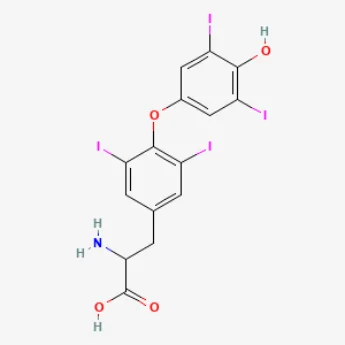
Thyroxine 0.15 mg Chemical Structure
IUPAC (International Union of Pure and Applied Chemistry)/ Chemical name
Thyroxine: 2-amino-3-[4-(4-hydroxy-3,5-diiodophenoxy)-3,5-diiodophenyl] propanoic acid
Intake routine/cycle
Daily dose
Take Thyroxine 0.15 mg exactly as your doctor recommends. The dose may change based on your condition and how well you respond. Do not take more than prescribed without consulting your doctor.
Missed Dose
If you forget to take your medicine, take the medication soon as you remember. If it’s nearly time for your next dose, skip the missed one and continue with your regular schedule. Always consult the doctor before making any changes to your dosage.
Overdose
The usual maintenance dose depends on your body weight, thyroid hormone levels, and medical condition. Although doses of 200–300 mcg/day are used in some cases, doses above 200 micrograms are rarely needed, and doses above 300 micrograms are very uncommon. Taking more than prescribed may cause a fast heartbeat, sweating, shaking, or anxiety. If you accidentally take too much, seek medical advice immediately. Do not change your dose without consulting your doctor.
Storage
- Store the medicine at room temperature.
- Keep away from sunlight and moisture.
- Keep out of reach of children
Directions for use
- Take this medicine exactly as prescribed by your doctor, at the same time each day.
- Do not stop taking this medicine without your doctor’s approval, even if you feel better.
- If you forget to take this medicine, take it as soon as you remember. If it’s almost time for your next dose, skip the missed dose.
FAQ’s
How to choose the right thyroxine product for hypothyroidism?
Choose a thyroxine product with the exact strength prescribed by your doctor. Your doctor may recommend a particular formulation based on your thyroid levels and response to treatment. Do not change the dose or dosage without medical advice.
What are the common side effects of thyroid hormone replacement?
Common side effects of thyroid hormone replacement medications include headaches, sweating, nervousness, difficulty sleeping, shaking, and a fast heartbeat, especially when the dose is higher than needed. Contact your doctor if you experience these symptoms and seek urgent medical care for chest pain or a severe or irregular heartbeat.
What diet changes are recommended when taking daily thyroid pills?
Take thyroxine with water on an empty stomach, 30–60 minutes before breakfast. Avoid taking tea or coffee too soon after your dose and keep calcium and iron supplements at least 4 hours apart from the medicine to help ensure proper absorption.
How often should thyroid function tests be done while on medication?
Thyroid function tests are usually done every 3 months until thyroid hormone levels become stable, and then once a year. Your doctor may recommend more frequent tests after a dose of change, during pregnancy, or if symptoms continue.
Where can I buy thyroxine tablets online with home delivery in India?
You can order thyroxine tablets online through SayaCare, which offers tested generic medicines, where every medicine undergoes quality testing in government-approved laboratories and test reports are provided with each medication, and home delivery across India. Choose the prescribed strength and follow prescription requirements before ordering.
Reference
- PubChem. DL-Thyroxine [Internet]. pubchem.ncbi.nlm.nih.gov. [cited 2026 Oct 21]. Available from
- Levothyroxine Dosage Guide with Precautions [Internet]. Drugs.com. 2024 [cited 2026 Oct 21]. Available from
- Eghtedari B, Correa R. Levothyroxine [Internet]. National Library of Medicine. StatPearls Publishing; 2023 [cited 2026 Oct 21]. Available from
- Mayo Clinic. Levothyroxine (Oral Route) Description and Brand Names – Mayo Clinic [Internet]. Mayoclinic.org. 2019 [cited 2026 Oct 21]. Available from
- National Health Service. Levothyroxine [Internet]. NHS. 2021 [cited 2026 Oct 21]. Available from
Authors


Pranathi is a final year Pharm D student at Chalapathi Institute of Pharmaceutical Sciences. She loves learning and applying her knowledge in pharmacy and has a passion for writing, which allows her to express ideas clearly and creatively. She enjoys combining her technical skills with her love for writing and communication to make a meaningful impact. Currently she is working on a research paper about “Consanguineous marriages and its impact on children’s health” which will be published by the end of 2025.