Category- Allopathy
Medicine Highlights
| Uses | 1. To support pregnancy 2. To protect uterine changes in women above 45 years 3. To treat depression and anxiety. 4. To improve hormonal balance (adrenal insufficiency) |
| Common Side Effects | 1. Acne or oily skin 2. Hair changes (hair loss or unwanted hair growth) 3. Mood changes (irritability, restlessness, or mood swings) 4. Changes in menstrual cycle in women 5. Breast tenderness 6. Deepening of the voice (in women, with prolonged use) 7. Increased sweating or body odor 8. Altered cholesterol levels (possible changes in HDL/LDL balance) |
| Additional Information | 1. It is sometimes used off label for osteoporosis and anti-aging effects. 3. Do not use this medicine without a doctor’s recommendation. |
| Storage | 1. The medicine should be stored at room temperature. 2. Keep away from sunlight and moisture. 3. Keep away from the reach of children |
| How to Take This Medicine | Take this medicine orally with a sip of water. |
Dehydroepiandrosterone Uses
Dehydroepiandrosterone 25 mg is an oral medicine belonging to the category of prohormones or hormonal supporters and is used for the following conditions:
- Supporting pregnancy
- Protection of Uterus
- Depression and anxiety
- Hormonal Balance
Dehydroepiandrosterone side effects
More Common
- Acne or oily skin
- Hair changes (hair loss or unwanted hair growth)
- Mood changes (irritability, restlessness, or mood swings)
- Changes in menstrual cycle in women
- Breast tenderness
- Deepening of the voice (in women, with prolonged use)
- Increased sweating or body odor
- Altered cholesterol levels (possible changes in HDL/LDL balance)
Less Common
- Insomnia or sleep disturbances
- Headaches
- Stomach upset or nausea
- Rapid or irregular heartbeat (palpitations)
- High blood pressure
- Liver function changes (rare but possible with long‑term use)
- Changes in mood or anxiety
- Altered blood sugar levels (especially in people with diabetes)
- Voice changes (deepening in women, though less common)
- Enlargement of the prostate in men
How Dehydroepiandrosterone works
Dehydroepiandrosterone (DHEA) works like a building block for steroid hormones like testosterone and estrogen. These hormones then help regulate important functions like energy, mood, bone strength, sexual health, and how the body responds to stress.
Safety Measures and Warning
Pregnancy
Taking DHEA in pregnancy can disturb hormone balance and harm the baby’s development. So always consult a doctor before using it.
Breastfeeding
Taking DHEA while breastfeeding can change hormone levels and may pass into breast milk, potentially affecting the baby’s growth and development. So, always consult a doctor before using it.
Kidney and Liver Problems
Using Dehydroepiandrosterone in liver disease can worsen liver function. In kidney patients, it may be used cautiously, as fluid retention and blood pressure changes. It is recommended to consult a doctor before using it.
Cancer Patients
Taking DHEA in a cancer condition raises estrogen and testosterone, which may worsen hormone‑sensitive cancers like breast, ovarian, or prostate. People with cancer or a history of it must consult their doctor for safer options.
Dehydroepiandrosterone Interaction with Food Product
DHEA should be avoided with certain foods because it can affect cholesterol and blood sugar levels. High‑fat diets may worsen cholesterol changes, and high‑sugar diets can increase blood sugar swings. People taking DHEA should eat balanced meals and consult their doctor to avoid harmful food interactions.
Dehydroepiandrosterone Interaction with Other Medicines
Avoid taking dehydroepiandrosterone 25 mg with the following medicines, as it may increase or decrease the desired effect, or in worse cases, it could be fatal:
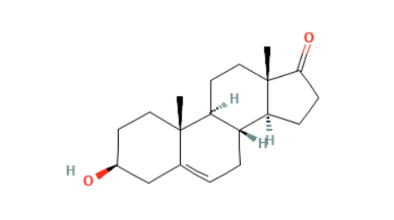
Dehydroepiandrosterone Chemical Structure
IUPAC (International Union of Pure and Applied Chemistry)/ Chemical name
(3S,8R,9S,10R,13S,14S)-3-hydroxy-10,13-dimethyl-1,2,3,4,7,8,9,11,12,14,15,16-dodecahydrocyclopenta[a]phenanthren-17-one
Intake routine/cycle
Daily dose
Take Dehydroepiandrosterone exactly as your doctor recommends. The dose may change based on your condition and how well you respond. Do not take more than prescribed without consulting your doctor.
Missed Dose
If you forget to take your medicine, take the medication as soon as you remember. If it’s nearly time for your next dose, skip the missed one and continue with your regular schedule. Always consult the doctor before making any changes to your dosage.
Overdose
It is not recommended to take more than 400 mg of dehydroepiandrosterone per day, as it may cause severe overdosing effects like nausea, abdominal pain, flushing, and vision changes (blurred vision, flashes, or spots) hormonal imbalance and unwanted acne and hair growth. If you face any of the severe effects, please contact the doctor.
Storage
- Store the medicine at room temperature
- Keep away from sunlight and moisture
- Keep out of reach of children
Directions for use
- Take dehydroepiandrosterone exactly as prescribed by your doctor, at the same time each day.
- Do not stop taking dehydroepiandrosterone without your doctor’s approval, even if you feel better.
- If you forget to take dehydroepiandrosterone, take it as soon as you remember. If it’s almost time for your next dose, skip the missed dose.
Dehydroepiandrosterone Summary
Dehydroepiandrosterone (DHEA) 25 mg, is a natural hormone belonging to the steroid class. It is approved for treating vaginal dryness in postmenopausal women, adrenal problems, bone health, mood, or menopause symptoms. It works by turning into other hormones like estrogen and testosterone, which in turn improves hormonal balance in the body. Common side effects include acne, hair changes, mood swings, and irregular periods. People with breast or prostate cancer, liver disease, or hormone‑sensitive conditions should avoid it. Taking more than 400 mg per day can cause severe acne, mood problems, high blood pressure, liver issues, and hormone imbalance.
FAQ’s
What are the side effects of dehydroepiandrosterone 25 mg?
At a dose of 25 mg, DHEA may cause mild side effects such as acne, oily skin, unwanted hair growth, mood changes, or irregular periods. Some people may also notice changes in cholesterol or blood sugar, so medical supervision is advised.
What are the uses of the dehydroepiandrosterone 25 mg tablet?
DHEA 25 mg is mainly used for hormone support, especially in conditions like thinning vaginal tissue after menopause, infertility treatment, and sometimes for mood, energy, or aging‑related concerns. Some people also take it for bone strength, muscle health, or sexual function, though scientific evidence for many of these uses is limited.
What is the mechanism of action of dehydroepiandrosterone?
DHEA is a natural steroid hormone made mainly in the adrenal glands. Its key role is to act as a precursor, meaning the body converts it into stronger hormones like estrogen and testosterone. Through these conversions, DHEA influences many functions such as energy, mood, bone strength, metabolism, fertility, and brain activity. It also interacts with specific receptors and may have direct effects on immune and cardiovascular systems.
What is the drug class of Dehydroepiandrosterone?
DHEA belongs to the endogenous steroid hormones class. It is a precursor hormone (also called a prohormone) that converts into androgens (like testosterone) and estrogens. In medicine, its synthetic form (prasterone) is classified as a steroid hormone replacement therapy used for certain menopausal symptoms.
Reference
- Mayo Clinic Staff. DHEA [Internet]. Rochester (MN): Mayo Foundation for Medical Education and Research; 2025 Mar 20 [cited 2026 Feb 28]. Available from.
- Lin HY, Chen JH, Chen KH. The Sex Hormone Precursors Dehydroepiandrosterone (DHEA) and Its Sulfate Ester Form (DHEAS): Molecular Mechanisms and Actions on Human Body. Int J Mol Sci. Available from.
- Drugs.com. Dehydroepiandrosterone: Uses, Benefits & Dosage [Internet]. Drugs.com; 2026 Jan 22 [cited 2026 Feb 28]. Available from.
- Nenezic N, Kostic S, Strac DS, Grunauer M, Nenezic D, Radosavljevic M, Jancic J, Samardzic J. Dehydroepiandrosterone (DHEA): Pharmacological Effects and Potential Therapeutic Application. Mini Rev Med Chem. Available from.
- PubChem [Internet]. Bethesda (MD): National Library of Medicine (US), National Center for Biotechnology Information; 2004-. PubChem Compound Summary for CID 5881, Dehydroepiandrosterone; [cited 2026 Feb. 28]. Available from.
Authors



Siva Krishna Adithya Bhumireddy completed a Bachelor of Pharmacy from GIET School of Pharmacy, affiliated with Andhra University, and from his 3rd year of graduation, he was working as a freelance medical and publication writer. Having expertise in systematic reviews and clinical research. With his keen interest and skills in research and documentation practices, he also reviewed more than 150 manuscripts from international journals like Elsevier, Springer Nature, and Sage Journals, and all the manuscripts were indexed and appeared in PubMed, Scopus, and Web of Science databases, and he received honorary recognition letters and certificates from all of them. Siva Krishna Adithya also published a few systematic, narrative reviews and a few chapters of international expertise.