Category- Allopathy
Medicine Highlights
| Uses | 1. To treat dry skin 2. To treat chapped lips 3. To treat minor wounds or burns |
| Common Side Effects | 1. Mild irritation or stinging on skin 2. Soft, smooth skin feeling |
| Additional Information | 1. Use a small amount on your body and face as a natural moisturizer. 2. You can also mix it with rose water for even better results. |
| Storage | 1.The medicine should be stored at room temperature 2. Keep away from sunlight and moisture 3. Keep away from the reach of children |
| How to Take This Medicine | This medicine is meant to be used on the skin only. |
Glycerin Uses
Glycerin 98% is a topical solution used for skin care. It is used to treat and relieve the symptoms of following indications:
- Dry skin
- Chapped lips
- Minor wounds or burns
Directions for use
- If you forget to take this medicine, take it as soon as you remember. If it’s almost time for your next dose, skip the missed dose.
- Take this medicine exactly as prescribed by your doctor, at the same time each day.
- Do not stop taking this medicine without your doctor’s approval, even if you feel better.
Glycerin side effects
More Common
- Mild irritation or stinging on skin
- Soft, smooth skin feeling
Less Common
- Allergic reaction rash, swelling, itching
- Severe diarrhea or dehydration
- Severe burning or pain
How Glycerin works
Glycerin works by drawing moisture to your skin and locking it in, acting like a natural humectant. It helps repair the skin’s outer layer, making it soft, smooth, and flexible. Regular use can reduce dryness, roughness, and irritation, and can even help minor cuts or cracks heal faster by keeping the skin hydrated. It’s gentle and safe for most skin types, including sensitive areas.
Safety Measures and Warning
Allergic Individuals
People who are allergic to glycerin or any ingredient in the solution should avoid using it, as it can cause skin redness, itching, or rashes.
Open Wounds or Severe Skin Infections
Glycerin should not be applied on deep cuts, open wounds, or infected areas, because it can trap bacteria and worsen the infection.
Very Oily or Acne-Prone Skin
Those with oily or acne-prone skin should use glycerin sparingly, as excessive application can make the skin feel sticky or may clog pores.
Sensitive Skin
People with sensitive skin should perform a patch test first before regular use to ensure it does not cause irritation or discomfort.
Glycerin Interaction with Other Medicines
Avoid taking Glycerin with the following medicines, as it may increase or decrease the desired effect, or in worse cases and it could be fatal:
Glycerin Interaction with Food Product
Glycerin topical solution is applied on the skin and not taken orally, so it does not have any food interactions. You can eat normally while using it.
Storage
- Store the medicine at room temperature
- Keep away from sunlight and moisture
- Keep out of reach of children
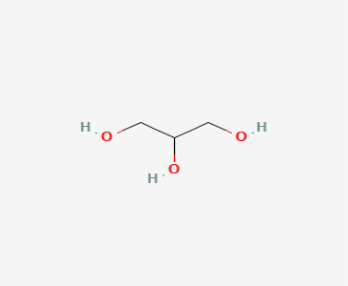
Glycerin Chemical Structure
IUPAC (International Union of Pure and Applied Chemistry)/ Chemical name
Propane-1,2,3-triol
Intake routine/cycle
Daily dose
Take glycerin exactly as your doctor recommends. The dose may change based on your condition and how well you respond. Do not take more than prescribed without consulting your doctor.
Missed Dose
If you forget to take your medicine, take the medication as soon as you remember. If it’s nearly time for your next dose, skip the missed one and continue with your regular schedule. Always consult the doctor before making any changes to your dosage.
Overdose
Do not use glycerin drops more than prescribed by your doctor. Using too many drops can increase the risk of skin irritation, stinging, redness. If you experience severe reactions stop using the medicine immediately and seek medical attention.
Glycerin Summary
Glycerin 98% is a natural moisturizer that helps keep the skin soft, smooth, and hydrated. It works by drawing water into the skin and locking it in, which prevents dryness, roughness, and flakiness. It can be used on the face and body, including sensitive areas, and can be mixed with rose water for a lighter feel. Glycerin is helpful for dry patches, minor cracks, and irritated skin, making it softer and more flexible.
Most people can use it safely, but those with allergies, open wounds, or very oily skin should be cautious, as it may sometimes cause mild redness, itching, or stickiness. It is for external use only, has no food interactions, and regular use helps maintain healthy, hydrated, and comfortable skin.
FAQ’s
Is glycerin good for oily skin?
Yes, glycerin can be used on oily skin because it hydrates without adding oil, but it should be used in small amounts. Overuse may make the skin feel sticky or heavy, so applying a thin layer is best.
What are the uses for glycerin 98% solution?
Glycerin 98% solution is used as a moisturizer to keep the skin soft, smooth, and hydrated. It helps treat dry, rough, or flaky skin, minor cracks, and irritation. It can also be used to protect sensitive skin and maintain overall skin health.
Can I use glycerin solution on my face?
Yes, glycerin can be applied to the face in small amounts. It helps keep the skin hydrated, soft, and smooth, and can reduce dryness or rough patches. For best results, it can be mixed with water or rose water to make it lighter and easier to apply.
Reference
- PubChem. Glycerol [Internet]. pubchem.ncbi.nlm.nih.gov. Available from
- WebMD. What Is Pure Glycerin? [Internet]. WebMD. 2023. Available from
- Glycerin (Oral Route) Description and Brand Names – Mayo Clinic [Internet]. Mayoclinic.org. 2024. Available from
Authors


Pranathi is a final year Pharm D student at Chalapathi Institute of Pharmaceutical Sciences. She loves learning and applying her knowledge in pharmacy and has a passion for writing, which allows her to express ideas clearly and creatively. She enjoys combining her technical skills with her love for writing and communication to make a meaningful impact. Currently she is working on a research paper about “Consanguineous marriages and its impact on children’s health” which will be published by the end of 2025.