Category- Allopathy
Medicine Highlights
| Uses | 1. To treat chest infections such as pneumonia and bronchitis. 2. To treat throat infections like tonsillitis or pharyngitis. 3. To treat ear infections (otitis media). 4. To treat urinary tract infections (UTIs) 5. To treat skin and soft tissue infections, like infected wounds or cellulitis. |
| Common Side Effects | 1. Diarrhea 2. Nausea or vomiting 3. Stomach pain or upset 4. Loss of appetite 5. Mild skin rash 6. Headache |
| Additional Information | 1. This medicine should only be used under medical supervision. 2. It only works for bacterial infections and not for viral illnesses (like common cold or flu). |
| Storage | 1. The medicine should be stored at room temperature. 2. Keep away from sunlight and moisture. 3. Keep away from the reach of children |
| How to Take This Medicine | This medicine is meant to be taken by orally. |
Cephalexin Uses
Cephalexin is an antibiotic medicine that belongs to the class of cephalosporins. It is used to kill bacteria and treat symptoms of conditions like:
- Chest infections such as pneumonia and bronchitis
- Sinus infections (sinusitis)
- Throat infections like tonsillitis or pharyngitis
- Ear infections (otitis media)
- Urinary tract and kidney infections
- Skin and soft tissue infections, like infected wounds or cellulitis
Cephalexin side effects
More Common
- Nausea or vomiting
- Diarrhea or loose stools
- Stomach pain or upset stomach
- Headache
- Dizziness
- Skin rash or itching
Less Common
- Severe allergic reactions (swelling, difficulty breathing, severe rash)
- Severe diarrhea caused by Clostridium difficile (infection in the gut)
- Liver problems (yellowing of skin or eyes)
- Blood-related issues (unusual bruising or bleeding)
How Cephalexin works
Cephalexin kills bacteria by preventing them from forming their protective cell wall. Without this wall, bacteria cannot survive, so the infection-causing germs die and the infection gradually clears.
Safety Measures and Warning
Allergy/Hypersensitivity
Avoid Cephalexin if you are allergic to cephalexin. Taking it may cause serious allergic reactions such as swelling, breathing difficulty, or severe skin rashes. Always inform your doctor about any past drug allergies.
Severe Kidney Problems
If you have severe kidney disease, tell your doctor so the dose can be adjusted properly, as this medicine may build up in the body and cause harmful effects.
Newborn Babies
Cephalexin syrup should not be given to newborn babies unless specifically prescribed by a pediatrician, as their bodies may not handle the medicine well.
Pregnancy
Cephalexin should be used during pregnancy only if prescribed by a doctor. It should be taken only when the benefits are greater than the possible risks to the baby.
Breastfeeding
Cephalexin can pass into breast milk. Breastfeeding mothers should use this medicine only with medical advice, as it may cause diarrhea or fungal infections in the baby.
Cephalexin Interaction with Food Product
No major food restrictions exist, and it does not interact significantly with dairy or common foods.
Cephalexin Interaction with Other Medicines
Avoid taking Cephalexin with the following medicines, as it may increase or decrease the desired effect, or in worse cases, it could be fatal:
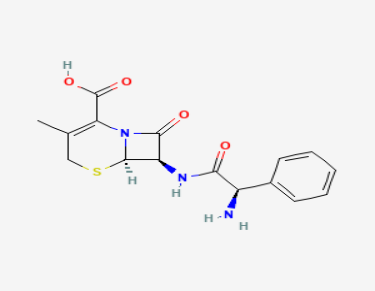
Cephalexin Chemical Structure
IUPAC (International Union of Pure and Applied Chemistry)/ Chemical name
Cephalexin: (6R,7R)-7-[[(2R)-2-amino-2-phenylacetyl]amino]-3-methyl-8-oxo-5-thia-1-azabicyclo[4.2.0]oct-2-ene-2-carboxylic acid
Intake routine/cycle
Daily dose
Take Cephalexin exactly as your doctor recommends. The dose may change based on your condition and how well you respond. Do not take more than prescribed without consulting your doctor.
Missed Dose
If you forget to take your medicine, take the medication as soon as you remember. If it’s nearly time for your next dose, skip the missed one and continue with your regular schedule. Always consult the doctor before making any changes to your dosage.
Overdose
It is not recommended to take more than 4 grams of cefalexin per day. Overdose may cause tremors, chest pain, fast or irregular heartbeat, nervousness, dizziness, headache, muscle cramps, or high blood pressure. In case of any of these symptoms, seek immediate medical help.
Storage
- Store the medicine at room temperature
- Keep away from sunlight and moisture
- Keep out of reach of children
Directions for use
- Take this medicine exactly as prescribed by your doctor, at the same time each day.
- Do not stop taking this medicine without your doctor’s approval, even if you feel better.
- If you forget to take this medicine, take it as soon as you remember. If it’s almost time for your next dose, skip the missed dose.
Cephalexin Summary
Cephalexin 125 mg/5 ml syrup is an antibiotic mainly used in children to treat bacterial infections of the throat, ears, lungs, urinary tract, skin, and soft tissues. It works by stopping bacteria from forming their protective cell wall, which kills the germs and helps the infection heal. Common side effects include diarrhea, nausea, stomach upset, and mild rash, while serious allergic reactions are rare but need immediate medical attention.
This syrup should not be used in people allergic this medicine, and those with severe kidney problems need dose adjustment and monitoring. Pregnant women should take it only if prescribed, and breastfeeding mothers should use it with medical advice as it can pass into breast milk. Always give the syrup exactly as directed and complete the full course, even if symptoms improve.
FAQ’s
What are the uses of Cefalexin tablets?
Cefalexin tablet is used to treat bacterial infections such as throat infections, ear infections, chest infections, urinary tract infections, and skin or wound infections.
What drug class does Cefalexin belong to?
Cefalexin belongs to the cephalosporin class of antibiotics.
How does Cefalexin work?
Cefalexin works by killing bacteria. It breaks the bacterial cell wall, causing the bacteria to burst and die, which helps clear the infection.
What are the side effects of Cefalexin?
Common side effects of Cefalexin include diarrhea, nausea, vomiting, stomach pain, headache, and mild skin rash. Rare side effects can include severe allergic reactions, liver problems, blood-related issues, and confusion.
Reference
- PubChem. Cephalexin [Internet]. pubchem.ncbi.nlm.nih.gov. Available from
- How and when to take cefalexin [Internet]. nhs.uk. 2023. Available from
- Cephalexin [Internet]. go.drugbank.com. 2022. Available from
- Herman TF, Hashmi MF. Cephalexin [Internet]. PubMed. Treasure Island (FL): StatPearls Publishing; 2023. Available from
Authors


Pranathi is a final year Pharm D student at Chalapathi Institute of Pharmaceutical Sciences. She loves learning and applying her knowledge in pharmacy and has a passion for writing, which allows her to express ideas clearly and creatively. She enjoys combining her technical skills with her love for writing and communication to make a meaningful impact. Currently she is working on a research paper about “Consanguineous marriages and its impact on children’s health” which will be published by the end of 2025.