Category- Allopathy
Medicine Highlights
| Uses | 1. To treat urinary tract infections (UTIs) 2. To treat respiratory tract infections (like bronchitis or pneumonia) 3. To treat skin and soft tissue infections 4. To treat bloodstream infections 5. To treat intra-abdominal infections 6. To treat bone and joint infections |
| Common Side Effects | 1. Pain, redness, or swelling at injection site 2. Nausea 3. Vomiting 4. Diarrhea 5. Stomach pain 6. Headache 7. Dizziness |
| Additional Information | To be taken only when prescribed by the doctor. |
| Storage | 1- The medicine should be stored at room temperature 2- Keep away from sunlight and moisture 3- Keep away from the reach of children |
| How to Take This Medicine | This medicine is administered as an injection by doctor or nurse. |
Ceftriaxone + Sulbactam Uses
Ceftriaxone + Sulbactam is an injectable antibiotic combination belonging to the cephalosporin (third-generation) group with beta-lactamase inhibitor, and it is used to treat serious bacterial infections such as:
- Urinary tract infections (UTIs)
- Respiratory tract infections (like bronchitis or pneumonia)
- Skin and soft-tissue infections
- Bloodstream infections
- Bone and joint infections
- Intra-abdominal infections
Directions for use
- Take this medicine exactly as prescribed by your doctor, at the same time each day.
- Do not stop taking this medicine without your doctor’s approval, even if you feel better.
- If you forget to take this medicine, take it as soon as you remember. If it’s almost time for your next dose, skip the missed dose.
Ceftriaxone + Sulbactam side effects
More Common
- Pain, redness, or swelling at injection site
- Nausea
- Vomiting
- Diarrhea
- Stomach pain
- Headache
- Dizziness
Less Common
- Severe diarrhea (Clostridium difficile infection)
- Abnormal liver function tests
- Low white blood cells or platelets
- Kidney problems
- Seizures
How Ceftriaxone + Sulbactam works
Ceftriaxone is a medicine that kills bacteria by breaking their protective outer wall. Without this wall, the bacteria will burst and die. Some bacteria have special enzymes called beta-lactamases that can destroy ceftriaxone and make it ineffective. Sulbactam blocks these enzymes, so ceftriaxone can work properly. Together, they treat serious infections, even against bacteria that might resist ceftriaxone alone.
Safety Measures and Warning
Allergy/Hypersensitivity
If you are allergic to ciprofloxacin and penicillin’s antibiotics, taking it can cause serious reactions like rashes, swelling, or trouble breathing. Stop the medicine immediately and get medical help.
History of Severe Diarrhea (Colitis)
If you have previously experienced antibiotic-associated diarrhea or colitis, ceftazidime may worsen this condition and cause dangerous bowel problems. Such patients should use this medicine only after informing their doctor, who will decide if it is safe.
Pregnancy and Breastfeeding
This medicine should be used during pregnancy or breastfeeding only if a doctor feels the benefits are greater than the risks, as it can pass to the baby and may cause unwanted effects.
Bleeding Disorders or Low Platelets
This medicine can sometimes reduce platelet levels, increasing the risk of bleeding. People with bleeding problems should take this injection only under a doctor’s supervision, with regular monitoring.
Kidney disease
People with serious kidney disease should use this medicine only under a doctor’s supervision. As the drug can accumulate in the body and cause side effects like seizures or confusion.
Ceftriaxone + Sulbactam Interaction with Food Product
You can eat normally while taking this medicine, but it is advised to drink plenty of fluids to support kidney function and avoid alcohol to reduce the risk of side effects, as recommended by your doctor.
Ceftriaxone + Sulbactam Interaction with Other Medicines
Avoid taking Ceftriaxone + Sulbactam with the following medicines, as it may increase or decrease the desired effect, or in worse cases, it could be fatal:
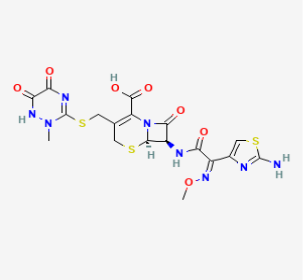
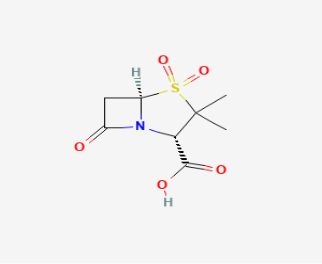
Ceftriaxone + Sulbactam Chemical Structure
IUPAC (International Union of Pure and Applied Chemistry)/ Chemical name
Ceftriaxone: (6R,7R)-7-[[(2Z)-2-(2-amino-1,3-thiazol-4-yl)-2-methoxyiminoacetyl]amino]-3-[(2-methyl-5,6-dioxo-1H-1,2,4-triazin-3-yl)sulfanylmethyl]-8-oxo-5-thia-1-azabicyclo[4.2.0]oct-2-ene-2-carboxylic acid
Sulbactam: (2S,5R)-3,3-dimethyl-4,4,7-trioxo-4λ6-thia-1-azabicyclo[3.2.0]heptane-2-carboxylic acid
Intake routine/cycle
Daily dose
Take Ceftriaxone + Sulbactam exactly as your doctor recommends. The dose may change based on your condition and how well you respond. Do not take more than prescribed without consulting your doctor.
Missed Dose
If you forget to take your medicine, take the medication as soon as you remember. If it’s nearly time for your next dose, skip the missed one and continue with your regular schedule. Always consult the doctor before making any changes to your dosage.
Overdose
It is not recommended to take Ceftriaxone + Sulbactam in doses higher than prescribed by your doctor, as an overdose may cause serious side effects such as nausea, vomiting, headache, dizziness, rapid heartbeat, or confusion. Seek medical attention immediately if any severe reactions occur.
Storage
- Store the medicine at room temperature
- Keep away from sunlight and moisture
- Keep out of reach of children
Ceftriaxone + Sulbactam Summary
Ceftriaxone is a third-generation cephalosporin antibiotic given by injection (IV or IM) to treat a wide range of serious bacterial infections, including pneumonia, urinary tract infections, blood infections, skin and soft tissue infections, bone and joint infections, and hospital-acquired infections. It works by killing bacteria through blocking their cell wall formation, which causes them to burst and die.
Ceftriaxone should be used under a doctor’s supervision, especially in people with allergies to cephalosporins or penicillin, kidney or liver problems, bleeding disorders, or a history of severe antibiotic-related diarrhea, as it can cause side effects like injection-site pain, nausea, diarrhea, or allergic reactions.
FAQ’s
What are the uses of Ceftriaxone + Sulbactam injection?
Ceftriaxone + Sulbactam injection is used to treat serious bacterial infections, including respiratory tract infections (like pneumonia), urinary tract infections, blood infections (septicemia), skin and soft tissue infections, bone and joint infections, abdominal infections, gynecological infections, and hospital-acquired infections. It is especially useful against bacteria that produce enzymes that can resist ceftriaxone alone.
How does Ceftriaxone work?
Ceftriaxone works by killing bacteria. It does this by blocking the bacteria’s cell wall formation, which weakens the bacteria and causes them to burst and die. This makes it effective in treating a wide range of serious bacterial infections.
Who should not take Ceftriaxone?
Ceftriaxone should not be used in people who are allergic to ceftriaxone, other cephalosporins, or penicillin, as it can cause serious allergic reactions like rash, swelling, or difficulty breathing. It should also be used with caution in patients with severe kidney or liver problems, bleeding disorders, or a history of severe diarrhea from antibiotics, and only under a doctor’s supervision.
What are the uses of sulbactam injection?
Sulbactam injection is used in combination with antibiotics to treat bacterial infections by preventing bacteria from breaking down the antibiotic, making the treatment effective against resistant infections.
What class of drug is sulbactam?
Sulbactam is a beta-lactamase inhibitor. It is not an antibiotic on its own but works by protecting certain antibiotics from being destroyed by bacteria, making them more effective.
What is the mechanism of action of sulbactam?
Sulbactam works by inhibiting beta-lactamase enzymes produced by bacteria, which would normally destroy certain antibiotics. By blocking these enzymes, sulbactam allows the antibiotic to effectively kill the bacteria.
What class of drug is Ceftriaxone?
Ceftriaxone belongs to the third-generation cephalosporin class of antibiotics.
Reference
- PubChem. Ceftriaxone [Internet]. pubchem.ncbi.nlm.nih.gov. Available from
- PubChem. Sulbactam [Internet]. Nih.gov. PubChem; 2025. Available from
- Ceftriaxone + Sulbactam: View Uses, Side Effects and Medicines | 1mg [Internet]. 1mg. 2023 [cited 2026 Jan 12]. Available from
- Truemeds [Internet]. Truemeds.in. 2019. Available from
Authors


Pranathi is a final year Pharm D student at Chalapathi Institute of Pharmaceutical Sciences. She loves learning and applying her knowledge in pharmacy and has a passion for writing, which allows her to express ideas clearly and creatively. She enjoys combining her technical skills with her love for writing and communication to make a meaningful impact. Currently she is working on a research paper about “Consanguineous marriages and its impact on children’s health” which will be published by the end of 2025.