Category- Allopathy
Medicine Highlights
| Uses | 1. To treat buzzing sounds in ears (tinnitus) 2. To treat muscle spasms in abdomen |
| Common Side Effects | 1. Nausea 2. Itching 3. Skin Rash 4. Headache |
| Additional Information | 1. Take medicine every day at the same time to maintain the drug well in the blood. 2. Do not take this medicine without a doctor’s recommendation. |
| Storage | 1. The medicine should be stored at room temperature. 2. Keep away from sunlight and moisture. 3. Keep away from the reach of children |
| How to Take This Medicine | Take this medicine orally with a sip of water. |
Caroverine Uses
Caroverine 20 mg is an oral medicine belonging to the category of calcium channel blockers used to treat tinnitus and muscle spasms.
Caroverine side effects
More Common
- Nausea
- Itching
- Skin Rash
- Headache
Less Common
- Vomiting
- Dizziness
- Headache
- Breathlessness
How Caroverine works
Caroverine works by blocking calcium from getting into nerve and muscle cells, which calms them down. By doing this, it helps relax tight muscles and quiet overactive nerve signals that can cause problems like ringing in the ears.
Safety Measures and Warning
Pregnancy
Pregnant women should only use caroverine unless prescribed by a doctor. Because its safety in pregnancy is unproven, and there are potential risks to the baby. So always consult a doctor before using it.
Breastfeeding
Breastfeeding women should only take caroverine if advised by a doctor. Although the drug passes into breast milk in very small amounts, its safety for infants is not fully established, so mothers should always consult a doctor before using it.
Kidney and Liver Problems
Kidney and liver patients should avoid taking caroverine because it may cause toxicity to the organs, so consult a doctor before using it
Caroverine Interaction with Food Product
Caroverine is generally safe with food, and it is recommended to avoid alcohol and smoking with caroverine, as they can alter the drug’s effect and may cause severe drowsiness and sedation because of their direct action on the brain.
Caroverine Interaction with Other Medicines
Avoid taking Caroverine with the following medicines, as it may increase or decrease the desired effect, or in worse cases, it could be fatal:
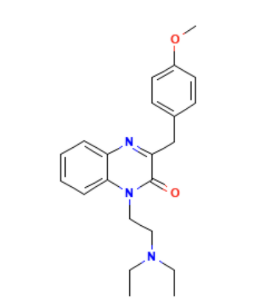
Caroverine Chemical Structure
IUPAC (International Union of Pure and Applied Chemistry)/ Chemical name
1-[2-(diethylamino)ethyl]-3-[(4-methoxyphenyl)methyl]quinoxalin-2-one
Intake routine/cycle
Daily dose
Take Caroverine exactly as your doctor recommends. The dose may change based on your condition and how well you respond. Do not take more than prescribed without consulting your doctor.
Missed Dose
If you forget to take your medicine, take the medication as soon as you remember. If it’s nearly time for your next dose, skip the missed one and continue with your regular schedule. Always consult the doctor before making any changes to your dosage.
Overdose
It is not recommended to take more than 400 mg of Caroverine per day, as it may cause severe adverse effects like extreme drowsiness, confusion, low blood pressure, unconsciousness, high fever, severe diarrhea, and heart weakness.
Storage
- Store the medicine at room temperature.
- Keep away from sunlight and moisture.
- Keep out of reach of children.
Directions for use
- Take Caroverine exactly as prescribed by your doctor, at the same time each day.
- Do not stop taking Caroverine without your doctor’s approval, even if you feel better.
- If you forget to take Caroverine, take it as soon as you remember. If it’s almost time for your next dose, skip the missed dose.
Caroverine Summary
Caroverine 20 mg is a calcium channel blocker group. It is mainly used for tinnitus (ringing in the ears) and sometimes for muscle spasm. It works by blocking calcium from entering cells, resulting in relaxed muscles and nerves. Common side effects of caroverine 20 mg are nausea, vomiting, dizziness, headache, itching, rash, and shortness of breath. Do not take this medication with alcohol or sedatives as it can cause dizziness . People with liver problems, allergies to the drug, or children under 18 should avoid it. Taking more than 400 mg of this medicine can cause serious problems like confusion, very low blood pressure, trouble breathing, and severe dizziness.
FAQ’s
What are the uses of Caroverine tablets?
Caroverine tablets are primarily used for the treatment of tinnitus (ringing in the ears) by reducing glutamate-mediated excitotoxicity in the inner ear. They are also prescribed for abdominal pain and smooth muscle spasms, thanks to their spasmolytic action.
What is the mechanism of action of caroverine?
Caroverine acts mainly as a calcium channel blocker, inhibiting calcium influx into cells, which reduces smooth muscle contraction and neuronal excitability. This dual spasmolytic and neuroprotective effect underlies its use in conditions like muscle spasms and tinnitus
What are the side effects of caroverine 20 mg tablets?
Caroverine 20 mg tablets can cause both minor and moderate side effects. The most reported ones include nausea, vomiting, dizziness, headache, breathlessness, itching, and skin rash. Most of these are mild and tend to resolve as the body adjusts, but persistent or severe symptoms should be evaluated by a doctor.
Reference
- Practo. Caroverine – Uses, Dosage, Side Effects, Price, Composition [Internet]. Practo; 2019 [cited 2026 Feb 24]. Available from.
- Drug Bank. Caroverine: Uses, Interactions, and Mechanism of Action [Internet]. Drug Bank Online; 2017 [cited 2026 Feb 24]. Available from.
- Dash AK, Panda A, Prusty N, Satpathy MR, Bisoyi SK, Barik PA. Effect of oral caroverine in the treatment of tinnitus: A quasi-experimental study. J Family Med Prim Care. Available from.
- PubChem [Internet]. Bethesda (MD): National Library of Medicine (US), National Center for Biotechnology Information; 2004-. PubChem Compound Summary for CID 65709, Caroverine; [cited 2026 Feb. 24]. Available from.
Authors



Siva Krishna Adithya Bhumireddy completed a Bachelor of Pharmacy from GIET School of Pharmacy, affiliated with Andhra University, and from his 3rd year of graduation, he was working as a freelance medical and publication writer. Having expertise in systematic reviews and clinical research. With his keen interest and skills in research and documentation practices, he also reviewed more than 150 manuscripts from international journals like Elsevier, Springer Nature, and Sage Journals, and all the manuscripts were indexed and appeared in PubMed, Scopus, and Web of Science databases, and he received honorary recognition letters and certificates from all of them. Siva Krishna Adithya also published a few systematic, narrative reviews and a few chapters of international expertise.