Category- Allopathy
Medicine Highlights
| Uses | To reduce pain and swelling after eye surgeries |
| Common Side Effects | 1. Blurred vision 2. Change in color vision 3. Decreased vision or other changes in vision 4. Difficulty seeing at night 5. Eye pain 6. Red, sore eyes 7. Sensitivity to light 8. Tearing |
| Additional Information | 1. Avoid touching the tip of the container. 2. Avoid using the drops if the seal is broken. 3. Do not use this medicine if you face any increase in redness and irritation. |
| Storage | 1. The medicine should be stored at room temperature. 2. Keep away from sunlight and moisture. 3. Keep away from the reach of children |
| How to Take This Medicine | Instill one or two drops into the eye pocket without touching the bottle tip. |
Ketorolac Uses
Ketorolac is an eye drop solution belonging to the category of non-steroid anti-inflammatory drugs and is used for the management of pain and swelling after cataract surgery
Ketorolac side effects
More Common
- Blurred vision
- Change in color vision
- Decreased vision or other changes in vision
- Difficulty seeing at night
- Eye pain
- Red, sore eyes
- Sensitivity to light
- Tearing
Less Common
- Abnormal sensation in the eye
- Burning or stinging of the eye
- Feeling of having something in the eye
- Headache
- Itching of the eyes
How Ketorolac works
Ketorolac works by blocking pain and inflammation chemicals called prostaglandins that cause inflammation and swelling after cataract surgery. This helps your eyes feel more comfortable and heal better after surgery.
Safety Measures and Warning
Pregnancy
Ketorolac use in pregnancy is generally avoided due to the limited evidence related to safety in pregnancy. Always consult a doctor before using it.
Breastfeeding
Ketorolac enters breast milk in small amounts, and it is safe for use in breastfeeding, but caution is advised, and it should be used only if clearly needed under a doctor’s recommendation.
Bleeding issues
Bromofenac can show a blood-thinning effect. So, it can worsen bleeding conditions, so it is not recommended in patients with recent bleeding. Always consult a doctor before using it.
Ketorolac Interaction with Food Product
Avoid consuming alcohol and smoking simultaneously, as it may affect the drug’s action and show an effect on the brain, leading to severe drowsiness, sedation, and coma in severe cases.
Ketorolac Interaction with Other Medicines
Avoid taking Ketorolac 0.5% with the following medicines, as it may increase or decrease the desired effect, or in worse cases, it could be fatal:
Ketorolac Chemical Structure
IUPAC (International Union of Pure and Applied Chemistry)/ Chemical name
5-benzoyl-2,3-dihydro-1H-pyrrolizine-1-carboxylic acid
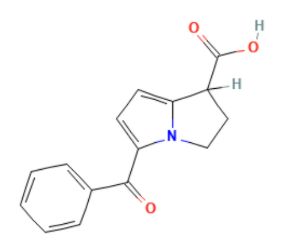
Intake routine/cycle
Daily dose
Take Ketorolac exactly as your doctor recommends. The dose may change based on your condition and how well you respond. Do not take more than prescribed without consulting your doctor.
Missed Dose
If you forget to take your medicine, take the medication as soon as you remember. If it’s nearly time for your next dose, skip the missed one and continue with your regular schedule. Always consult the doctor before making any changes to your dosage.
Overdose
It is not recommended to use more than 6 drops of Ketorolac per day, as it may cause severe overdosing effects like dry mouth, stomach upset, and irritation. Immediately seek medical attention and meet the doctor if necessary.
Storage
- Store the medicine at room temperature.
- Keep away from sunlight and moisture.
- Keep out of reach of children.
Directions for use
- Take Ketorolac exactly as prescribed by your doctor, at the same time each day.
- Do not stop taking Ketorolac without your doctor’s approval, even if you feel better.
- If you forget to take Ketorolac, take it as soon as you remember. If it’s almost time for your next dose, skip the missed dose.
Ketorolac Summary
Ketorolac is an eye drop medicine used to reduce pain and swelling in the eyes, mainly after cataract surgery. It is an NSAID (non-steroidal anti-inflammatory drug) that works by blocking pain and inflammation chemical called prostaglandins. Common side effects include mild eye irritation, blurry vision, or sensitivity to light. It doesn’t usually interact with food. People with aspirin allergies, bleeding issues, or serious eye surface problems should avoid it. Taking more than 100 mg could cause eye damage, stomach upset, or delayed healing.
FAQ’s
What are the uses of Ketorolac eye drops?
Ketorolac eye drops are used to relieve pain, redness, and swelling in the eye, mainly after cataract surgery. They help by reducing inflammation-causing chemicals, making the eye more comfortable during healing.
What are the side effects of ketorolac drops?
Ketorolac eye drops may cause mild side effects like eye irritation, burning, stinging, blurred vision, or sensitivity to light. Rarely, they can lead to more serious issues like delayed healing or corneal problems, especially with long-term use.
What is the drug class of ketorolac?
Ketorolac belongs to the drug class called non-steroidal anti-inflammatory drugs (NSAIDs), specifically used as ophthalmic anti-inflammatory agents when formulated as eye drops.
What are ketorolac interactions with other drugs?
Ketorolac eye drops have mostly moderate drug interactions, especially with other NSAIDs, corticosteroids, and blood thinners, which can increase the risk of eye irritation, delayed healing, or bleeding.
Reference
- Berger K, VanWert A. Ketorolac (Toradol): Uses, Side Effects, Interactions, Pictures, Warnings & Dosing. WebMD. Updated August 30, 2024. Available from.
- Cerner Multum. Ketorolac oral/injection: Uses, Side Effects & Warnings. Drugs.com. Updated July 24, 2025. Available from.
- Merative, Micromedex. Ketorolac (oral route, injection route): Description, Side Effects & Dosage. Mayo Clinic. Updated February 1, 2026. Available from.
- PubChem [Internet]. Bethesda (MD): National Library of Medicine (US), National Center for Biotechnology Information; 2004-. PubChem Compound Summary for CID 3826, Ketorolac; [cited 2026 Feb. 23]. Available from.
- Mahmoodi AN, Patel P, Kim PY. Ketorolac. [Updated 2024 Feb 28]. In: StatPearls [Internet]. Treasure Island (FL): StatPearls Publishing; 2025 Jan. Available from.
Authors



Siva Krishna Adithya Bhumireddy completed a Bachelor of Pharmacy from GIET School of Pharmacy, affiliated with Andhra University, and from his 3rd year of graduation, he was working as a freelance medical and publication writer. Having expertise in systematic reviews and clinical research. With his keen interest and skills in research and documentation practices, he also reviewed more than 150 manuscripts from international journals like Elsevier, Springer Nature, and Sage Journals, and all the manuscripts were indexed and appeared in PubMed, Scopus, and Web of Science databases, and he received honorary recognition letters and certificates from all of them. Siva Krishna Adithya also published a few systematic, narrative reviews and a few chapters of international expertise.