Category- Allopathy
Medicine Highlights
| Uses | 1. To treat acne, pimples, blackheads, and whitehead 2. To treat acne, dark spots or hyperpigmentation 3. To reduce fine wrinkles on skin |
| Common Side Effects | 1. Redness or irritation of the skin 2. Dryness or peeling 3. Mild burning or stinging 4. Increased sensitivity to sunlight |
| Additional Information | 1. Apply only on the affected area of the skin, not on broken or infected skin. 2. Wash your hands before and after applying the cream. Avoid contact with eyes, mouth, or private areas. |
| Storage | 1. The medicine should be stored at room temperature. 2. Keep away from sunlight and moisture. 3. Keep away from the reach of children |
| How to Take This Medicine | The medicine should be applied to the affected area. |
Adapalene + Clindamycin Uses
Adapalene 0.1% + Clindamycin 1% is a topical medicine that helps treat acne, improve skin texture, reduce fine wrinkles, and lighten dark spots. It is useful for the following:
- Acne, pimples, blackheads, and whiteheads
- Reduce skin aging due to sun exposure
- Lighten dark spots or hyperpigmentation
Adapalene + Clindamycin side effects
More Common
- Redness or irritation of the skin
- Dryness or peeling
- Mild burning or stinging
- Increased sensitivity to sunlight
Less Common
- Severe redness, swelling, or rash
- Blistering or crusting of skin
- Severe itching or burning
How Adapalene + Clindamycin works
Adapalene 0.1% + clindamycin 1% works by attaching to the part of the skin that is responsible for skin cells’ growth and death. This helps prevent clogged pores, reduces swelling, and keeps acne from forming. In simple terms, it makes skin turnover more balanced, so pimples and bumps are less likely to appear.
Safety Measures and Warning
Pregnancy and Breastfeeding
Adapalene cream is safe to use in pregnancy. In breastfeeding, it should not be applied in large areas or near the chest to prevent infant exposure.
Allergies
People allergic to this medicine should avoid it because it can cause severe rash, swelling, or allergic reactions. Always check with a doctor before using it.
Broken or Damaged Skin
People with broken, raw, or infected skin should avoid it, because it can sting, worsen irritation, or delay healing. Avoid it until the skin heals and consult a doctor.
Children Under 12 Years
Their skin is delicate and may irritate easily or absorb too much medicine. So, use only under doctor supervision.
Adapalene + Clindamycin Interaction with Food Product
Adapalene does not interact with food products, as it can be applied on the skin only. So, it is safe to use without any fear of food interactions.
Adapalene + Clindamycin Interaction with Other Medicines
Avoid taking Adapalene with the following medicines, as it may increase or decrease the desired effect, or in worse cases, it could be fatal:
Adapalene + Clindamycin Chemical Structure
IUPAC (International Union of Pure and Applied Chemistry)/ Chemical name
Adapalene- (2E,4E,6E,8E)-3,7-dimethyl-9-(2,6,6-trimethylcyclohex-1-enyl)nona-2,4,6,8-tetraenoic acid
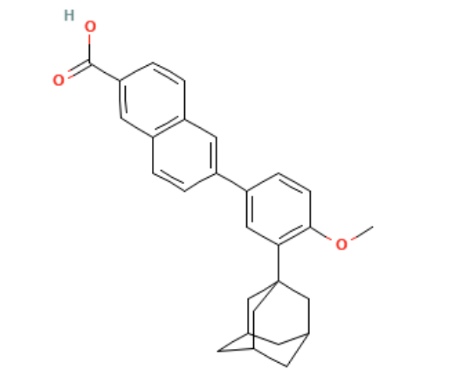
Clindamycin- (2S,4R)-N-[(1S,2S)-2-chloro-1-[(2R,3R,4S,5R,6R)-3,4,5-trihydroxy-6-methylsulfanyloxan-2-yl]propyl]-1-methyl-4-propylpyrrolidine-2-carboxamide
Intake routine/cycle
Daily dose
Take Adapalene exactly as your doctor recommends. The dose may change based on your condition and how well you respond. Do not take more than prescribed without consulting your doctor.
Missed Dose
If you forget to take your medicine, take the medication as soon as you remember. If it’s nearly time for your next dose, skip the missed one and continue with your regular schedule. Always consult the doctor before making any changes to your dosage.
Overdose
Do not apply more than the recommended amount of Adapalene + clindamycin cream on your skin, as using too much can increase the risk of side effects like skin irritation, redness, burning, or rash. If severe reactions such as swelling, blistering, or difficulty breathing occur, stop using it and seek medical attention immediately.
Storage
- Store the medicine at room temperature.
- Keep away from sunlight and moisture.
- Keep out of reach of children.
Directions for use
- Do not apply in the eye
- Make sure to apply evenly on the skin
- Do not stop using this medicated cream immediately unless allergic; complete the full course.
Adapalene + Clindamycin Summary
Adapalene 0.1% + clindamycin 1% gel is a topical retinoid medicine used mainly for acne vulgaris. It belongs to the class of third‑generation retinoids. Its off-label uses include for skin aging due to sunlight exposure, bumps on skin (keratosis pilaris), and hyperpigmentation. It works by binding to retinoic acid receptors, reducing skin cell damage, and reducing inflammation. Common side effects are dryness, redness, peeling, and increased sensitivity to sunlight. There are no major food interactions, but alcohol and harsh skin products can worsen irritation. People who are pregnant, breastfeeding, or have very sensitive skin should avoid it. Taking more than 50 mg orally may cause headaches, abdominal pain, diarrhea, and skin irritation.
FAQ’s
What are the uses of adapalene and clindamycin?
Adapalene + Clindamycin cream is used to treat acne, reduce fine lines and wrinkles, improve skin texture, and lighten dark spots.
What are the common side effects of adapalene and clindamycin gel?
Common side effects of adapalene + clindamycin are redness, peeling, dryness, or mild burning of the skin, which are usually mild and improve with continued use or moisturizer.
What are the main benefits of adapalene and clindamycin gel?
Adapalene + clindamycin gel helps treat acne by unclogging pores and reducing pimples and blackheads. It improves skin texture, making it smoother and softer, and can reduce fine lines, wrinkles, and dark spots. With regular use, it also helps prevent new acne from forming and promotes overall skin health by encouraging the turnover of skin cells, keeping the skin clear and healthy.
Does adapalene and clindamycin help with hair growth?
Adapalene + clindamycin is mainly for skin, not hair. However, some studies suggest that when used with other hair treatments (like minoxidil), it may help improve absorption and effectiveness, potentially supporting hair growth. Don’t combine these 2 ingredients on your own; it should be done only under the supervision of a doctor.
Reference
- National Center for Biotechnology Information. PubChem Compound Summary for CID 11562, Adapalene PubChem. Available from.
- Stat Pearls [Internet]. Treasure Island (FL): Stat Pearls Publishing: 2025 Jan Adapalene + clindamycin. Available from.
- Mayo Clinic. Adapalene (topical route). Mayo Clinic. Available from.
- WebMD. Adapalene (Differin):Uses, Side Effects, Interactions, Pictures, Warnings & Dosing. WebMD. Available from.
- Drugs.com. Adapalene + clindamycin topical: Uses, Side Effects, Interactions, Pictures, Warnings & Dosing. Drugs.com. Available from.
- PubChem [Internet]. Bethesda (MD): National Library of Medicine (US), National Center for Biotechnology Information; 2004-. PubChem Compound Summary for CID 446598, Clindamycin; [cited 2026 Mar. 7]. Available from.
- Mayo Clinic. Clindamycin (topical route) – Side effects & dosage. Mayo Clinic [Internet]. 2026 Jan 31 [cited 2026 Mar 7]. Available from.
Authors



Siva Krishna Adithya Bhumireddy completed a Bachelor of Pharmacy from GIET School of Pharmacy, affiliated with Andhra University, and from his 3rd year of graduation, he was working as a freelance medical and publication writer. Having expertise in systematic reviews and clinical research. With his keen interest and skills in research and documentation practices, he also reviewed more than 150 manuscripts from international journals like Elsevier, Springer Nature, and Sage Journals, and all the manuscripts were indexed and appeared in PubMed, Scopus, and Web of Science databases, and he received honorary recognition letters and certificates from all of them. Siva Krishna Adithya also published a few systematic, narrative reviews and a few chapters of international expertise.