Category- Allopathy
Medicine Highlights
| Uses | 1- To manage blood sugar level (Type 2 diabetes) 2- To treat polycystic ovarian disease (Off-label use) 3- To treat cardiovascular disease |
| Common Side Effects | 1- Bladder pain 2- Bloody or cloudy urine 3- Change in the color, amount, or odor of vaginal discharge 4- Difficult, burning, or painful urination 5- Frequent urge to urinate 6- Itching, stinging, or redness of the vaginal area 7- Lower back or side pain |
| Additional Information | Avoid drinking alcohol after taking metformin, as it causes severe hypoglycemia. |
| Storage | 1- The medicine should be stored at room temperature 2- Keep away from sunlight and moisture 3- Keep away from the reach of children |
| How to Take This Medicine | This medicine should be taken orally |
BrandName Summary
BrandName work together to manage type 2 diabetes by lowering blood sugar levels. Empagliflozin helps the kidneys flush out excess sugar, while metformin reduces sugar production and improves insulin response. This combo may also be used for PCOS (off label use)and heart health benefits. However, it can cause side effects like urinary infections, stomach discomfort, dizziness, or, in rare cases, serious conditions like metabolic acidosis. People with kidney issues, pregnancy, or high acid levels should consult their doctor before use.
Take the medicine as prescribed and avoid alcohol or tobacco, as they can increase risks. If you miss a dose, take it as soon as you remember, unless it’s close to the next one. Watch for overdose symptoms like sweating, confusion, or shaking-seek medical help immediately if they occur. Store it in a cool, dry place, away from children.
BrandName Uses
BrandName are oral medicine belonging to SGLT2 (sodium-glucose co-transporter 2) inhibitor and biguanide category of antidiabetic medicine respectively. This medicine is approved for use in following indications:
- To manage blood sugar level (Type 2 diabetes)
- Polycystic ovarian disease (Off-label use)
- Cardiovascular disease
BrandName side effects
More Common
- Bladder pain
- Bloody or cloudy urine
- Change in the color, amount, or odor of vaginal discharge
- Difficult, burning, or painful urination
- Frequent urge to urinate
- Itching, stinging, or redness of the vaginal area
- Lower back or side pain
- Pain during sexual intercourse
- Abdominal or stomach discomfort
- Cough or hoarseness
- Decreased appetite
- Diarrhea
- Fast or shallow breathing
- Fever or chills
- General feeling of discomfort
- Lower back or side pain
- Muscle pain or cramping
- Painful or difficult urination
- Sleepiness
Less Common
- Discharge with a strong odor from the penis
- Increased volume of pale, dilute urine
- Redness, itching, swelling, or pain around the penis
- Waking to urinate at night
- Anxiety
- Blurred vision
- Chest discomfort
- Cold sweats
- Coma
- Confusion
- Cool, pale skin
- Depression
- Difficult or labored breathing
- Dizziness
- Fast, irregular, pounding, or racing heartbeat or pulse
- Feeling of warmth
- Headache
- Increased hunger
- Increased sweating
- Nausea
- Nervousness
- Nightmares
- Redness of the face, neck, arms, and occasionally, upper chest
- Seizures
- Shakiness
- Slurred speech
- Tightness in the chest
- Unusual tiredness or weakness
How BrandName works
Empagliflozin helps lower blood sugar by blocking a protein called SGLT-2 in the kidneys. This prevents the body from reabsorbing sugar, making you pass more sugar through urine. Unlike other diabetes medications, it works without relying on insulin.
Metformin lowers blood sugar levels in three ways: it reduces the amount of sugar your liver makes, lowers how much sugar your body absorbs from food, and makes your body more responsive to insulin. This helps control both fasting and after-meal blood sugar levels.
Safety Measures and Warning
Pregnancy
If you are planning to conceive or are pregnant, inform your doctor, as this medicine is not safe to consume during the second and third trimesters.
Urinary Tract Infection
This medicine can increase the risk of urinary tract infections, so if you have one, inform your doctor.
Kidney Disease
Since metformin is excreted out of the body through the kidney and empagliflozin increases urine formation patients with pre-existing kidney disease should inform their doctor before taking the medication. The medication should not be prescribed to patients 80 years of age.
Metabolic Acidosis
If your body produces too much acid in a short period of time, a condition known as metabolic acidosis, inform your doctor, as metformin is not recommended for patients with this condition.
Directions for Use
- Take this medicine exactly as prescribed by your doctor, regularly at the same time each day.
- Do not stop taking BrandName without your doctor’s approval, even if you feel better.
- If you forget to take the medicine, take it as soon as you remember, unless it’s almost time for the next one, then just skip it.
BrandName Interaction with Other Medicines
Avoid taking BrandName with the following medicines, as it may increase or decrease the desired effect, or in worse cases, it could be fatal:
BrandName Interaction with Food Product
Avoid consuming alcohol and tobacco with BrandName as alcohol increases the risk of lactic acidosis (building up of lactic acid in the bloodstream).
Storage
- The medicine should be stored at room temperature
- Keep away from sunlight and moisture
- Keep away from the reach of children
BrandName Chemical Structure
IUPAC (International Union of Pure and Applied Chemistry)/ Chemical name-
Empagliflozin- (2S,3R,4R,5S,6R)-2-[4-Chloro-3-[[4-[(3S)-oxolan-3-yl]oxyphenyl]methyl]phenyl]-6-(hydroxymethyl)oxane-3,4,5-triol
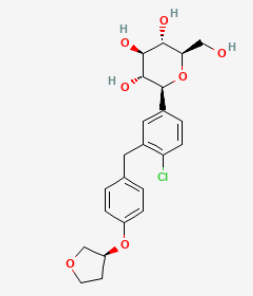
Metformin- 3-(diaminomethylidene)-1,1-dimethylguanidine.

Intake routine/cycle
Daily Dose
Take BrandName exactly as your doctor recommends. The dose may change based on your condition and how well you respond. Do not take more than prescribed without consulting your doctor.
Missed Dose
If you forget to take your medicine, take the medication soon as you remember. If it’s nearly time for your next dose, skip the missed one and continue with your regular schedule. Always consult the doctor before making any changes to your dosage.
Overdose
If you know someone taking this medicine who experiences trembling, shaking, sweating, and confusion, take them to the hospital immediately, as they may be overdosing.
FAQ’s
1- Which empagliflozin is best?
Empagliflozin works the same regardless of the brand, but it’s important to choose a tested version. SayaCare provides independently tested empagliflozin for added assurance.
2- What is the maximum dose of empagliflozin?
The maximum recommended dose is 25 mg per day. Taking more than this can lead to an overdose.
3- Which class of drug does empagliflozin belong to?
Empagliflozin belongs to the class of SGLT2 inhibitors, which help lower blood sugar by promoting glucose excretion through urine.
4- Can metformin cause weight loss?
Yes, metformin can cause a 2%-3% loss of body weight within the first year of starting the medicine.
5- How much metformin can be taken in a day?
The daily dose limit for metformin is 2,000 mg. This means you can take 4 tablets of 500 mg or 2 tablets of 1,000 mg per day, as instructed by your doctor.
6- Can metformin cause diarrhea?
Yes, one of the side effects of metformin is diarrhea.
7- Why is metformin used for PCOS?
In PCOS, there is a significant hormone imbalance that leads to the formation of cysts in the uterus. Metformin helps restore hormonal balance in the body and triggers ovulation, making it an effective treatment for PCOS.
8- Can metformin cause hair loss?
Yes, metformin is associated with hair loss. Long-term use of metformin can lead to vitamin B12 deficiency and anemia, which may cause symptoms like hair fall.
Reference
- Type 2 diabetes – Symptoms and causes. Mayo Clinic. Accessed September 14, 2024. Available from.
- Mayo Clinic. Gestational diabetes – Symptoms and causes. Mayo Clinic; 2023. Available from.
- World Health Organization. Polycystic Ovary Syndrome (PCOS). WHO; 2023. Available from.
- WebMD. Metformin oral: uses, side effects, interactions, pictures, warnings & dosing [Internet]. 2024 [cited 2024 Sep 14]. Available from.
- Metformin (Oral Route). Mayo Clinic. Available from.
- Lukas G, Fehse T, Ashton M. Metformin. In: StatPearls [Internet]. Treasure Island (FL): StatPearls Publishing; 2023. Available from.
- Stanford Medicine News Center. Many people with diabetes who take metformin lose weight [Internet]. Stanford Medicine; 2024 Mar [cited 2024 Dec 14]. Available from.
- NHS. How and when to take metformin [Internet]. National Health Service; [cited 2024 Dec 14]. Available from.
- Subramaniam K, Joseph MP, Babu LA. A Common Drug Causing a Common Side Effect at an Uncommon Time: Metformin-Induced Chronic Diarrhea and Weight Loss After Years of Treatment. Clin Diabetes. 2021 Apr;39(2):237-240. doi: 10.2337/cd20-0101. PMID: 33986581; PMCID: PMC8061542. Available from.
- Attia GM, Almouteri MM, Alnakhli FT. Role of Metformin in Polycystic Ovary Syndrome (PCOS)-Related Infertility. Cureus. 2023 Aug 31;15(8):e44493. doi: 10.7759/cureus.44493. PMID: 37791160; PMCID: PMC10544455. Available from.
- Jardiance Duo – Dosage Information [Internet]. MIMS Philippines; [cited 2025 Mar 29]. Available from.
- Empagliflozin – How and When to Take It [Internet]. NHS; [cited 2025 Mar 29]. Available from.
- Sizar O, Podder V, Talati R. Empagliflozin. [Updated 2023 May 29]. In: StatPearls [Internet]. Treasure Island (FL): StatPearls Publishing; 2025 Jan-. Available from.
- Empagliflozin (Oral Route) – Description [Internet]. Mayo Clinic; [cited 2025 Mar 29]. Available from.
Authors


Pranathi is a final year Pharm D student at Chalapathi Institute of Pharmaceutical Sciences. She loves learning and applying her knowledge in pharmacy and has a passion for writing, which allows her to express ideas clearly and creatively. She enjoys combining her technical skills with her love for writing and communication to make a meaningful impact. Currently she is working on a research paper about “Consanguineous marriages and its impact on children’s health” which will be published by the end of 2025.