Category- Allopathy
Medicine Highlights
| Uses | 1- To manage blood sugar level in type-2 diabetes mellitus 2- To treat cardiovascular disease 3- Reduce kidney disease |
| Common Side Effects | 1- Bladder pain 2- Bloody or cloudy urine 3- Change in the color, amount, or odor of vaginal 4- Discharge 5- Difficult, burning, or painful urination 6- Frequent urge to urinate 7- Itching, stinging, or redness of the vaginal area 8- Lower back or side pain 9- Pain during sexual intercourse 10- Headache |
| Additional Information | Avoid taking alcohol or tobacco with this medicine. |
| Storage | 1- The medicine should be stored at room temperature 2- Keep away from sunlight and moisture 3- Keep away from the reach of children |
| How to Take This Medicine | The medicine should be taken orally |
Empagliflozin + Linagliptin Summary
Empagliflozin and linagliptin work together to manage type 2 diabetes by lowering blood sugar levels. Empagliflozin helps the kidneys flush out excess sugar, while linagliptin reduces sugar production and improves insulin response. This combo may also be used for kidney disease and heart health benefits. However, it can cause side effects like urinary infections, stomach discomfort, dizziness, or, in rare cases, serious conditions like metabolic acidosis. People with kidney issues, pregnancy, or high acid levels should consult their doctor before use.
Take the medicine as prescribed and avoid alcohol or tobacco, as they can increase risks. If you miss a dose, take it as soon as you remember, unless it’s close to the next one. Watch for overdose symptoms like sweating, confusion, or shaking-seek medical help immediately if they occur. Store it in a cool, dry place, away from children.
Empagliflozin + Linagliptin Uses
Empagliflozin and linagliptin are oral medicine belonging to SGLT2 inhibitor and dipeptidyl peptidase-4 (DPP-4) inhibitors category of antidiabetic medicine respectively. This medicine is approved for use in following indications:
- Type-2 diabetes mellitus
- Cardiovascular disease
Empagliflozin + Linagliptin side effects
More Common
- Anxiety
- Blurred vision
- Chills
- Cold sweats
- Confusion
- Cool, pale skin
- Depression
- Dizziness
- Fast heartbeat
- Headache
- Increased hunger
- Loss of consciousness
- Nausea
- Nightmares
- Seizures
- Shakiness
- Slurred speech
- Unusual tiredness or weakness
- Bladder pain
- Bloody or cloudy urine
- Change in the color, amount, or odor of vaginal discharge
- Difficult, burning, or painful urination
- Frequent urge to urinate
- Itching, stinging, or redness of the vaginal area
- Lower back or side pain
- Pain during sexual intercourse
Less Common
- Discharge with a strong odor from the penis
- Increased volume of pale, dilute urine
- Redness, itching, swelling, or pain around the penis
- Waking to urinate at night
- Bloating
- Constipation
- Cough
- Fever
- Hives, welts, itching, or skin rash
- Large, hard skin blisters
- Large, hive-like swelling on the face, eyelids, lips, tongue, throat, hands, legs, feet, or sex organs
- Loss of appetite
- Pains in the stomach, side, or abdomen, possibly radiating to the back
- Puffiness or swelling of the eyelids or around the eyes, face, lips, or tongue
- Redness of the skin
- Severe joint pain
How Empagliflozin + Linagliptin works
Empagliflozin helps lower blood sugar by blocking a protein called SGLT-2 in the kidneys. This prevents the body from reabsorbing sugar, making you pass more sugar through urine. Unlike other diabetes medications, it works without relying on insulin.
Linagliptin controls blood sugar by preventing the breakdown of two hormones, GLP-1 and GIP. These hormones increase insulin release and reduce sugar production, helping to keep blood sugar levels stable in people with Type 2 diabetes.
Safety Measures and Warning
Pregnancy
If you are planning to conceive or are pregnant, inform your doctor, as this medicine is not safe to consume during the second and third trimesters.
Urinary Tract Infection
This medicine can increase the risk of urinary tract infections, so if you have one, inform your doctor.
Allergy/Hypersensitivity
If you have trouble breathing, body swelling, or a drop in blood pressure after taking this medication, you may be allergic to it. If you have a known allergy to this medicine, inform your doctor.
Joint Pain
If you already have joint pain, inform your doctor, as this medication may worsen the pain.
Directions for Use
- Take this medicine exactly as prescribed by your doctor, regularly at the same time each day.
- Do not stop taking empagliflozin + linagliptin without your doctor’s approval, even if you feel better.
- If you forget to take the medicine, take it as soon as you remember, unless it’s almost time for the next one, then just skip it.
Empagliflozin + Linagliptin Interaction with Other Medicines
Avoid taking empagliflozin + linagliptin with the following medicines, as it may increase or decrease the desired effect, or in worse cases, it could be fatal:
Empagliflozin + Linagliptin Interaction with Food Product
Empagliflozin + linagliptin does not interact with any food products, but alcohol should be avoided before and after taking the medicine, as it can increase or decrease the effect of this medicine.
Storage
- The medicine should be stored at room temperature
- Keep away from sunlight and moisture
- Keep away from the reach of children
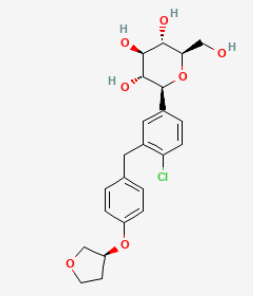
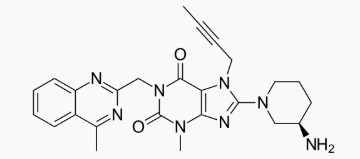
Empagliflozin + Linagliptin Chemical Structure
IUPAC (International Union of Pure and Applied Chemistry)/ Chemical name-
Empagliflozin-(2S,3R,4R,5S,6R)-2-[4-Chloro-3-[[4-[(3S)-oxolan-3-yl]oxyphenyl]methyl]phenyl]-6-(hydroxymethyl)oxane-3,4,5-triol
Linagliptin- 8-[(3R)-3-Aminopiperidin-1-yl]-7-(but-2-yn-1-yl)-3-methyl-1-[(4-methylquinazolin-2-yl)methyl]-3,7-dihydro-1H-purine-2,6-dione
Intake routine/cycle
Daily Dose
Take this medicine exactly as your doctor recommends. The dose may change based on your condition and how well you respond. Do not take more than prescribed without consulting your doctor.
Missed Dose
If you forget to take your medicine, take the medication soon as you remember. If it’s nearly time for your next dose, skip the missed one and continue with your regular schedule. Always consult the doctor before making any changes to your dosage.
Overdose
Overdosing symptoms of linagliptin and empagliflozin include stomach pain, nausea, vomiting, dizziness, trembling, shaking, sweating, and confusion. If you know someone who has taken this medicine and is experiencing these symptoms, rush them to the hospital immediately.
Dietary and Lifestyle Management
Diabetes cannot be cured permanently, but with a healthy lifestyle and exercise, it can be managed easily. Diabetic patients are advised to monitor their blood sugar level before and after meals. Following are the natural ways to manage blood sugar levels:
1- Food
Eating healthy is important for managing diabetes. Carbohydrates have a huge impact on our blood sugar level, as they break into sugar (glucose), which is poison for diabetic patients as they already have elevated blood sugar levels. Therefore, it is essential for a diabetic patient to count the amount of carbohydrates he is taking.
2- Do Exercise
Exercise plays an important role in managing diabetes. When our body moves and gets active, the muscles use blood sugar for energy, resulting in a low amount of sugar in our bloodstream. Adults are advised to exercise for at least 150 minutes a week.
3- Medicine
Take your medicine on time, as it is designed to lower blood sugar levels.
4- Avoid Alcohol
Consumptions of alcohol while on therapy with metformin increase the risk of lactic acidosis, that is, lactic acid increases in the bloodstream. Lactic acid can cause symptoms like muscle pain, difficulty breathing, stomach pain, and weakness. Alcohol also decreases the level of blood sugar. It is generally recommended to avoid alcohol while on empagliflozin + sitagliptin.
FAQ’s
1- What is the maximum daily dose of linagliptin?
You should not take more than 5 mg of linagliptin per day.
2- Does linagliptin cause weight loss?
No, linagliptin does not cause weight loss.
3- Which empagliflozin is best?
Empagliflozin works the same regardless of the brand, but it’s important to choose a tested version. SayaCare provides independently tested empagliflozin for added assurance.
4- What is the maximum dose of empagliflozin?
The maximum recommended dose is 25 mg per day. Taking more than this can lead to an overdose.
5- Which class of drug does empagliflozin belong to?
Empagliflozin belongs to the class of SGLT2 inhibitors, which help lower blood sugar by promoting glucose excretion through urine.
Reference
- NHS. About linagliptin [Internet]. London: National Health Service (NHS); [cited 2025 Mar 31]. Available from.
- NHS. How and when to take linagliptin [Internet]. London: National Health Service (NHS); [cited 2025 Mar 31]. Available from.
- MedlinePlus. Linagliptin: MedlinePlus drug information [Internet]. Bethesda (MD): National Library of Medicine (US); [cited 2025 Mar 31]. Available from.
- DrugBank. Linagliptin [Internet]. Edmonton (AB): DrugBank Online; [cited 2025 Mar 31]. Available from.
- Mayo Clinic. Linagliptin (oral route) – description [Internet]. Rochester (MN): Mayo Clinic; [cited 2025 Mar 31]. Available from.
- Jardiance Duo – Dosage Information [Internet]. MIMS Philippines; [cited 2025 Mar 29]. Available from.
- Empagliflozin – How and When to Take It [Internet]. NHS; [cited 2025 Mar 29]. Available from.
- Sizar O, Podder V, Talati R. Empagliflozin. [Updated 2023 May 29]. In: StatPearls [Internet]. Treasure Island (FL): StatPearls Publishing; 2025 Jan-. Available from.
- Empagliflozin (Oral Route) – Description [Internet]. Mayo Clinic; [cited 2025 Mar 29]. Available from.
Authors


Mahak Phartyal completed her bachelor’s in pharmacy from Veer Madho Singh Bhandari Uttarakhand Technical University. She previously worked as a Medical Writer at Meril Life Sciences, where she wrote numerous scientific abstracts for conferences such as India Live 2024 and the European Society of Cardiology (ESC). During her college years, she developed a keen research interest and published an article titled “Preliminary Phytochemical Screening, Physicochemical and Fluorescence Analysis of Nyctanthes arbor-tristis and Syzygium cumini Leaves.