Category- Allopathy
Medicine Highlights
| Uses | 1. To treat Muscle weakness and degeneration (Duchenne Muscular Dystrophy) 2. To control the symptoms of Duchenne Muscular Dystrophy |
| Common Side Effects | 1. Puffy, rosy face 2. Weight gain or increased appetite 3. Infection in the nose or throat, sore throat, or common cold symptoms 4. Cough 5. Frequent daytime peeing 6. Excessive hair growth 7. Obesity around the belly area |
| Additional Information | 1. It should not be given to children below 2 years 2. This medicine is available only with your doctor’s prescription. |
| Storage | 1. The medicine should be stored at room temperature. 2. Keep away from sunlight and moisture. 3. Keep away from the reach of children. |
| How to Take This Medicine | Swallow this medicine with water. |
Deflazacort Summary
Deflazacort is a corticosteroid medicine used to reduce inflammation and suppress the immune system, commonly prescribed for conditions like Duchenne muscular dystrophy, autoimmune disorders, and severe allergies. It helps improve muscle strength and slow disease progression but doesn’t cure the underlying condition. Common side effects include weight gain, increased appetite, puffiness in the face, frequent urination, and sleep issues. People with serious infections, uncontrolled diabetes, eye problems like glaucoma, or a history of stomach ulcers should avoid it unless advised by a doctor. It can interact with many medicines, especially those affecting liver enzymes (like ketoconazole or rifampicin), and grapefruit juice should be avoided as it may increase the drug’s levels in the body, raising the risk of side effects. Always take it exactly as prescribed and never stop suddenly without medical guidance.
Deflazacort Uses
Deflazacort 6 mg is an oral medicine belonging to the category of oral corticosteroids and is used to treat muscle weakness and degeneration related to genetics, also known as Duchenne Muscular Dystrophy (DMD).
Deflazacort side effects
More Common
- Puffy, rosy face
- Weight gain or increased appetite
- Infection in the nose or throat, sore throat, or common cold symptoms
- Cough
- Frequent daytime peeing
- Excessive hair growth
- Obesity around the belly area
Less Common
- Severe Allergic Reactions
- Infections
- Breathing problems or wheezing
- Racing heart
- Fever or general ill feeling
- Swollen lymph nodes
- Swelling of the face, lips, mouth, tongue, or throat
- Trouble swallowing or throat tightness
- Itching, skin rash, or pale red bumps on the skin called hives
- Nausea or vomiting
- Dizziness, feeling lightheaded, or fainting
- Stomach cramps
- Joint pain
How deflazacort works
Deflazacort works by calming the body’s immune system and reducing inflammation. Once inside the body, it turns into its active form and attaches to special switches called glucocorticoid receptors inside cells. This action slows down the release of chemicals that cause swelling and damage, especially in diseases like Duchenne muscular dystrophy, where muscles weaken over time. By doing this, deflazacort helps protect muscles, improve strength, and delay complications. For patients, it’s not a cure but a helpful tool to keep movement and independence going longer.
Safety Measures and Warning
Pediatrics
Deflazacort is not recommended to be used in children under 2 years of age, as it can cause low birth weight, breathing problems, and gasping syndrome. So, meet the doctor in any case of pediatric populations.
Liver Problems
Deflazacort is not recommended to be used in patients having Hepatitis B, as it can worsen the viral conditions and increase the chance of infections in patients. So, meet a doctor before using it.
Infections
Deflazacort can weaken (suppress) your immune system, and you may get an infection more easily. It is also contraindicated in patients with low vision and low bone density. You may need frequent medical tests and consult doctor frequently
Deflazacort Interaction with Food Product
Avoid consuming grapefruit and grapefruit juice, which may interact with deflazacort and lead to unwanted side effects like allergies and skin rashes. Alcohol and smoking can increase the potential of side effects occurring and worsen the patient’s condition.
Deflazacort Interaction with Other Medicines
Avoid taking deflazacort 6 mg with the following medicines, as it may increase or decrease the desired effect, or in worse cases, it could be fatal:
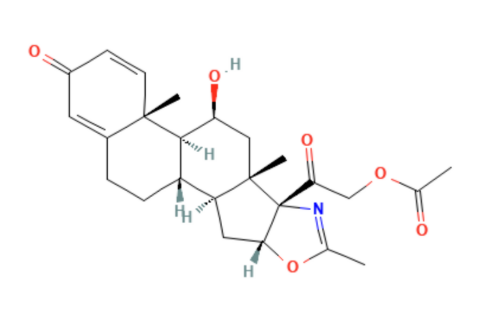
Deflazacort Chemical Structure
IUPAC (International Union of Pure and Applied Chemistry)/Chemical name
(11β,16β)-21-(Acetyloxy)-11-hydroxy-2′-methyl-5′H-pregna-1,4-dieno[17,16-d]oxazole-3,20-dione
Intake routine/cycle
Daily dose
Take deflazacort exactly as your doctor recommends. The dose may change based on your condition and how well you respond. Do not take more than prescribed without consulting your doctor.
Missed Dose
If you forget to take your medicine, take the medication as soon as you remember. If it’s nearly time for your next dose, skip the missed one and continue with your regular schedule. Always consult the doctor before making any changes to your dosage
Overdose
It is not recommended to take more than 130 mg of deflazacort per day, as it may cause side effects like neurological disorders, heart problems, hormonal imbalances, bone weakness, and infections. If you know someone who takes this medicine and has these symptoms, then rush them to the hospital immediately.
Storage
- Store the medicine at room temperature.
- Keep away from sunlight and moisture.
- Keep out of reach of children.
Directions for use
- If you forget to take deflazacort, take it as soon as you remember. If it’s almost time for your next dose, skip the missed dose.
- Take deflazacort exactly as prescribed by your doctor, at the same time each day.
- Do not stop taking deflazacort without your doctor’s approval, even if you feel better.
FAQ’s
What is the deflazacort tablet dose per day?
The oral dose of deflazacort per day is below 120 mg, as recommended by the doctor.
What is the deflazacort dosage for adults?
The oral dose of deflazacort per day should not be more than 120 mg per day.
What is the deflazacort dosage for asthma?
The dosage should be tailored by the doctor based on the severity of asthma the patient is having.
What are deflazacort tablet side effects?
The side effects include serious infections, hormonal imbalances, heart problems, and bone weakness.
Reference
- Drugs.com. Deflazacort: MedlinePlus Drug Information [Internet]. Drugs.com; [cited 2025 Jun 28]. Available from.
- National Center for Biotechnology Information. PubChem Compound Summary for CID 3033865, Deflazacort [Internet]. Bethesda (MD): National Library of Medicine (US); [cited 2025 Jun 28]. Available from.
- WebMD. Deflazacort oral: Uses, side effects, interactions, pictures, warnings & dosing [Internet]. WebMD; [cited 2025 Jun 28]. Available from.
- Mayo Clinic. Deflazacort (Oral Route) Description and Brand Names [Internet]. Mayo Clinic; [cited 2025 Jun 28]. Available from.
Authors



Siva Krishna Adithya Bhumireddy completed a Bachelor of Pharmacy from GIET School of Pharmacy, affiliated with Andhra University, and from his 3rd year of graduation, he was working as a freelance medical and publication writer. Having expertise in systematic reviews and clinical research. With his keen interest and skills in research and documentation practices, he also reviewed more than 150 manuscripts from international journals like Elsevier, Springer Nature, and Sage Journals, and all the manuscripts were indexed and appeared in PubMed, Scopus, and Web of Science databases, and he received honorary recognition letters and certificates from all of them. Siva Krishna Adithya also published a few systematic, narrative reviews and a few chapters of international expertise.