Category- Allopathy
Medicine Highlights
| Uses | 1. To manage Gastroesophageal reflux disease (GERD) 2. To treat indigestion, bloating, early satiety (dyspepsia) 3. To control nausea and vomiting. 4. To manage pain, discomfort, and fullness of stomach. (Gastritis) |
| Common Side Effects | 1. Diarrhea 2. Abdominal pain 3. Headache 4. Dizziness 5. Increased salivation |
| Additional Information | 1. Take it before the meals to get maximum effect. 2. As this is a prescription medicine, use this medicine with a doctor’s recommendation. |
| Storage | 1. The medicine should be stored at room temperature. 2. Keep away from sunlight and moisture. 3. Keep away from the reach of children |
| How to Take This Medicine | Take this medicine orally with a sip of water. |
Itopride Uses
Itopride 50 mg is an oral medicine belonging to the category of histamine inhibitors and is used to treat
- Gastroesophageal reflux disease (GERD)
- Functional dyspepsia (indigestion, bloating, early satiety)
- Nausea and vomiting
- Heartburn
- Gastritis-related symptoms (pain, discomfort, fullness)
Itopride side effects
More Common
- Diarrhea
- Abdominal pain
- Headache
- Dizziness
- Increased salivation
Less Common
- Constipation
- Fatigue or weakness
- Rash or itching (allergic reaction)
- Elevated liver enzymes (rare)
- Gynecomastia (very rare, due to dopamine antagonism)
How Itopride works
Itopride improves stomach movement by blocking dopamine, a chemical that slows digestion, and increasing acetylcholine, a chemical that speeds up stomach and intestinal activity. This dual action enhances gastric emptying and intestinal transit. As a result, food passes more efficiently through the digestive tract.
Safety Measures and Warning
Pregnancy
Itopride is not recommended during pregnancy because there is limited human safety data, and animal studies have shown potential risks; doctors usually avoid prescribing it unless the expected benefit clearly outweighs possible harm.
Breastfeeding
Itopride is usually avoided while breastfeeding because it can enter breast milk and may affect the baby. Doctors only use it if necessary, and safer medicines are usually chosen first.
Liver Problems
Itopride should be used with caution in patients with impaired liver function, as it can raise drug levels and increase side effects. Always consult a doctor before using it.
Itopride Interaction with Food Product
Alcohol and smoking can interact with the medicine, simultaneously affecting the drug’s action, and can cause an increase or decrease in the drug’s action.
Itopride Interaction with Other Medicines
Avoid taking Itopride 50 mg with the following medicines, as it may increase or decrease the desired effect, or in worse cases, it could be fatal:
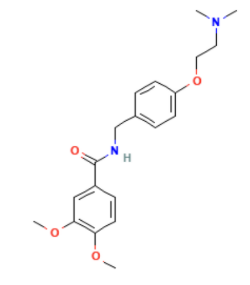
Itopride Chemical Structure
IUPAC (International Union of Pure and Applied Chemistry)/ Chemical name
N-[[4-(2-dimethylaminoethoxy) phenyl]methyl]-3,4-dimethoxybenzamide
Intake routine/cycle
Daily dose
Take Itopride exactly as your doctor recommends. The dose may change based on your condition and how well you respond. Do not take more than prescribed without consulting your doctor.
Missed Dose
If you forget to take your medicine, take the medication as soon as you remember. If it’s nearly time for your next dose, skip the missed one and continue with your regular schedule. Always consult the doctor before making any changes to your dosage.
Overdose
It is not recommended to take more than 1000 mg of itopride per day, as it may cause severe overdosing effects like diarrhea, nausea, dizziness, kidney and liver damage, heart problems, and allergies. If you face any of the severe effects, visit the doctor.
Storage
- Store the medicine at room temperature
- Keep away from sunlight and moisture
- Keep out of reach of children
Directions for use
- Take Itopride exactly as prescribed by your doctor, at the same time each day.
- Do not stop taking Itopride without your doctor’s approval, even if you feel better.
- If you forget to take Itopride, take it as soon as you remember. If it’s almost time for your next dose, skip the missed dose.
Itopride Summary
Itopride is a prokinetic medicine that improves stomach movement by blocking dopamine’s slowing effect and boosting acetylcholine’s speeding effect. Though not FDA approved, it is widely used in Asia for indigestion, bloating, nausea, reflux, and sometimes gastroparesis. Side effects include diarrhea, abdominal pain, dizziness, headache, and rarely breast changes from raised prolactin. Food does not alter absorption, but alcohol or sedatives may worsen dizziness. Extra care is needed in elderly patients, pregnant or breastfeeding women, and those with liver disease. Taking more than 800 mg per day can cause severe nausea, tremors, confusion, low blood pressure, and abnormal movements requiring urgent care.
FAQ’s
What are the uses of Itopride tablets?
Itopride 50 mg is used to improve stomach and intestinal movement, helping relieve indigestion, bloating, nausea, vomiting, and reflux symptoms. It is also prescribed in some regions for functional dyspepsia and occasionally off label for gastroparesis
What are the side effects of Itopride tablets?
Itopride tablets may cause diarrhea, abdominal pain, headache, dizziness, and fatigue as common side effects. Less frequent effects include rash, increased prolactin leading to breast changes, tremors, low blood pressure, and mild liver enzyme changes.
What is the maximum recommended dose of itopride per day?
The maximum recommended dose of itopride is 150 mg per day, usually taken as 50 mg three times daily. Higher doses are not advised because they increase the risk of side effects such as diarrhea, dizziness, and prolactin‑related changes.
What is the mechanism of action of itopride?
Itopride works by blocking dopamine D2 receptors, which normally slows down stomach emptying, and by inhibiting acetylcholinesterase, which increases acetylcholine levels that stimulate stomach and intestinal movement. Together, these actions enhance gastric emptying and improve overall gastrointestinal motility.
Reference
- DrugBank Online. Itopride [Internet]. Edmonton (AB): DrugBank; 2025 [cited 2025 Dec 23]. Available from.
- PubMed. Effects of itopride hydrochloride on gastric motility in functional dyspepsia patients: a randomized trial [Internet]. Bethesda (MD): National Library of Medicine; 2025 [cited 2025 Dec 23]. Available from.
- PubChem. Itopride [Internet]. Bethesda (MD): National Library of Medicine (US); 2025 [cited 2025 Dec 23]. Available from.
- Practo. Itoprid 50 mg Tablet: Uses, Side Effects, Price & Substitutes [Internet]. Bengaluru (IN): Practo Technologies Pvt Ltd; 2025 [cited 2025 Dec 23]. Available from.
Authors



Siva Krishna Adithya Bhumireddy completed a Bachelor of Pharmacy from GIET School of Pharmacy, affiliated with Andhra University, and from his 3rd year of graduation, he was working as a freelance medical and publication writer. Having expertise in systematic reviews and clinical research. With his keen interest and skills in research and documentation practices, he also reviewed more than 150 manuscripts from international journals like Elsevier, Springer Nature, and Sage Journals, and all the manuscripts were indexed and appeared in PubMed, Scopus, and Web of Science databases, and he received honorary recognition letters and certificates from all of them. Siva Krishna Adithya also published a few systematic, narrative reviews and a few chapters of international expertise.