Category- Allopathy
Medicine Highlights
| Uses | 1. To treat Ulcerative colitis 2. To treat Rheumatoid arthritis 3. To treat Juvenile Idiopathic Arthritis (arthritis in children) 4. To reduce bowel inflammation 5. To control diarrhea 6. To control rectal bleeding. |
| Common Side Effects | 1. Aching of joints 2. Fever 3. Headache (continuing) 4. Increased sensitivity of the skin to sunlight 5. Skin rash or itching 6. Vomiting |
| Additional Information | 1. Tears, urine, and sweat may turn yellow and orange. This is harmless but important to know, so patients don’t panic. 2. Take this medication with food to reduce stomach upset. 3. Patients are recommended to use sunscreen, as the drug causes photosensitivity. |
| Storage | 1. The medicine should be stored at room temperature. 2. Keep away from sunlight and moisture. 3. Keep away from the reach of children |
| How to Take This Medicine | Take this medicine orally with a sip of water. |
Sulfasalazine Uses
Sulfasalazine 1000 mg is an oral medicine belonging to the category of aminosalicylates and is used for the following indications:
- Ulcerative colitis
- Rheumatoid arthritis
- Juvenile Idiopathic Arthritis (arthritis in children)
- Bowel inflammation
- Diarrhea
- Rectal bleeding
Sulfasalazine side effects
More Common
- Aching of joints
- Fever
- Headache (continuing)
- Increased sensitivity of the skin to sunlight
- Skin rash or itching
- Vomiting
Less Common
- Back, leg, or stomach pains
- Bleeding gums
- Bluish color of the fingernails, lips, skin, palms, or nail beds
- Chills
- Dark urine
- Difficulty breathing
- Fever
- General body swelling
- Headache
- Loss of appetite
- Nausea
- Nosebleeds
- Pale skin
- Sore throat
- Trouble breathing
- Unusual bleeding or bruising
- Unusual tiredness or weakness
- Yellowing of the eyes or skin
How Sulfasalazine works
Sulfasalazine works by breaking down in the intestine into two parts: 5‑aminosalicylic acid, which stays in the gut and reduces inflammation chemicals, and sulfapyridine, which enters the blood and helps calm the immune system. In ulcerative colitis and Crohn’s disease, it suppresses immune activity in the bowel lining, which results in reducing swelling and bleeding. In rheumatoid and juvenile arthritis, it slows the immune attack on the joints, easing stiffness and preventing damage.
Safety Measures and Warning
Pregnancy
The safety of sulfasalazine in pregnancy is not established. Inform your doctor if you are pregnant or planning to conceive.
Breastfeeding
Sulfasalazine is not usually recommended during breastfeeding because there is no reliable information on whether it passes into breast milk or how it might affect a nursing infant.
Kidney and Liver Problems
Patients with previous liver and kidney damage are not recommended to take the medicine, as it can cause liver and kidney toxicity while being removed from the body.
Heart Problems
Sulfasalazine is not usually used for heart problems, but if someone already has heart disease doctors are careful with it, because it can sometimes affect the blood vessels and in rare cases make heart issues worse.
Sulfasalazine Interaction with Food Product
The use of drinks that contain alcohol raises your risk of low blood pressure from Sulfasalazine. If you drink alcohol, talk to your doctor. You may need to have your blood pressure monitored while you take this drug.
Sulfasalazine Interaction with Other Medicines
Avoid taking Sulfasalazine 1000 mg with the following medicines, as it may increase or decrease the desired effect, or in worse cases, it could be fatal:
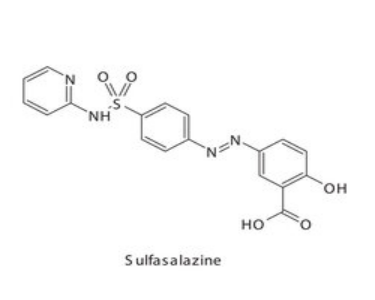
Sulfasalazine Chemical Structure
IUPAC (International Union of Pure and Applied Chemistry)/ Chemical name
2‑hydroxy‑5‑[(E)‑2‑{4‑[(pyridin‑2‑yl)sulfamoyl]phenyl}diazen‑1‑yl]benzoic acid
Intake routine/cycle
Daily dose
Take Sulfasalazine exactly as your doctor recommends. The dose may change based on your condition and how well you respond. Do not take more than prescribed without consulting your doctor.
Missed Dose
If you forget to take your medicine, take the medication as soon as you remember. If it’s nearly time for your next dose, skip the missed one and continue with your regular schedule. Always consult the doctor before making any changes to your dosage.
Overdose
It is not recommended to take more than 4000 mg of Sulfasalazine per day, as it may cause severe overdosing effects like extreme drowsiness, confusion, unconsciousness, sweating, double vision, low blood pressure, and slurred speech. Immediately seek medical attention and meet the doctor if necessary.
Storage
- Store the medicine at room temperature
- Keep away from sunlight and moisture
- Keep out of reach of children
Directions for use
- Take Sulfasalazine exactly as prescribed by your doctor, at the same time each day.
- Do not stop taking Sulfasalazine without your doctor’s approval, even if you feel better.
- If you forget to take Sulfasalazine, take it as soon as you remember. If it’s almost time for your next dose, skip the missed dose.
Sulfasalazine Summary
Sulfasalazine is a medicine that belongs to the sulfonamide and aminosalicylate group and is used to calm inflammation in the gut and joints by blocking certain chemicals that cause swelling and pain. It is approved for ulcerative colitis, rheumatoid arthritis, bowel inflammation, diarrhea, and rectal bleeding. Common side effects of this medicine are nausea, headache, rash, stomach upset, and orange urine or tears. Taking it with food helps reduce stomach irritation, while alcohol can stress the liver. It should be avoided usually in pregnant women, men planning children, and people with liver, kidney, or blood problems. Overdose occurs by taking more than 2000 mg of sulfasalazine and can be dangerous and may require medical care. In simple terms, sulfasalazine is a slow acting medicine that cools down inflammation but requires hydration, sun protection, and regular blood tests to stay safe.
FAQ’s
Who should avoid sulfasalazine tablets?
People who should avoid sulfasalazine include those with allergies to sulfa drugs or aspirin‑like medicines, rare blood conditions such as porphyria, severe liver or kidney problems, urinary or intestinal blockage, or a genetic condition called G6PD deficiency.
What are the side effects of Sulfasalazine tablets?
Sulfasalazine tablets can cause nausea, headache, rash, stomach upset, and orange‑yellow urine or tears. Rarely, they may lead to liver problems, low blood counts, or allergic reactions that need urgent medical care.
Which class does sulfasalazine belong to?
Sulfasalazine belongs to the drug classes of sulfonamides and amino salicylates, and it is also categorized as a slow‑acting disease‑modifying anti‑rheumatic drug (DMARD).
What is Sulfasalazine’s highest dose?
The highest recommended dose of sulfasalazine in adults is about 4 grams per day, divided into smaller doses. Going above this increases the risk of toxicity and side effects
Reference
- StatPearls [Internet]. Treasure Island (FL): StatPearls Publishing; 2025 Jan–. Sulfasalazine. [Updated 2024 Dec 12]. Available from.
- Mayo Clinic. Sulfasalazine (oral route) [Internet]. Rochester (MN): Mayo Foundation for Medical Education and Research; 2025. Available from.
- Drugs.com. Sulfasalazine: Uses, Dosage, Side Effects [Internet]. Drugs.com; 2025. Available from.
- National Center for Biotechnology Information (NCBI). PubChem Compound Summary for CID 5359476, Sulfasalazine [Internet]. Bethesda (MD): National Library of Medicine; 2025. Available from.
Authors



Siva Krishna Adithya Bhumireddy completed a Bachelor of Pharmacy from GIET School of Pharmacy, affiliated with Andhra University, and from his 3rd year of graduation, he was working as a freelance medical and publication writer. Having expertise in systematic reviews and clinical research. With his keen interest and skills in research and documentation practices, he also reviewed more than 150 manuscripts from international journals like Elsevier, Springer Nature, and Sage Journals, and all the manuscripts were indexed and appeared in PubMed, Scopus, and Web of Science databases, and he received honorary recognition letters and certificates from all of them. Siva Krishna Adithya also published a few systematic, narrative reviews and a few chapters of international expertise.