Category- Allopathy
Medicine Highlights
| Uses | 1- To treat heart failure 2- To treat high blood pressure (Hypertension) |
| Common Side Effects | 1- Feeling dizzy 2- Headaches 3- Nausea 4- Vomiting 5- Diarrhea 6- Pain in your joints or muscles |
| Additional Information | Diabetic patients should not take this medicine. |
| Storage | 1- The medicine should be stored at room temperature 2- Keep away from sunlight and moisture 3- Keep away from the reach of children |
| How to Take This Medicine | The medicine should be taken orally |
Valsartan Summary
Valsartan 80 mg is an angiotensinogen receptor blocker (ARB) medicine used to treat high blood pressure and heart failure by relaxing blood vessels. It should be taken as prescribed without sudden discontinuation. Common side effects include dizziness, headache, and nausea, while rare ones like irregular heartbeat or difficulty breathing require immediate attention. Patients with kidney issues should consult their doctor, and alcohol and tobacco should be avoided.
Lifestyle changes like regular exercise, a balanced diet (rich in spinach, bananas, and garlic), quitting smoking, limiting alcohol, and getting 7-8 hours of sleep can enhance its effectiveness in managing blood pressure and heart health.
Valsartan Uses
Valsartan 80 mg is an oral medicine belonging to the class of angiotensinogen receptor blocker (ARB) medicines. It is used for the following indications:
- Heart failure
- High blood pressure (Hypertension)
Direction for Use
- Take valsartan exactly as prescribed by your doctor, regularly at the same time each day.
- Do not stop taking valsartan without your doctor’s approval, even if you feel better.
- If you forget to take the medicine, take it as soon as you remember, unless it’s almost time for the next one, then just skip it.
Valsartan Side Effects
More Common
- Feeling dizzy
- Headaches
- Nausea
- Vomiting
- Diarrhea
- Pain in your joints or muscles
Less common
- Bloody urine
- Cold sweats
- Confusion
- Decreased frequency or amount of urine
- Difficult breathing
- Dizziness, faintness, or lightheadedness when getting up from a lying position
- Fainting
- Increased thirst
- Irregular heartbeat
- Loss of appetite
- Lower back or side pain
- Nausea
- Nervousness
- Numbness or tingling in the hands, feet, or lips
- Swelling of the face, fingers, or lower legs
- Unusual tiredness or weakness
- Vomiting
- Weakness or heaviness of the legs
- Weight gain
How Valsartan Works
Valsartan reduces blood pressure by blocking a protein called angiotensin II from binding to the AT1 receptor. By preventing this binding, valsartan reduces vessel contraction, leading to a decrease in blood pressure.
Safety Measure and Warning
1- Allergy/Hypersensitivity
If you have previously had an allergy to this medicine then inform your doctor before he prescribes you the medicine.
2- Kidney Disease
If you have an existing kidney problem, inform your doctor immediately, as this medicine can worsen the condition.
Valsartan Interaction with Other Medicine
Avoid taking valsartan 80 mg with the following medicines, as it may increase or decrease the desired effect, or in worse cases, it could be fatal:
Valsartan Interaction with Food Products
Alcohol and tobacco should not be taken with this medicine, as they can either decrease or increase its effects.
Storage
- The medicine should be stored at room temperature
- Keep away from sunlight and moisture
- Keep away from the reach of children
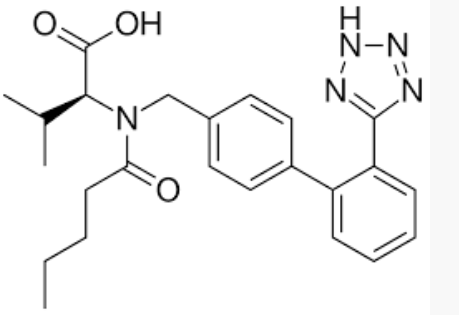
Valsartan Chemical Structure
IUPAC (International Union of Pure and Applied Chemistry)/ Chemical name
(2S)-3-methyl-2-[pentanoyl-[[4-[2-(2H-tetrazol-5- yl)phenyl]phenyl]methyl]amino]butanoic acid
Intake Routine/Cycle
Daily Dose
Take valsartan exactly as your doctor recommends. The dose may change based on your condition and how well you respond. Do not take more than prescribed without consulting your doctor.
Missed Dose
If you forget to take your medicine, take the medication soon as you remember. If it’s nearly time for your next dose, skip the missed one and continue with your regular schedule. Always consult the doctor before making any changes to your dosage.
Overdose
Valsartan should not be taken in doses exceeding 320 mg, as an overdose can cause dizziness, confusion, abdominal pain, shortness of breath, and irregular heartbeat. If you know someone who has taken this medicine and is experiencing these symptoms, take them to the hospital immediately.
Dietary and Lifestyle Management
A few modifications in your diet and lifestyle can significantly help manage your blood pressure, to the point where your doctor may determine that medication is no longer necessary. Here are some dietary changes and lifestyle practices that can help you manage your blood pressure:
1- Lose Weight
Weight gain is directly linked to higher blood pressure. If you’re overweight or obese, losing weight can help lower your blood pressure. Pay attention to the weight around your waistline as well, excess weight in this area can be a significant risk factor for high blood pressure.
2- Regular Exercise
Exercise can lower your blood pressure by 5 to 8 mm Hg. Engaging in 30 minutes of physical activity daily can significantly help reduce your blood pressure. Activities like walking, jogging, cycling, swimming, and dancing are all effective in keeping your blood pressure under control.
3- Eat Healthy
Choosing a healthy diet not only helps lower your blood pressure but also offers numerous other health benefits. Incorporate the following foods into your diet to help reduce your blood pressure:
- Carrots
- Spinach
- Bananas
- Beetroot
- Watermelon
- Oats
- Green leafy vegetables
- Garlic
- Daal (Lentils)
- Yogurt
- Pomegranates
4- Quit or limit alcohol consumption
Alcohol can cause blood vessels to narrow, increasing the heart’s pumping workload. Therefore, it is best to quit or limit alcohol consumption.
5- Quit Smoking
Cigarettes contain nicotine, an addictive substance that causes blood vessels to constrict, leading to an increase in blood pressure. If you have high blood pressure, it’s crucial to avoid smoking to protect your heart and overall health.
6- Increase your Sleep Duration
Lack of sleep forces your heart to work harder, causing your blood vessels to constrict, which can lead to high blood pressure. Aiming for 7 to 8 hours of sleep is ideal for those with elevated blood pressure.
FAQ’s
1- Can valsartan damage kidneys?
Yes, long-term use of valsartan can cause kidney damage by reducing blood flow to the kidneys, especially in those with pre-existing kidney conditions. It may also increase potassium levels, which can harm the kidneys if not monitored.
2- Can valsartan and amlodipine be taken together?
Yes, valsartan and amlodipine can be taken together only if your doctor prescribes it and determines that a single medication may not provide the desired effect.
3- Can valsartan be cut in half?
Some brands of valsartan have a line in the middle of the tablet, indicating that it can be split in half. This means the tablet is designed to be divided into two equal doses, which can help adjust the dosage as prescribed by a doctor.
4- Can valsartan cause hyperkalemia?
Long-term use of valsartan can cause kidney damage, which impairs the kidney’s ability to excrete potassium from the body, leading to hyperkalemia.
Reference
- NHS. Side effects of valsartan [Internet]. London: National Health Service; [updated 2024 Dec 11; cited 2024 Dec 11]. Available from.
- National Health Service (NHS). Side effects of valsartan. [Internet]. 2024 [cited 2024 Dec 12]. Available from.
- Mayo Clinic. Amlodipine and valsartan (oral route): Description. [Internet]. 2024 [cited 2024 Dec 12]. Available from.
- GoodRx. What is valsartan? [Internet]. 2024 [cited 2024 Dec 12]. Available from.
- WebMD. Valsartan oral: Details. [Internet]. 2024 [cited 2024 Dec 12]. Available from.
- Mayo Clinic. Valsartan (oral route): Description. [Internet]. 2024 [cited 2024 Dec 12]. Available from.
Authors


Mahak Phartyal completed her bachelor’s in pharmacy from Veer Madho Singh Bhandari Uttarakhand Technical University. She previously worked as a Medical Writer at Meril Life Sciences, where she wrote numerous scientific abstracts for conferences such as India Live 2024 and the European Society of Cardiology (ESC). During her college years, she developed a keen research interest and published an article titled “Preliminary Phytochemical Screening, Physicochemical and Fluorescence Analysis of Nyctanthes arbor-tristis and Syzygium cumini Leaves.