Category- Allopathy
Medicine Highlights
| Uses | 1. To treat heart failure 2. To treat high blood pressure |
| Common Side Effects | 1. Diarrhea 2. Nausea 3. Stomach pain 4. Vomiting |
| Additional Information | 1. Its off-label uses include aldosteronism, resistant hypertension, kidney protection, and arrhythmia prevention. 2. It is not recommended to take this medicine without a prescription. |
| Storage | 1. The medicine should be stored at room temperature. 2. Keep away from sunlight and moisture. 3. Keep away from the reach of children |
| How to Take This Medicine | Take this medicine orally with a sip of water. |
Spironolactone Uses
Spironolactone 25 mg is an oral medicine belonging to the category of diuretic agents and is used for the following indications:
- Heart failure
- High blood pressure
Spironolactone side effects
More Common
- Dizziness or lightheadedness (especially when standing up)
- Headache
- Hyperkalemia (high potassium levels, which can cause muscle weakness or irregular heartbeat)
- Diarrhea
- Cough
- Fatigue or weakness
- Low blood pressure (hypotension)
- Flu-like symptoms (such as runny nose or sore throat)
Less Common
- Excess of cholesterol in the blood
- Excess of triglycerides in the blood
- Abnormal vaginal bleeding
- Breast pain
- Chills
- Cloudy urine
- Cough
- Diarrhea
- Fever
- General feeling of discomfort or illness
- Joint pain
- Loss of appetite
- Muscle aches and pains
- Swelling of the breasts or breast soreness in both females and males
- Unusual tiredness or weakness
How Spironolactone works
Spironolactone works like a blocker against a hormone called aldosterone, which normally makes your body hold on to salt and water. By stopping this action, the medicine helps your body get rid of extra fluid, lowers blood pressure, and protects the heart. Now, the heart will have less load to work.
Safety Measures and Warning
Pregnancy
Spironolactone is not routinely recommended in pregnancy because human safety data are limited; it should only be used if the potential benefit clearly outweighs the risk to the fetus and patients are recommended to consult the doctor before using it.
Breastfeeding
Spironolactone passes into breast milk in very small amounts and there is no evidence of any side effects in babies, but doctors may prefer alternatives that are safer. Always consult a doctor before using it.
Kidney and Liver Problems
Spironolactone is cleared by the kidneys and liver, so impaired function raises the risk of high potassium and toxicity. It is not recommended in severe kidney disease and requires caution in liver impairment, and patients are recommended to consult the doctor before using it.
Spironolactone Interaction with Food Product
Avoid consuming alcohol and smoking simultaneously together, as it may affect the drug’s action and show an effect on the brain, leading to severe drowsiness, sedation, and coma in severe cases.
Spironolactone Interaction with Other Medicines
Avoid taking Spironolactone 25 mg with the following medicines, as it may increase or decrease the desired effect, or in worse cases, it could be fatal:
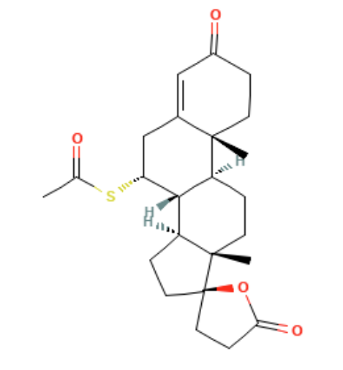
Spironolactone Chemical Structure
IUPAC (International Union of Pure and Applied Chemistry)/ Chemical name
S-[(7R,8R,9S,10R,13S,14S,17R)-10,13-dimethyl-3,5′-dioxospiro[2,6,7,8,9,11,12,14,15,16-decahydro-1H-cyclopenta[a]phenanthrene-17,2′-oxolane]-7-yl]ethanethioate
Intake routine/cycle
Daily dose
Take spironolactone exactly as your doctor recommends. The dose may change based on your condition and how well you respond. Do not take more than prescribed without consulting your doctor.
Missed Dose
If you forget to take your medicine, take the medication as soon as you remember. If it’s nearly time for your next dose, skip the missed one and continue with your regular schedule. Always consult the doctor before making any changes to your dosage.
Overdose
It is not recommended to take more than 300 mg of spironolactone per day, as it may cause severe overdosing effects like extreme drowsiness, confusion, unconsciousness, sweating, double vision, low blood pressure, and slurred speech. Immediately seek medical attention and meet the doctor if necessary.
Storage
- Store the medicine at room temperature
- Keep away from sunlight and moisture
- Keep out of reach of children
Directions for use
- Take spironolactone exactly as prescribed by your doctor, at the same time each day.
- Do not stop taking spironolactone without your doctor’s approval, even if you feel better.
- If you forget to take spironolactone, take it as soon as you remember. If it’s almost time for your next dose, skip the missed dose.
Spironolactone Summary
Spironolactone is a potassium‑sparing diuretic that blocks aldosterone, is FDA‑approved for hypertension and heart failure, and has off‑label uses that include aldosteronism, resistant hypertension, kidney protection, and arrhythmia prevention. Common side effects are dizziness, headache, diarrhea, fatigue, and increased potassium levels in the body, which can be dangerous. Avoid grapefruit juice and potassium‑rich salt substitutes, as they raise drug levels or potassium in the heart. Taking up to 100 mg of spironolactone per day is safe, but too much can cause severe hyperkalemia, low blood pressure, and irregular heartbeat. Patients with kidney or liver disease, older adults, and pregnant women should avoid this medication
FAQ’s
What are the uses of spironolactone tablets?
Spironolactone tablets are used to lower high blood pressure and to improve survival in patients with heart failure after a heart attack. Doctors may also prescribe them off‑label for resistant hypertension, hormone‑related high blood pressure, and kidney protection in diabetes.
What are the side effects of spironolactone tablets?
Spironolactone tablets can cause dizziness, headache, diarrhea, cough, tiredness, and low blood pressure, but the most important risk is high potassium (hyperkalemia), which may lead to muscle weakness or irregular heartbeat. Regular monitoring of potassium and kidney function is essential, especially in patients with kidney problems or those taking other potassium‑raising medicines.
What is the drug class of spironolactone?
Spironolactone belongs to the aldosterone receptor antagonists, a type of potassium‑sparing diuretic. This class of drugs blocks the hormone aldosterone, helping lower blood pressure and protect the heart while preventing the body from losing too much potassium.
What is the highest dose of spironolactone per day?
The highest recommended dose of spironolactone is 100 mg per day, usually taken as 50 mg twice daily. For heart failure, the typical target is 50 mg once daily, while hypertension may require up to the full 100 mg/day.
Reference
- Mayo Clinic. Spironolactone (oral route). Mayo Clinic [Internet]. 2024 [cited 2026 Jan 5]. Available from.
- Drugs.com. Spironolactone: Uses, Dosage, Side Effects. Drugs.com [Internet]. 2025 [cited 2026 Jan 5]. Available from.
- WebMD. Spironolactone oral: Uses, Side Effects, Interactions, Pictures, Warnings & Dosing. WebMD [Internet]. 2025 [cited 2026 Jan 5]. Available from.
- National Center for Biotechnology Information (NCBI). PubChem Compound Summary for CID 5833, Spironolactone. PubChem [Internet]. 2025 [cited 2026 Jan 5]. Available from.
Authors



Siva Krishna Adithya Bhumireddy completed a Bachelor of Pharmacy from GIET School of Pharmacy, affiliated with Andhra University, and from his 3rd year of graduation, he was working as a freelance medical and publication writer. Having expertise in systematic reviews and clinical research. With his keen interest and skills in research and documentation practices, he also reviewed more than 150 manuscripts from international journals like Elsevier, Springer Nature, and Sage Journals, and all the manuscripts were indexed and appeared in PubMed, Scopus, and Web of Science databases, and he received honorary recognition letters and certificates from all of them. Siva Krishna Adithya also published a few systematic, narrative reviews and a few chapters of international expertise.