Category- Allopathy
Medicine Highlights
| Uses | 1. To treat high blood pressure 2. To control fluid buildup and swelling in body due to heart failure |
| Common Side Effects | 1. Dizziness, spinning sensation 2. Drowsiness, tiredness 3. Depressed mood 4. Muscle or joint pain 5. Numbness or tingly feeling 6. Nausea, stomach pain, loss of appetite 7. Diarrhea, constipation. |
| Additional Information | 1. Take medicine every day at the same time to maintain the drug well in the blood. 2. Do not stop the medicine usage suddenly 3. Don’t take this medicine without a doctor’s recommendation. |
| Storage | 1. The medicine should be stored at room temperature. 2. Keep away from sunlight and moisture. 3. Keep away from the reach of children |
| How to Take This Medicine | To be taken orally with a sip of water |
Metolazone Uses
Metolazone 5 mg is an oral medicine belonging to the category of thiazide like diuretics and is used for the following indications:
- High blood pressure
- Fluid buildup and swelling in body due to heart failure
Metolazone side effects
More Common
- Dizziness, spinning sensation;
- Drowsiness, tiredness;
- Depressed mood;
- Muscle or joint pain;
- Numbness or tingly feeling;
- Nausea, stomach pain, loss of appetite; or
- Diarrhea, constipation.
Less Common
- Chest pain
- Pounding heartbeats or fluttering in your chest
- Easy bruising or bleeding
- A light-headed feeling, like you might pass out
- Liver problems like nausea, upper stomach pain, itching, tiredness, loss of appetite, dark urine, clay-colored stools, jaundice (yellowing of the skin or eyes)
- Low potassium cause leg cramps, constipation, irregular heartbeats, fluttering in your chest, increased thirst or urination, numbness or tingling, muscle weakness or limp feeling
- Low levels of sodium in the body leading to headache, confusion, slurred speech, severe weakness, vomiting, loss of coordination, feeling unsteady
- Other signs of an electrolyte imbalance like dry mouth, nausea, vomiting, weakness, drowsiness, lack of energy, muscle pain, little or no urination, or feeling restless; or
- Severe skin reaction and fever, sore throat, swelling in your face or tongue, burning in your eyes, skin pain followed by a red or purple skin rash that spreads (especially in the face or upper body) and causes blistering and peeling.
How Metolazone works
Metolazone works with your kidneys’ natural plumbing system to flush out excess salt and water, easing the burden on your heart and lowering blood pressure, especially in conditions like heart failure or chronic kidney disease where fluid builds up. By blocking a key transporter that normally reabsorbs sodium, it helps your body release more fluid through urine, reducing swelling and pressure. For patients, it’s a quiet but powerful ally often paired with other diuretics, so staying hydrated, monitoring electrolytes, and following your doctor’s advice are essential to keep things in balance.
Safety Measures and Warning
Allergies
Tell your doctor if you have ever had any unusual or allergic reaction to this medicine or any other medicine. Also tell your health care professional if you have any other types of allergies, such as to foods, dyes, preservatives, or animals.
Pregnancy
Pregnant women are not recommended to take metolazone; it can cause serious hormonal imbalance and affect baby growth and develop male characteristics in female babies. No human studies confirm its safety in pregnancy. Use only in emergencies, and always consult a doctor first.
Breastfeeding
Metolazone isn’t usually advised while breastfeeding due to unknown effects on the baby. Always talk to your doctor before using it.
Kidney and Liver Problems
Patients with previous liver and kidney damage are not recommended to take the medicine, as it can cause liver and kidney toxicity while being removed from the body.
Metolazone Interaction with Food Product
Metolazone is generally safe with food, and it is recommended to avoid alcohol and smoking with metolazone, as they can alter the drug’s effect and may cause severe drowsiness and sedation because of their direct action on the brain.
Metolazone Interaction with Other Medicines
Avoid taking Metolazone 5 mg with the following medicines, as it may increase or decrease the desired effect, or in worse cases, it could be fatal:
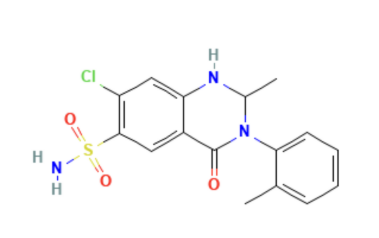
Metolazone Chemical Structure
IUPAC (International Union of Pure and Applied Chemistry)/ Chemical name
7-chloro-2-methyl-4-oxo-3-o-tolyl-1,2,3,4-tetrahydroquinazoline-6-sulfonamide.
Intake routine/cycle
Daily dose
Take Metolazone exactly as your doctor recommends. The dose may change based on your condition and how well you respond. Do not take more than prescribed without consulting your doctor.
Missed Dose
If you forget to take your medicine, take the medication as soon as you remember. If it’s nearly time for your next dose, skip the missed one and continue with your regular schedule. Always consult the doctor before making any changes to your dosage.
Overdose
It is not recommended to take more than 20 mg of metolazone per day, as it may cause severe overdosing effects like extreme drowsiness, confusion, unconsciousness, sweating, double vision, low blood pressure, and slurred speech. Immediately seek medical attention and meet the doctor if necessary.
Storage
- Store the medicine at room temperature
- Keep away from sunlight and moisture
- Keep out of reach of children
Directions for use
- Take metolazone exactly as prescribed by your doctor, at the same time each day.
- Do not stop taking metolazone without your doctor’s approval, even if you feel better.
- If you forget to take metolazone, take it as soon as you remember. If it’s almost time for your next dose, skip the missed dose.
Metolazone Summary
Metolazone is a long-acting pill from the thiazide-like diuretic class of medication, used to treat high blood pressure and fluid buildup in conditions like heart failure and kidney disease. It works by gently nudging the kidneys to flush out excess salt and water, lowering blood pressure and easing swelling. Common side effects include dizziness, tiredness, stomach upset, and change in mood or appetite. It may lower potassium and sodium levels, so regular monitoring is important. Avoid alcohol and consult your doctor before combining it with other blood pressure or kidney medications. Store it at room temperature, away from moisture and heat, and this medication should be taken only after doctors’ consultation.
FAQ’s
What is the drug class of metolazone?
Metolazone is a long-acting pill from the thiazide-like diuretic class, used to treat high blood pressure and fluid buildup in conditions like heart failure and kidney disease.
What are the side effects of the metolazone 5 mg tablet?
Common side effects of metolazone include dizziness, tiredness, stomach upset, and changes in mood or appetite.
What is the mechanism of action of metolazone?
Metolazone works with your kidneys to flush out excess salt and water, easing fluid buildup in heart failure or kidney disease. By blocking sodium reabsorption, it boosts urine output, reducing swelling and lowering blood pressure.
What are the uses of metolazone tablets?
Metolazone is a long-acting pill from the thiazide-like diuretic class, used to treat high blood pressure and fluid buildup in conditions like heart failure and kidney disease.
Reference
- National Center for Biotechnology Information. PubChem Compound Summary for CID 4166, Metolazone. [Internet]. Bethesda (MD): National Library of Medicine (US); [cited 2025 Aug 29]. Available from.
- Van Wert A, Poppen A. Metolazone: Uses, Side Effects, Interactions, Pictures, Warnings & Dosing. [Internet]. WebMD; 2024 May 30 [cited 2025 Aug 29]. Available from.
- Metolazone (oral route) – Side effects & dosage. [Internet]. Mayo Clinic; 2025 Jun 1 [cited 2025 Aug 29]. Available from.
- Kirkwood C, Patel S. Metolazone. [Internet]. In: Stat Pearls [Internet]. Treasure Island (FL): Stat Pearls Publishing; 2024 Jan– [cited 2025 Aug 29]. Available from.
- Cerner Multum. Metolazone: Uses, Side Effects & Warnings. [Internet]. Drugs.com; 2025 Jul 30 [cited 2025 Aug 29]. Available from.
Authors



Siva Krishna Adithya Bhumireddy completed a Bachelor of Pharmacy from GIET School of Pharmacy, affiliated with Andhra University, and from his 3rd year of graduation, he was working as a freelance medical and publication writer. Having expertise in systematic reviews and clinical research. With his keen interest and skills in research and documentation practices, he also reviewed more than 150 manuscripts from international journals like Elsevier, Springer Nature, and Sage Journals, and all the manuscripts were indexed and appeared in PubMed, Scopus, and Web of Science databases, and he received honorary recognition letters and certificates from all of them. Siva Krishna Adithya also published a few systematic, narrative reviews and a few chapters of international expertise.