Category- Allopathy
Medicine Highlights
| Uses | 1. To control inflammatory bowel disease 2. To control severe allergies 3. To treat asthma and chronic obstructive pulmonary disease (COPD) 5. To treat skin conditions (eczema, psoriasis, dermatitis) 6. To control autoimmune diseases (lupus, rheumatoid arthritis) 7. To treat certain cancers (leukemia, lymphoma, multiple myeloma) 8. To control cerebral edema (brain swelling) and spinal cord compression |
| Common Side Effects | 1. Aggression 2. Agitation 3. Anxiety 4. Blurred vision 5. Decrease in the amount of urine 6. Dizziness 7. Fast, slow, pounding, or irregular heartbeat or pulse 8. Headache 9. Irritability 10. Mental depression 11. Mood changes 12. Nervousness 13. Noisy, rattling breathing 14. Numbness or tingling in the arms or legs 15. Pounding in the ears 16. Swelling of the fingers, hands, feet, or lower legs 17. Trouble thinking, speaking, or walking 18. Trouble breathing 19. Weight gain |
| Additional Information | 1. It is not recommended to take this medicine without a doctor’s prescription. 2. People with severe infections should avoid it. |
| Storage | 1. The medicine should be stored at room temperature. 2. Keep away from sunlight and moisture. 3. Keep away from the reach of children |
| How to Take This Medicine | This injection is given through IV or IM route by a nurse. |
Dexamethasone Uses
Dexamethasone 4 mg/ml is an injection medicine belonging to the category of corticosteroids and is used for the following indications:
- Inflammatory bowel disease.
- Severe allergies
- Asthma and chronic obstructive pulmonary disease (COPD)
- Skin conditions (eczema, psoriasis, dermatitis)
- Autoimmune diseases (lupus, rheumatoid arthritis, inflammatory bowel disease)
- Certain cancers (leukemia, lymphoma, multiple myeloma)
- Cerebral edema (brain swelling) and spinal cord compression
- Adrenal insufficiency and congenital adrenal hyperplasia
- Eye inflammation (uveitis, keratitis)
- COVID‑19 complications (severe cases needing oxygen or ventilation)
- Prevention of nausea and vomiting after chemotherapy
Dexamethasone side effects
More Common
- Aggression
- Agitation
- Anxiety
- Blurred vision
- Decrease in the amount of urine
- Dizziness
- Fast, slow, pounding, or irregular heartbeat or pulse
- Headache
- Irritability
- Mental depression
- Mood changes
- Nervousness
- Noisy, rattling breathing
- Numbness or tingling in the arms or legs
- Pounding in the ears
- Swelling of the fingers, hands, feet, or lower legs
- Trouble thinking, speaking, or walking
- Trouble breathing
- Weight gain
Less Common
- Mood changes (depression, euphoria, irritability)
- Vision problems (blurred vision, cataracts, glaucoma)
- Unusual bleeding or bruising
- Slow wound healing
- Muscle weakness or wasting
- Irregular heartbeat or palpitations
- Swelling of face or limbs (edema)
- Menstrual irregularities
- Skin thinning or easy tearing
- Seizures (rare but reported)
- Severe stomach pain or black/tarry stools (possible ulcer or bleeding)
- Signs of infection (fever, sore throat, persistent cough)
How Dexamethasone works
Dexamethasone works by acting like the body’s natural stress hormones to calm down inflammation. It switches off signals that make the immune system overreact, reducing swelling and irritation. This helps control conditions where the immune system is too active or causing damage
Safety Measures and Warning
Pregnancy
Dexamethasone is usually avoided in pregnancy unless clearly needed, but it may be given to help premature babies’ lungs mature. Since it crosses the placenta more than other steroids, it can pose risks to the fetus, so they need to inform the doctor about the condition.
Breastfeeding
Dexamethasone can pass into breast milk, so it is usually avoided unless clearly needed. Short courses at low doses are less risky, but prolonged use may affect the baby, so always meet a doctor before taking it while breastfeeding
Kidney Problems
Dexamethasone can be safe to use in kidney patients. But it can raise blood pressure, cause fluid buildup, and affect blood sugar, so it should be given under monitoring only. Always consult a doctor before using it.
Dexamethasone Interaction with Food Product
Alcohol and smoking can interact with the medicine, simultaneously affecting the drug’s action, and can cause an increase or decrease in the drug’s action.
Dexamethasone Interaction with Other Medicines
Avoid taking Dexamethasone 0.5 mg with the following medicines, as it may increase or decrease the desired effect, or in worse cases, it could be fatal:
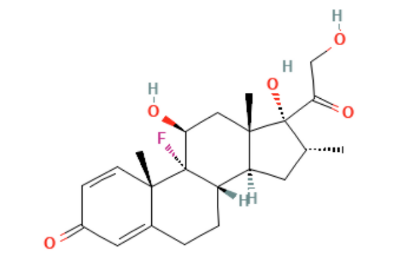
Dexamethasone Chemical Structure
IUPAC (International Union of Pure and Applied Chemistry)/ Chemical name
(8S,9R,10S,11S,13S,14S,16R,17R)-9-fluoro-11,17-dihydroxy-17-(2-hydroxyacetyl)-10,13,16-trimethyl-6,7,8,9,10,11,12,13,14,15,16,17-dodecahydro-3H-cyclopenta[a]phenanthren-3-one
Intake routine/cycle
Daily dose
Take dexamethasone exactly as your doctor recommends. The dose may change based on your condition and how well you respond. Do not take more than prescribed without consulting your doctor.
Missed Dose
If you forget to take your medicine, take the medication as soon as you remember. If it’s nearly time for your next dose, skip the missed one and continue with your regular schedule. Always consult the doctor before making any changes to your dosage.
Overdose
It is not recommended to take more than 10 mg of dexamethasone per day, as it may cause severe overdosing effects like liver damage, infections, pancreatitis, muscle problems, nausea, and muscle problems. If you face any of the severe effects, meet the doctor.
Storage
- Store the medicine at room temperature
- Keep away from sunlight and moisture
- Keep out of reach of children
Directions for use
- Take dexamethasone exactly as prescribed by your doctor, at the same time each day.
- Do not stop taking dexamethasone without your doctor’s approval, even if you feel better.
- If you forget to take dexamethasone, take it as soon as you remember. If it’s almost time for your next dose, skip the missed dose.
Dexamethasone Summary
Dexamethasone is a powerful corticosteroid (glucocorticoid) medicine used to reduce inflammation and suppress the immune system. It is commonly prescribed for arthritis, asthma, severe allergies, skin conditions, bowel disorders, certain cancers, and even COVID‑19 complications. It works by mimicking natural hormones to block inflammatory chemicals and calm an overactive immune response. Typical side effects include weight gain, mood changes, insomnia, high blood sugar, and increased infection risk. Food does not greatly affect absorption, but alcohol and high-sodium diets can worsen side effects like fluid retention and blood pressure. Taking more than 10 mg of this medicine can cause overdosing effects like severe infections, stomach bleeding, dangerously high blood sugar, and psychiatric disturbances. People with uncontrolled infections, stomach ulcers, severe diabetes, osteoporosis, or known allergies to corticosteroids should avoid it.
FAQ’s
What are the uses of dexamethasone tablets?
Dexamethasone tablets are used to treat inflammation, allergies, asthma, autoimmune diseases, certain cancers, and severe COVID‑19 complications. They work by calming the immune system and reducing swelling, pain, and overactive immune responses.
What are the side effects of dexamethasone tablets?
Dexamethasone can cause both common and serious side effects, ranging from weight gain and mood changes to vision problems and increased infection risk. Long‑term or high‑dose use raises the chance of severe complications, so medical supervision is essential.
What is the drug class of dexamethasone?
Dexamethasone belongs to the drug class called corticosteroids, specifically glucocorticoids, which are medicines that reduce inflammation and suppress the immune system.
Reference
- National Center for Biotechnology Information. Dexamethasone. In: StatPearls [Internet]. Treasure Island (FL): StatPearls Publishing; 2025. Available from.
- Drugs.com. Dexamethasone: Uses, Dosage, Side Effects [Internet]. Drugs.com; 2025 [cited 2026 Jan 15]. Available from.
- Mayo Clinic. Dexamethasone (oral route): Description and Side Effects [Internet]. Rochester (MN): Mayo Foundation for Medical Education and Research; 2025 [cited 2026 Jan 15]. Available from.
- National Center for Biotechnology Information. PubChem Compound Summary for CID 5743, Dexamethasone [Internet]. Bethesda (MD): National Library of Medicine; 2025 [cited 2026 Jan 15]. Available from.
Authors



Siva Krishna Adithya Bhumireddy completed a Bachelor of Pharmacy from GIET School of Pharmacy, affiliated with Andhra University, and from his 3rd year of graduation, he was working as a freelance medical and publication writer. Having expertise in systematic reviews and clinical research. With his keen interest and skills in research and documentation practices, he also reviewed more than 150 manuscripts from international journals like Elsevier, Springer Nature, and Sage Journals, and all the manuscripts were indexed and appeared in PubMed, Scopus, and Web of Science databases, and he received honorary recognition letters and certificates from all of them. Siva Krishna Adithya also published a few systematic, narrative reviews and a few chapters of international expertise.