Category- Allopathy
Medicine Highlights
| Uses | 1-To treat chest pain 2- To treat increased blood pressure (high blood pressure) |
| Common Side Effects | 1- Body aches or pain 2- Congestion 3- Cough 4- Dryness or soreness of the throat 5- Fever 6- Hoarseness 7- Runny nose 8- Tender or swollen glands in the neck 9- Trouble swallowing 10- Voice changes |
| Additional Information | Avoid taking alcohol or tobacco with this medicine. |
| Storage | 1- The medicine should be stored at room temperature 2- Keep away from sunlight and moisture 3- Keep away from the reach of children |
| How to Take This Medicine | 1- To treat bacterial infection 2- To treat swelling in the throat (Pharyngitis) |
Diltiazem Summary
Diltiazem 30 mg is a medicine used to treat high blood pressure and chest pain. It works by relaxing blood vessels and slowing the heart rate, making it easier for the heart to pump. Take it exactly as prescribed, and don’t stop without your doctor’s advice. Common side effects include cough, sore throat, or dizziness. Serious effects like slow heartbeat or swelling should be reported to a doctor. It may not be safe during pregnancy or breastfeeding, so always check with your doctor.
For better heart health, eat more fruits, vegetables, whole grains, and healthy fats like fish and nuts. Cut back on salt and avoid alcohol. Stay active with regular exercise, quit smoking, and manage stress with things like yoga or deep breathing. Healthy habits work best when combined with your medication.
Diltiazem Uses
Diltiazem 30 mg is an oral medicine belonging to the class of calcium channel blocker medicines. It is used for following indications:
- Chest pain
- Increased blood pressure
How Diltiazem works
Diltiazem blocks the entry of calcium through a protein called the calcium channel receptor. Calcium is responsible for contracting arteries and muscles, which can lead to increased blood pressure and pain. By inhibiting this process, Diltiazem helps relax blood vessels and muscles, providing relief from high blood pressure and chest pain.
Directions for use
- Take diltiazem exactly as prescribed by your doctor, regularly at the same time each day.
- Do not stop taking diltiazem without your doctor’s approval, even if you feel better.
- If you forget to take the medicine, take it as soon as you remember, unless it’s almost time for the next one, then just skip it.
Diltiazem side effects
More Common
- Body aches or pain
- Congestion
- Cough
- Dryness or soreness of the throat
- Fever
- Hoarseness
- Runny nose
- Tender or swollen glands in the neck
- Touble swallowing
- Voice changes
Less Common
- Chest pain, discomfort, or tightness
- Chills
- Diarrhea
- Difficult or labored breathing
- Feeling faint, dizzy, or lightheaded
- Feeling of warmth or heat
- Flushing or redness of the skin, especially on the face and neck
- General feeling of discomfort or illness
- Headache
- Joint pain
- Loss of appetite
- Muscle aches and pains
- Nausea
- Shivering
- Slow or irregular heartbeat
- Sweating
- Swelling of the hands, ankles, feet, or lower legs
- Trouble sleeping
- Unusual tiredness or weakness
- Vomiting
Safety Measures and warning
1- Allergy/Hypersensitivity
If you have ever had an allergy to Diltiazem, inform your doctor immediately to prevent any complications.
2- Pregnancy
Animal studies have shown that this medicine can be harmful during pregnancy, but there are limited studies on humans. If you are planning to conceive or are pregnant, inform your doctor.
3- Breastfeeding
Diltiazem is excreted in human milk. If you are breastfeeding, inform your doctor so they can adjust your prescription accordingly.
Diltiazem Interaction with Other Medicines
Avoid taking diltiazem 30 mg with the following medicines, as it may increase or decrease the desired effect, or in worse cases, it could be fatal:
Diltiazem Interaction with Food Product
Till now, there is no known interaction between diltiazem and food or drinks. However, avoid drinking alcohol before or after taking this medicine.
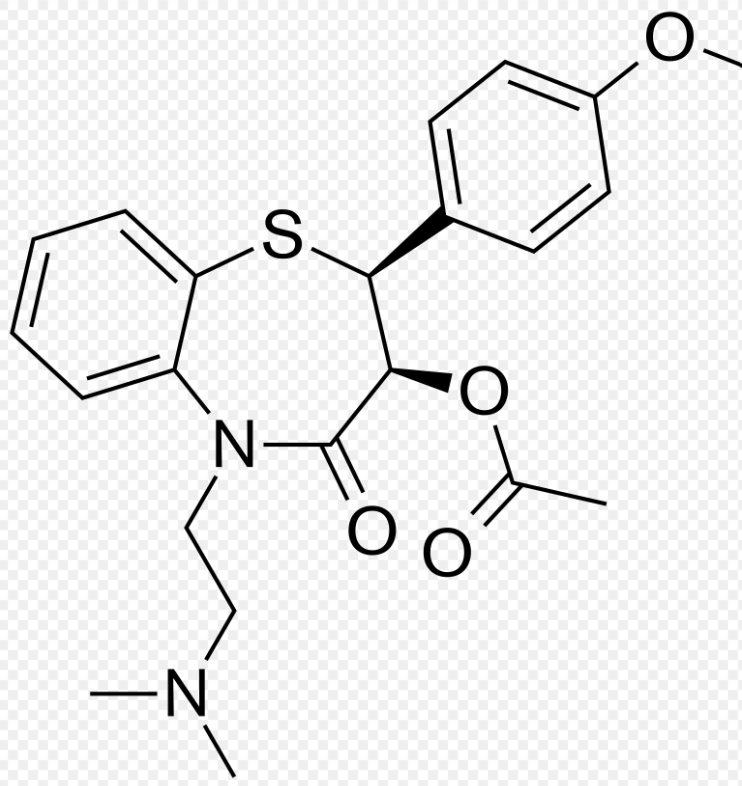
Diltiazem Chemical Structure
IUPAC (International Union of Pure and Applied Chemistry)/ Chemical name
(E)-but-2-enedioic acid;methane;1-(propan-2-ylamino)-3-[4-(2-propan-2-yloxyethoxymethyl)phenoxy]propan-2-ol
Storage
- The medicine should be stored at room temperature
- Keep away from sunlight and moisture
- Keep away from the reach of children
Intake routine/cycle
Daily dose
Take diltiazem as suggested by your doctor. Your dose can vary depending on the severity of the condition and how you respond to the medication. Do not exceed the prescribed dose without consulting your doctor.
Missed Dose
If you forget to take your medicine, take the medication soon as you remember. If it’s nearly time for your next dose, skip the missed one and continue with your regular schedule. Always consult the doctor before making any changes to your dosage.
Overdose
Taking more than the recommended dose of diltiazem – whether knowingly or by accident- can cause serious issues such as a slow heartbeat (bradycardia), dizziness, low blood pressure (hypotension), organ damage, heart failure, or even cardiac arrest. If someone shows these symptoms, seek medical help immediately.
Dietary and Lifestyle Management
Heart diseases are also known as cardiovascular disease because it involves heart and blood vessels around it. There are many medicines to help, but making small changes in how we live can help even more. To keep the heart beating nicely, here are some foods that can help:
- Whole grains like bajra, jowar, millet, ragi, rice, whole wheat
- Fruits
- Vegetables like spinach, lettuce and cabbage
- Fatty fish
- Walnuts
- Berries
- Dark chocolate
- Reduce salt (sodium) intake
Lifestyle modification include:
- Quit smoking
- Exercise like brisk walking, yoga, cycling or swimming.
- Try to lose weight
- Avoid drinking alcohol
- Reduce stress by doing yoga meditation and practicing deep breathing technique
FAQ’s
1- Why should diltiazem be taken on an empty stomach?
Taking diltiazem on an empty stomach helps with quick and complete absorption, allowing the medicine to act faster. However, it should only be taken on an empty stomach if advised by your doctor.
2- How much diltiazem is too much?
A dose of diltiazem between 1 gram and 18 grams is way too much and can have harmful effects on your body
3- Can diltiazem cause anxiety?
No, in fact, some studies have shown that diltiazem helps with anxiety treatment, although more research is required.
4- Can diltiazem lower blood pressure?
Yes, diltiazem helps in reducing blood pressure. It belongs to a category of calcium channel blockers, which reduce calcium absorption by the heart muscle; in this way, it lowers blood pressure.
Reference
- Mayo Clinic. Diltiazem (oral route). [Online]. Available from.
- MedlinePlus [Internet]. Bethesda (MD): National Library of Medicine (US); [updated 2024-11-01; cited 2024-11-05]. Heart Disease; [updated 2023-02-16; reviewed 2023-06-29]. Available from.
- Talreja O, Cassagnol M. Diltiazem. [Updated 2023 Aug 28]. In: StatPearls [Internet]. Treasure Island (FL): StatPearls Publishing; 2024 Jan-. Available from.
- Harley Street Clinic. Lifestyle Modifications for Managing Arrhythmia. [Online]. Available from.
- Talreja O, Cassagnol M. Diltiazem. [Updated 2023 Aug 28]. In: StatPearls [Internet]. Treasure Island (FL): StatPearls Publishing; 2025 Jan-. Available from.
Authors


Mahak Phartyal completed her bachelor’s in pharmacy from Veer Madho Singh Bhandari Uttarakhand Technical University. She previously worked as a Medical Writer at Meril Life Sciences, where she wrote numerous scientific abstracts for conferences such as India Live 2024 and the European Society of Cardiology (ESC). During her college years, she developed a keen research interest and published an article titled “Preliminary Phytochemical Screening, Physicochemical and Fluorescence Analysis of Nyctanthes arbor-tristis and Syzygium cumini Leaves.