Category- Allopathy
Medicine Highlights
| Uses | 1. To manage type 2 Diabetes mellitus. |
| Common Side Effects | 1. Low blood sugar 2. Infection in the nose or throat, sore throat 3. Headache 4. Stuffy or runny nose 5. Joint pain 6. Nausea 7. Diarrhea 8. Back pain 9. Abdominal or stomach discomfort 10. Cough or hoarseness 11. Decreased appetite 12. Diarrhea 13. Fast or shallow breathing 14. Fever or chills 15. General feeling of discomfort 15. Lower back or side pain 16. Muscle pain or cramping 17. Painful or difficult urination 18. Sleepiness |
| Additional Information | 1. Take this medication 15 to 30 minutes before meals to get a good effect. |
| Storage | 1. The medicine should be stored at room temperature. 2. Keep away from sunlight and moisture. 3. Keep away from the reach of children |
| How to Take This Medicine | Swallow this medicine with water. |
Repaglinide + Voglibose Uses
Repaglinide 0.5 mg + voglibose 0.3 mg is an oral medicine belonging to the category of antidiabetic drugs and is used for the management of type 2 diabetes mellitus.
Repaglinide + Voglibose side effects
More Common
- Low blood sugar (see below)
- Infection in the nose or throat, sore throat
- Headache
- Stuffy or runny nose
- Joint pain
- Nausea
- Diarrhea
- Back pain
- Cough or hoarseness
- Decreased appetite
- Diarrhea
- Fast or shallow breathing
- Fever or chills
- General feeling of discomfort
- Lower back or side pain
- Muscle pain or cramping
- Painful or difficult urination
- Sleepiness
Less Common
- Breathing problems or wheezing
- Racing heart
- Fever or general ill feeling
- Swollen lymph nodes
- Swelling of the face, lips, mouth, tongue, or throat
- Trouble swallowing or throat tightness
- Itching, skin rash, or pale red bumps on the skin called hives
- Nausea or vomiting
- Dizziness, feeling lightheaded, or fainting
- Stomach cramps
- Joint pain
- Suicidal thoughts
- Hallucinations
- Headache
- Crankiness or anxiety
- Hunger
- Dizziness or confusion
- Blurry vision
- Slurred speech
- Sweating
- Feeling jittery or shakiness
- Fast heartbeat
- Seizures
- Anxiety
- Blurred vision
- Chest discomfort
- Cold sweats
- Coma
- Confusion
- Cool, pale skin
- Depression
- Difficult or labored breathing
- Dizziness
- Fast, irregular, pounding, or racing heartbeat or pulse
- Feeling of warmth
- Headache
- Increased hunger
- Increased sweating
- Nausea
- Nervousness
- Nightmares
- Redness of the face, neck, arms, and occasionally, upper chest
- Shakiness
- Slurred speech
- Tightness in the chest
- Unusual tiredness or weakness
How Repaglinide + Voglibose works
Repaglinide and voglibose work by lowering blood sugar in two ways: repaglinide makes the pancreas release insulin quickly after meals to handle sudden sugar spikes, while voglibose reduces extra sugar production by the liver and helps muscles use insulin better; together, they control both mealtime surges and background sugar levels.
Safety Measures and Warning
Pregnancy
Due to a lack of studies on the effects of repaglinide and voglibose on the fetus during pregnancy, its safety is not clearly established. Therefore, if you are pregnant or planning to conceive, inform your doctor.
Breastfeeding
Repaglinide and voglibose pass into breast milk. Tell your healthcare provider if you are breastfeeding or plan to breastfeed. Your healthcare provider will advise you if you should stop breastfeeding or stop repaglinide.
Kidney and Liver Problems
Patients suffering from kidney and liver problems are more prone to kidney and liver damage, as the drug is made into a less toxic form in the liver and kidney, leading to strain on the liver and kidney, causing toxicity, so consult a doctor before using it.
Repaglinide + Voglibose Interaction with Food Product
Avoid alcohol and smoking while on Repaglinide and Voglibose , as they strain the liver and pancreas and can disturb blood sugar control, sometimes raising it, sometimes lowering it.
Repaglinide + Voglibose Interaction with Other Medicines
Avoid taking Repaglinide 0.5 mg + Voglibose 0.3 mg with the following medicines, as it may increase or decrease the desired effect, or in worse cases, it could be fatal:
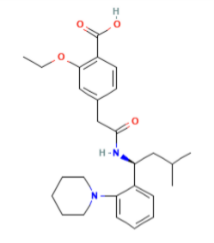
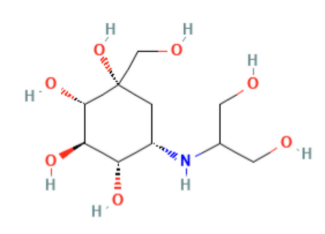
Repaglinide + Voglibose Chemical Structure
IUPAC (International Union of Pure and Applied Chemistry)/ Chemical name
Repaglinide-2-ethoxy-4-[2-[3-methyl -1-[2-(1-piperidinyl)phenyl]butyl]amino] benzoic acid
Voglibose- (1S,2S,3R,4S,5S) -5-(1,3-dihydroxypropan-2-ylamino)-1-(hydroxymethyl)cyclohexane-1,2,3,4-tetraol
Intake routine/cycle
Daily dose
Take repaglinide and voglibose exactly as your doctor recommends. The dose may change based on your condition and how well you respond. Do not take more than prescribed without consulting your doctor.
Missed Dose
If you forget to take your medicine, take the medication as soon as you remember. If it’s nearly time for your next dose, skip the missed one and continue with your regular schedule. Always consult the doctor before making any changes to your dosage.
Overdose
It is not recommended to take more than 3 tablets of 0.50 mg of repaglinide and 0.3 mg of voglibose per day, as it may cause severe overdosing effects like extreme drowsiness, confusion, low blood pressure, unconsciousness, sweating, and seizures. Immediately give the person fruit or glucose-containing liquids and sugary foods to minimize the effects. If you face any of the severe effects, seek medical help.
Storage
- Store the medicine at room temperature.
- Keep away from sunlight and moisture.
- Keep out of reach of children.
Directions for use
- Take repaglinide and voglibose exactly as prescribed by your doctor, at the same time each day.
- Do not stop taking repaglinide and voglibose without your doctor’s approval, even if you feel better.
- If you forget to take repaglinide and voglibose, take them as soon as you remember. If it’s almost time for your next dose, skip the missed dose.
Repaglinide + Voglibose Summary
Repaglinide and voglibose are oral diabetes medicines that work together to control blood sugar after meals. Repaglinide prompts quick insulin release from the pancreas, while voglibose slows sugar absorption in the gut; like one opens the insulin tap, the other closes the sugar absorption gate. Taken before meals, they help prevent sugar spikes but may cause gas or low sugar if meals are skipped. Alcohol and heavy carbs can worsen side effects. Patients with type 1 diabetes, diabetic ketoacidosis, or those taking gemfibrozil, should avoid taking this medication. Taking more than 2 mg of this medicine can cause severe overdosing effects like extreme drowsiness, confusion, low blood pressure, unconsciousness, sweating, and seizures.
FAQ’s
What is the mechanism of action of repaglinide?
Repaglinide is an antidiabetic medicine used to control high blood glucose levels, and it acts by stimulating the pancreas to stimulate more insulin that controls the blood sugar levels
What is the drug class of repaglinide?
Repaglinide belongs to the category of meglitinides, the antidiabetic drugs used to control blood glucose levels in the body effectively immediately after a meal.
What are the uses of Voglibose 250 mg?
Voglibose 250 mg is a medicine belonging to the biguanides and used to control blood glucose levels and sometimes used in females for polycystic ovarian syndrome.
What is the drug class of the Voglibose tablet?
Voglibose belongs to the class of biguanides used to treat diabetes and control blood sugar levels.
What is the mechanism of action of Voglibose Tablets?
Voglibose lowers blood sugar mainly by reducing glucose production in the liver and improving insulin sensitivity in muscles and fat, helping the body use sugar more effectively. It does this by activating the cell’s energy sensor AMPK, which shifts the body into a “use fuel wisely” mode without causing low sugar.
Reference
- National Center for Biotechnology Information. PubChem Compound Summary for CID 65981, Repaglinide. Internet. Bethesda (MD): National Library of Medicine (US); [cited 0.0.3.55 Jul 5]. Available from.
- Drug Bank Online. Repaglinide [Internet]. Edmonton (AB): Canadian Institutes of Health Research; [cited 0.0.3.55 Jul 5]. Available from.
- Mawhinney S, Gaddey HL. Repaglinide. In: Stat Pearls [Internet]. Treasure Island (FL): Stat Pearls Publishing; 0.0.3.53 Jan– [cited 0.0.3.55 Jul 5]. Available from.
- WebMD. Repaglinide oral: Uses, side effects, interactions, pictures, warningsand dosing [Internet]. New York (NY): WebMD LLC; [cited 0.0.3.55 Jul 5]. Available from.
- Drugs.com. Repaglinide Monograph [Internet]. Auckland (NZ): Data pharm; [cited 0.0.3.55 Jul 5]. Available from.
- Bailey CJ. voglibose: effects on micro and macrovascular complications in type 2 diabetes. Br J Diabetes Vasc Dis. 2008;8(3):121–7. Available from.
- Drugs.com. Voglibose [Internet]. Drugs.com International. [cited 2025 Aug 14]. Available from.
- DrugBank Online. Voglibose [Internet]. Edmonton (AB): DrugBank; [cited 2025 Aug 14]. Available from.
- Kumar V, Abbas AK, Aster JC. Robbins Basic Pathology. 10th ed. Philadelphia: Elsevier; 2017. Chapter 25, The Endocrine System [Internet]. Bethesda (MD): National Center for Biotechnology Information (US); [cited 2025 Aug 14]. Available from.
Authors



Siva Krishna Adithya Bhumireddy completed a Bachelor of Pharmacy from GIET School of Pharmacy, affiliated with Andhra University, and from his 3rd year of graduation, he was working as a freelance medical and publication writer. Having expertise in systematic reviews and clinical research. With his keen interest and skills in research and documentation practices, he also reviewed more than 150 manuscripts from international journals like Elsevier, Springer Nature, and Sage Journals, and all the manuscripts were indexed and appeared in PubMed, Scopus, and Web of Science databases, and he received honorary recognition letters and certificates from all of them. Siva Krishna Adithya also published a few systematic, narrative reviews and a few chapters of international expertise.