Category- Allopathy
Medicine Highlights
| Uses | 1. To empty pee when bladder function is disturbed (urinary retention). 2. To reduce urination difficulties after surgery 3. To treat peeing difficulties after childbirth 4. To help when nerve problems affect the bladder (neurogenic bladder) |
| Common Side Effects | 1. Nausea 2. Vomiting 3. Diarrhea 4. Cramps 5. Sweating 6. Flushing 7. Dizziness 8. Headache 9. Drowsiness 10. Hypotension |
| Additional Information | 1. Take it before the meals to get maximum effect. 2. As this is a prescription medicine, use this medicine with a doctor’s recommendation. |
| Storage | 1. The medicine should be stored at room temperature. 2. Keep away from sunlight and moisture. 3. Keep away from the reach of children |
| How to Take This Medicine | Take this medicine orally with a sip of water |
Bethanechol Uses
Bethanechol 25 mg is an oral medicine belonging to the category of bladder relaxants and is used to treat
- Burning pee
- Going too often to pee
- Sudden urge to urinate
- Night trips
- Urine Leaks
- Bladder cramps
- Urination Discomfort
Bethanechol side effects
More Common
- Nausea
- Vomiting
- Diarrhea
- Cramps
- Sweating
- Flushing
- Dizziness
- Headache
- Drowsiness
- Hypotension
Less Common
- Belching
- Blurred vision or change in near or distance vision
- Diarrhea
- Dizziness or lightheadedness
- Feeling faint
- Frequent urge to urinate
- Headache
- Increased watering of mouth or sweating
- Nausea or vomiting
- Redness or flushing of skin or feeling of warmth
- Seizures
- Sleeplessness, nervousness, or jitters
- Stomach discomfort or pain
How Bethanechol works
Bethanechol works by directly stimulating muscarinic receptors in the bladder and stomach. This makes the bladder contract so urine can pass and helps the stomach push food forward. In simple terms, it acts like a starter key that wakes up weak muscles in the bladder and gut.
Safety Measures and Warning
Breastfeeding
Bethanechol in breastfeeding is not well studied, so doctors use it only if clearly needed. Because it may pass into milk, babies should be watched for stomach upset or unusual fussiness.
Pregnancy
Bethanechol should be used in pregnancy only if clearly needed, there isn’t much research in pregnant women. The FDA hasn’t given it a category, and Australia says it’s “probably safe” based on limited use.
Kidney and Liver Problems
Bethanechol should be avoided in people with serious liver or kidney problems because the body may not clear the drug properly. This can increase the risk of stronger side effects like low blood pressure, stomach upset, or breathing difficulty, so doctors usually choose safer alternatives in these patients.
Heart Problems
Bethanechol can lower blood pressure and slow the heartbeat, which may strain the heart. People with heart disease should avoid it, as it can trigger dangerous rhythm changes or worsen symptoms.
Respiratory problems
Bethanechol can make lung problems worse because it tightens the airways and increases mucus production. People with asthma or chronic lung disease should avoid it, as it may trigger wheezing or breathing difficulty.
Bethanechol Interaction with Food Product
Bethanechol is generally safe with food, and it is recommended to avoid alcohol and smoking with Bethanechol, as they can alter the drug’s effect and may cause severe drowsiness and sedation because of their direct action on the brain.
Bethanechol Interaction with Other Medicines
Avoid taking Bethanechol 25 mg with the following medicines, as it may increase or decrease the desired effect, or in worse cases, it could be fatal:
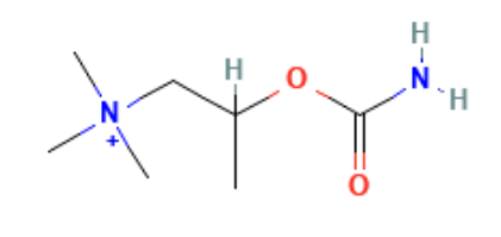
Bethanechol Chemical Structure
IUPAC (International Union of Pure and Applied Chemistry)/ Chemical name
2-(Carbamoyloxy)-N,N,N-trimethylpropan-1-aminium.
Intake routine/cycle
Daily dose
Take Bethanechol exactly as your doctor recommends. The dose may change based on your condition and how well you respond. Do not take more than prescribed without consulting your doctor.
Missed Dose
If you forget to take your medicine, take the medication as soon as you remember. If it’s nearly time for your next dose, skip the missed one and continue with your regular schedule. Always consult the doctor before making any changes to your dosage.
Overdose
It is not recommended to take more than 200 mg of Bethanechol per day, as it may cause severe adverse effects like extreme drowsiness, confusion, low BP, unconsciousness, respiratory depression, and arrhythmia. Patients consuming alcohol or any antidepressant medications should not take Bethanechol, as it causes severe overdose.
Storage
- Store the medicine at room temperature
- Keep away from sunlight and moisture
- Keep out of reach of children
Directions for use
- Take Bethanechol exactly as prescribed by your doctor, at the same time each day.
- Do not stop taking Bethanechol without your doctor’s approval, even if you feel better.
- If you forget to take Bethanechol, take it as soon as you remember. If it’s almost time for your next dose, skip the missed dose.
Bethanechol Summary
Bethanechol is a medicine that helps press the bladder push the urine out, especially after surgery, childbirth, or nerve problems; it may also sometimes be used for stomach slowing or acid reflux though not officially approved; common side effects include feeling sick, stomach cramps, loose stools, sweating, dizziness, or low blood pressure; it works by “turning on” the body’s pee‑signal switch (muscarinic receptors) to get the bladder moving; it should be taken on an empty stomach to avoid nausea; older adults, people with asthma, heart disease, or ulcers need extra care; and taking too much (around 200 mg or more at once) can be dangerous, causing severe stomach upset, very low blood pressure, or trouble breathing.
FAQ’s
What are the uses of bethanechol 25 mg?
Bethanechol 25 mg is mainly used to help the bladder empty when urine gets stuck, such as after surgery, childbirth, or nerve problems. Doctors may also sometimes use it off‑label to improve stomach movement or reduce acid reflux.
What are the side effects of bethanechol tablets?
Bethanechol tablets can cause stomach upset, diarrhea, sweating, dizziness, flushing, headache, and low blood pressure; in some cases, breathing difficulty or chest tightness may occur, especially in people with asthma or heart problems.
What is the maximum recommended dose of bethanechol per day?
The maximum recommended dose of Bethanechol is 125 mg per day, usually given as 25 mg six times daily. Taking more than this is not advised because higher doses raise the risk of side effects like diarrhea, dizziness, and hormone‑related changes such as increased prolactin.
What is the mechanism of action of bethanechol?
Bethanechol works by directly stimulating muscarinic acetylcholine receptors, especially in the bladder and digestive tract, causing the bladder muscle to contract and the stomach to push food forward.
Reference
- National Center for Biotechnology Information. Bethanechol. In: StatPearls [Internet]. Treasure Island (FL): StatPearls Publishing; 2023 Jan–. Available from.
- Drugs.com. Bethanechol Monograph for Professionals. Drugs.com [Internet]. Available from.
- Mayo Clinic. Bethanechol (oral route, subcutaneous route) description. Mayo Clinic [Internet]. Available from.
- National Center for Biotechnology Information. Bethanechol. PubChem [Internet]. Bethesda (MD): National Library of Medicine; Available from.
Authors



Siva Krishna Adithya Bhumireddy completed a Bachelor of Pharmacy from GIET School of Pharmacy, affiliated with Andhra University, and from his 3rd year of graduation, he was working as a freelance medical and publication writer. Having expertise in systematic reviews and clinical research. With his keen interest and skills in research and documentation practices, he also reviewed more than 150 manuscripts from international journals like Elsevier, Springer Nature, and Sage Journals, and all the manuscripts were indexed and appeared in PubMed, Scopus, and Web of Science databases, and he received honorary recognition letters and certificates from all of them. Siva Krishna Adithya also published a few systematic, narrative reviews and a few chapters of international expertise.