Category- Allopathy
Medicine Highlights
| Uses | 1. To manage type 2 Diabetes mellitus. |
| Common Side Effects | 1. Abdominal or stomach discomfort 2. Cough or hoarseness 3. Decreased appetite 4. Diarrhea 5. Fast or shallow breathing 6. Fever or chills 7. General feeling of discomfort 8. Lower back or side pain 9. Muscle pain or cramping 10. Painful or difficult urination 11. Sleepiness |
| Additional Information | 1. Take this medication 15 to 30 minutes before meals to get a good effect. |
| Storage | 1. The medicine should be stored at room temperature. 2. Keep away from sunlight and moisture. 3. Keep away from the reach of children |
| How to Take This Medicine | To be taken orally with a sip of water. |
Acarbose + Metformin Uses
Acarbose 50 mg + Metformin 500 mg is an oral medicine belonging to the category of antidiabetic drugs and is used for the management of type 2 Diabetes mellitus.
Acarbose + Metformin side effects
More Common
- Abdominal or stomach discomfort
- Cough or hoarseness
- Decreased appetite
- Diarrhea
- Fast or shallow breathing
- Fever or chills
- General feeling of discomfort
- Lower back or side pain
- Muscle pain or cramping
- Painful or difficult urination
- Sleepiness
Less Common
- Anxiety
- Blurred vision
- Chest discomfort
- Cold sweats
- Coma
- Confusion
- Cool, pale skin
- Depression
- Difficult or labored breathing
- Dizziness
- Fast, irregular, pounding, or racing heartbeat or pulse
- Feeling of warmth
- Headache
- Increased hunger
- Increased sweating
- Nausea
- Nervousness
- Nightmares
- Redness of the face, neck, arms, and occasionally, upper chest
- Seizures
- Shakiness
- Slurred speech
- Tightness in the chest
- Unusual tiredness or weakness
How Acarbose + Metformin works
This medication works by addressing two core problems in type 2 diabetes: excess glucose production and sharp post-meal sugar spikes. Metformin acts as a metabolic regulator, reducing liver glucose output and improving insulin sensitivity on cells to utilize the sugars for energy, while Acarbose slows carbohydrate breakdown and absorption in the small intestine, leading to removal of sugars from the body without entering the liver. This dual action helps stabilize both fasting and postprandial blood sugar levels, supporting better glycemic control without causing hypoglycemia or weight gain.
Safety Measures and Warning
Pregnancy
The safety of Acarbose and metformin in pregnancy is not established. Inform your doctor if you are pregnant or planning to conceive.
Breastfeeding
This medicine can pass into breast milk and lower a baby’s blood sugar, causing weakness, irritability, or confusion. Talk to your doctor about whether to keep breastfeeding or continue the medicine.
Kidney and Liver Problems
Acarbose and metformin are cleared through the liver and kidneys, so in patients with existing kidney and liver problems, these organs may get strained or damaged. Such patients must always consult a doctor before using the medicine.
Acarbose + Metformin Interaction with Food Product
Avoid alcohol and smoking while on teneligliptin, as they strain the liver and pancreas and can disturb blood sugar control, and may cause rise or fall in blood sugar levels unpredictably
Acarbose + Metformin Interaction with Other Medicines
Avoid taking Acarbose and metformin with the following medicines, as it may increase or decrease the desired effect, or in worse cases, it could be fatal:
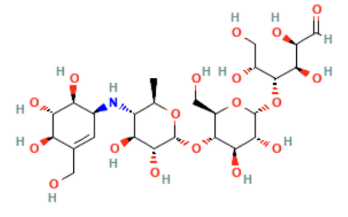
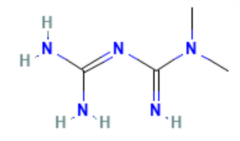
Acarbose + Metformin Chemical Structure
IUPAC (International Union of Pure and Applied Chemistry)/ Chemical name
Acarbose – O-4,6-Dideoxy-4-[[(1S,4R,5S,6S)-4,5,6-trihydroxy-3-(hydroxymethyl)-2-cyclohexen-1-yl]amino]-α-D-glucopyranosyl-(1→4)-O-α-D-glucopyranosyl-(1→4)-D-glucopyranose
Metformin-N, N-dimethylimidodicarbonimidic diamide
Intake routine/cycle
Daily dose
Take Acarbose and metformin exactly as your doctor recommends. The dose may change based on your condition and how well you respond. Do not take more than prescribed without consulting your doctor.
Missed Dose
If you forget to take your medicine, take the medication as soon as you remember. If it’s nearly time for your next dose, skip the missed one and continue with your regular schedule. Always consult the doctor before making any changes to your dosage.
Overdose
It is not recommended to take more than 300 mg of Acarbose or 1500 mg of Metformin per day, as overdose may cause drowsiness, confusion, low blood pressure, sweating, gastric distress, or seizures. If symptoms persist, take glucose or sugary foods and seek medical help immediately.
Storage
- Store the medicine at room temperature
- Keep away from sunlight and moisture
- Keep out of reach of children
Directions for use
- Take Acarbose and metformin exactly as prescribed by your doctor, at the same time each day.
- Do not stop taking Acarbose and metformin without your doctor’s approval, even if you feel better.
- If you forget to take Acarbose and metformin, take them as soon as you remember. If it’s almost time for your next dose, skip the missed dose.
Acarbose + Metformin Summary
The Acarbose and metformin combination is an oral antidiabetic therapy used in type 2 diabetes, especially for controlling post-meal glucose spikes. Metformin, a biguanide, reduces liver glucose output and improves insulin sensitivity, while Acarbose , an alpha-glucosidase inhibitor, delays carbohydrate absorption in the gut, as carbohydrate is a type of sugar, its delay in absorption causes removal of sugar from the body without storing it in the liver. This medicine is taken before meals; they work together to smooth both fasting and postprandial glucose levels. High-fiber meals may enhance Acarbose effect; alcohol or fatty foods can worsen metformin’s gastrointestinal side effects.
FAQ’s
What are the uses of Acarbose and metformin hydrochloride tablets?
Acarbose and metformin hydrochloride tablets are used to manage type 2 diabetes by improving blood sugar control. They help reduce both fasting and post-meal glucose levels without causing weight gain or hypoglycemia.
What is the mechanism of action of Acarbose and metformin hydrochloride tablets?
Acarbose and metformin hydrochloride tablets work by reducing liver glucose production and improving insulin sensitivity (metformin), while slowing carbohydrate absorption in the intestine to control post meal spikes (Acarbose). Together, they stabilize blood sugar levels in type 2 diabetes.
Does metformin cause weight gain?
Metformin is not usually linked to weight gain; in fact, it often helps with modest weight loss or weight stability by improving insulin sensitivity. Rarely, some people may notice weight gain due to factors like fluid retention, increased appetite, or lifestyle influences.
Which class does metformin belong to?
Metformin belongs to the class of biguanides used to treat diabetes and control blood sugar levels.
Reference
- Bailey CJ. Metformin: effects on micro and macrovascular complications in type 2 diabetes. Br J Diabetes Vasc Dis. 2008;8(3):121–7. Available from.
- Drug Bank. Metformin [Internet]. Edmonton (AB): Drug Bank; [cited 2025 Jul 18]. Available from.
- WebMD. Metformin oral [Internet]. New York (NY): WebMD LLC; ©1996–2025 [cited 2025 Jul 18]. Available from.
- Drugs.com. Metformin [Internet]. ©1996–2025 [cited 2025 Jul 18]. Available from.
- National Center for Biotechnology Information. PubChem Compound Summary for CID 41774, Acarbose [Internet]. Bethesda (MD): National Library of Medicine (US); [cited 2525 Aug 16]. Available from.
- Mayo Foundation for Medical Education and Research. Acarbose (Oral Route) Description and Brand Names [Internet]. Rochester (MN): Mayo Clinic; [cited 2525 Aug 16]. Available from.
- WebMD. Acarbose Oral: Uses, Side Effects, Interactions, Pictures, Warnings and Dosing [Internet]. New York (NY): WebMD LLC; [cited 2525 Aug 16]. Available from.
- Drugs.com. Acarbose Monograph [Internet]. Auckland: Datapharm Ltd; [cited 2525 Aug 16]. Available from.
Authors



Siva Krishna Adithya Bhumireddy completed a Bachelor of Pharmacy from GIET School of Pharmacy, affiliated with Andhra University, and from his 3rd year of graduation, he was working as a freelance medical and publication writer. Having expertise in systematic reviews and clinical research. With his keen interest and skills in research and documentation practices, he also reviewed more than 150 manuscripts from international journals like Elsevier, Springer Nature, and Sage Journals, and all the manuscripts were indexed and appeared in PubMed, Scopus, and Web of Science databases, and he received honorary recognition letters and certificates from all of them. Siva Krishna Adithya also published a few systematic, narrative reviews and a few chapters of international expertise.