Category- Allopathy
Medicine Highlights
| Uses | 1. To treat seizures in adults and in children aged 4 to 16. |
| Common Side Effects | 1. Dizziness and sleepiness 2. Changes in vision, including blurred or double vision 3. Feeling unusually weak or tired 4. Nausea and vomiting 5. Trouble with balance or coordination 6. Headache 7. Uncontrollable eye movements 8. Tremor 9. Irregular or unusual walking pattern |
| Additional Information | 1. Don’t stop the medicine suddenly, as it worsens the condition 2. This medication doesn’t cure seizures, but it will control the occurrence of seizures. |
| Storage | 1. The medicine should be stored at room temperature. 2. Keep away from sunlight and moisture. 3. Keep away from the reach of children |
| How to Take This Medicine | To be taken orally with a sip of water |
Oxcarbazepine Uses
Oxcarbazepine 600 mg is an oral medicine belonging to the category of antiepileptics belonging to the subclass of carboxamide and is used for the following indications:
- Partial Seizures
- Epilepsy
Oxcarbazepine side effects
More Common
- Dizziness and sleepiness
- Changes in vision, including blurred or double vision
- Feeling unusually weak or tired
- Nausea and vomiting
- Trouble with balance or coordination
- Headache
- Uncontrollable eye movements
- Tremor
- Irregular or unusual walking pattern
Less Common
- Cause reduced sodium levels in the body.
- Severe allergic and skin reactions
- Suicidal thoughts
- Headache
- Drowsiness
- Muscle weakness or cramps
- Nausea, vomiting, or loss of appetite
- Tiredness or sleepiness
- Dizziness
- Weight gain
- Restlessness or irritability
- Change in your mental condition, such as hallucinations, confusion, decreased awareness, or alertness
How Oxcarbazepine works
Oxcarbazepine works by calming overexcited brain cells in epilepsy. Normally, these cells can become overloaded with electrical charge, like balloons filled with too much water—making them prone to bursting into seizures when triggered. Oxcarbazepine blocks sodium channels, preventing excessive entry of charged ions into the brain cells. This stabilizes their activity, reduces the risk of sudden electrical surges, and helps prevent seizures and tremors.
Safety Measures and Warning
Pregnancy and Breastfeeding
Oxcarbazepine causes issues with the baby’s brain and spine development (neural tube defects) , so it is said to take the medication only after the doctor’s recommendation.
Kidney and Liver Problems
Patients suffering from kidney and liver problems are more prone to kidney and liver damage, as the medicine is converted into a less toxic form in the liver and excreted through the kidney. They may cause interactions and cause severe toxicity, so consult a doctor before using it.
Past Mental Health Issues
Oxcarbazepine directly acts on the brain and causes multiple side effects like sedation, drowsiness, and suicidal thoughts. Inform the doctor about your past mental health issues before using Oxcarbazepine.
Low sodium levels in the body
Patients with low sodium levels may experience low blood pressure and unconsciousness if they use this medicine. Consult the doctor if you have any issues related to blood pressure.
Oxcarbazepine Interaction with Food Product
Avoid consuming alcohol and smoking simultaneously with this medication, as it may affect the drug’s action and show an effect on the brain, leading to severe drowsiness, sedation, and coma in severe cases.
Oxcarbazepine Interaction with Other Medicines
Avoid taking Oxcarbazepine 600 mg with the following medicines, as it may increase or decrease the desired effect, or in worse cases, it could be fatal:
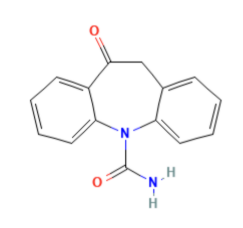
Oxcarbazepine Chemical Structure
IUPAC (International Union of Pure and Applied Chemistry)/ Chemical name
10,11-dihydro-10-oxo-5H-dibenz[b,f]azepine-5-carboxamide
Intake routine/cycle
Daily dose
Take Oxcarbazepine exactly as your doctor recommends. The dose may change based on your condition and how well you respond. Do not take more than prescribed without consulting your doctor.
Missed Dose
If you forget to take your medicine, take the medication as soon as you remember. If it’s nearly time for your next dose, skip the missed one and continue with your regular schedule. Always consult the doctor before making any changes to your dosage.
Overdose
It is not recommended to take more than 2400 mg of oxcarbazepine per day, as it may cause severe adverse effects like extreme drowsiness, confusion, low BP, unconsciousness, and respiratory depression. If you know someone who takes this medication and has these symptoms, rush them to the hospital immediately.
Storage
- Store the medicine at room temperature
- Keep away from sunlight and moisture
- Keep out of reach of children
Directions for use
- Take Oxcarbazepine exactly as prescribed by your doctor, at the same time each day.
- Do not stop taking Oxcarbazepine without your doctor’s approval, even if you feel better.
- If you forget to take Oxcarbazepine, take it as soon as you remember. If it’s almost time for your next dose, skip the missed dose.
Oxcarbazepine Summary
Oxcarbazepine is a Selective serotonin reuptake inhibitor (SSRI) antidepressant used for depression, anxiety, and sometimes panic attacks, obsessive-compulsive disorder (OCD), or social anxiety. It works by stopping the brain from quickly reabsorbing the lost serotonin from its nerve ending to make an individual stay happy, improve mood, and reduce anxiety. Common side effects include nausea, headache, sleep changes, dry mouth, and sexual difficulties. It can be taken with or without food, but alcohol may increase drowsiness, and grapefruit juice is best avoided. Store at room temperature, away from heat, moisture, and children.
FAQ’s
What are the side effects of Oxcarbazepine 150 mg?
Oxcarbazepine is used to treat epilepsy; its side effects include severe skin diseases, allergies, and low sodium levels in the body.
What is an oxcarbazepine overdose?
Taking more than 2400 mg of oxcarbazepine causes overdose and produces toxic effects like fall in BP, unconsciousness, and skin allergies.
What are Oxcarbazepine drug interactions?
Oxcarbazepine can reduce sodium levels and weaken hormonal contraceptives. It also interacts with phenytoin, carbamazepine, and CNS depressants.
Does oxcarbazepine cause hyponatremia?
Yes, oxcarbazepine causes hyponatremia, known as a fall in sodium levels in the body, and can cause severe low BP leading to fainting.
Reference
- Mayo Clinic. Oxcarbazepine (oral route). 2025 Jun 1 [cited 2025 Jun 30]. Available from.
- WebMD. Oxcarbazepine (oral). 2024 Dec 20 [cited 2025 Jun 30]. Available from.
- Drugs.com. Oxcarbazepine. 2025 Apr 24 [cited 2025 Jun 30]. Available from.
- PubChem. Oxcarbazepine [Internet]. Bethesda (MD): National Library of Medicine (US); [updated 2025 Jun 28; cited 2025 Jun 30]. Available from.
Authors



Siva Krishna Adithya Bhumireddy completed a Bachelor of Pharmacy from GIET School of Pharmacy, affiliated with Andhra University, and from his 3rd year of graduation, he was working as a freelance medical and publication writer. Having expertise in systematic reviews and clinical research. With his keen interest and skills in research and documentation practices, he also reviewed more than 150 manuscripts from international journals like Elsevier, Springer Nature, and Sage Journals, and all the manuscripts were indexed and appeared in PubMed, Scopus, and Web of Science databases, and he received honorary recognition letters and certificates from all of them. Siva Krishna Adithya also published a few systematic, narrative reviews and a few chapters of international expertise.