Category- Allopathy
Medicine Highlights
| Uses | 1. To treat swelling in the oesophagus 2. To treat Zollinger-Ellison syndrome |
| Common Side Effects | 1. Blurred vision 2. Dry mouth 3. Flushed, dry skin 4. Fruit-like breath odour |
| Additional Information | Avoid consuming grapes, alcohol, and tobacco while taking this medicine. |
| Storage | 1- The medicine should be stored at room temperature 2- Keep away from sunlight and moisture 3- Keep away from the reach of children |
| How to Take This Medicine | The medicine should be taken orally |
Pantoprazole Summary
Pantoprazole GR 40 mg is a medication used to treat acid-related issues like acid reflux, ulcers, and conditions like Zollinger-Ellison syndrome. It works by blocking acid production in the stomach and usually starts working within a few hours. Take it exactly as prescribed, ideally at the same time each day. Don’t stop taking it without talking to your doctor, even if you feel better. Common side effects include headache, nausea, stomach pain, and gas, while more serious side effects like allergic reactions or muscle cramps are rare but possible.
Let your doctor know if you are pregnant, breastfeeding, or have any allergies. Pantoprazole may interact with certain medicines, alcohol, tobacco, and even foods like cranberry, so be cautious. Store it in a cool, dry place out of children’s reach. If you miss a dose, take it when you remember unless it is close to your next one. In case of overdose, symptoms like tremors or confusion may occur, so seek medical help right away.
Pantoprazole Uses
Pantoprazole GR 40 mg is an oral medicine belonging to the class of proton pump inhibitor medicines. It is used for following indications:
- Ulcer in oesophagus (erosive oesophagitis)
- Excessive acid production (Zollinger-Ellison syndrome)
Directions for use
- Take pantoprazole exactly as prescribed by your doctor, regularly at the same time each day.
- Do not stop taking pantoprazole without your doctor’s approval, even if you feel better.
- If you forget to take the medicine, take it as soon as you remember, unless it’s almost time for the next one, then just skip it.
Pantoprazole side effects
More Common
- Headache
- Diarrhea
- Nausea or vomiting
- Stomach pain or abdominal discomfort
- Gas
- Dizziness
- Joint pain
- Fever or rash (more common in children)
Less Common
- Blurred vision
- Dry mouth
- Flushed, dry skin
- Fruit-like breath odor
- Increased hunger
- Increased thirst
- Increased urination
- Nausea
- Stomach pain
- Sweating
- Trouble breathing
- Unexplained weight loss
- Vomiting
- Incidence not known
- Absence of or decrease in body movements
- Black, tarry stools
- Blindness
- Blistering, peeling, or loosening of the skin
- Bloating
- Bloody or cloudy urine
- Bloody, black, or tarry stools
- Blurred vision
- Chest pain or tightness
- Chills
- Clay-colored stools
- Confusion
- Constipation
- Continuous ringing or buzzing or other unexplained noise in the ears
- Cough
- Dark urine
- Decreased vision
- Diarrhea
- Difficulty with speaking
- Difficulty with swallowing
- Dizziness or lightheadedness
- Drowsiness
- Fast heartbeat
- Feeling of constant movement of self or surroundings
- Fever
- Greatly decreased frequency of urination or amount of urine
- Headache
- Hearing loss
- High fever
- Hives, itching, or skin rash
- Indigestion
- Joint pain
- Large, hive-like swelling on the face, eyelids, lips, tongue, throat, hands, legs, feet, or genitals
- Light-colored stools
- Loss of appetite
- Mood or mental changes
- Muscle cramp, pain, stiffness, spasms, or twitching
- Muscle cramps in the hands, arms, feet, legs, or face
- Numbness and tingling around the mouth, fingertips, or feet
- Painful or difficult urination
- Pains in the stomach, side, or abdomen, possibly radiating to the back
- Pale skin
- Puffiness or swelling of the eyelids or around the eyes, face, lips, or tongue
- Red skin lesions, often with a purple center
- Red, irritated eyes
- Seizures
- Sensation of spinning
- Sore throat
- Sores, ulcers, or white spots on the lips or in the mouth
- Stomach pain, continuing
- Swelling of the feet or lower legs
- Swollen glands
- Trembling
- Unexplained bleeding or bruising
- Unpleasant breath odor
- Unusual tiredness or weakness
- Vomiting of blood
- Yellow eyes or skin
How Pantoprazole works
Pantoprazole acts like a cork in a bottle, blocking the acid-releasing gate known as the H+/K+ ATPase pump. This action reduces acid release in the stomach, with its effects typically observed within 2 to 6 hours.
Safety Measure and Warning
Allergy/Hypersensitivity
If you have a history of allergy to pantoprazole, inform your doctor immediately.
Pregnancy
If you are planning to conceive or are pregnant, inform your doctor. Pantoprazole is not usually recommended during pregnancy due to limited information on its safety.
Breastfeeding
Pantoprazole is minimally present in breast milk; however, its effects on breast-fed children are not yet fully understood and require further study.
Pantoprazole Interaction with Other Medicines
Avoid taking pantoprazole GR 40 mg with the following medicines, as it may increase or decrease the desired effect, or in worse cases, it could be fatal:
Pantoprazole Interaction with Food Product
Avoid consuming cranberry, alcohol and tobacco with pantoprazole as it can increase or decrease the effect of medicine.
Storage
- The medicine should be stored at room temperature
- Keep away from sunlight and moisture
- Keep away from the reach of children
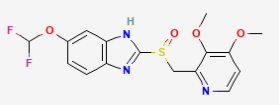
Pantoprazole Chemical Structure
IUPAC (International Union of Pure and Applied Chemistry)/ Chemical name-
5-(difluoromethoxy)-2-(((3,4-dimethoxy-2-pyridinyl)methyl)sulfinyl)-1H-benzimidazole
Intake routine/cycle
Daily Dose
Take pantoprazole exactly as your doctor recommends. The dose may change based on your condition and how well you respond. Do not take more than prescribed without consulting your doctor.
Missed Dose
If you forget to take your medicine, take the medication soon as you remember. If it’s nearly time for your next dose, skip the missed one and continue with your regular schedule. Always consult the doctor before making any changes to your dosage.
Overdose
For humans, there is no specific dose established to determine the exact threshold beyond which pantoprazole becomes unsafe. However, in cases of overdose, symptoms such as hypoactivity, tremors, and ataxia may occur.
FAQ’s
1. Why is pantoprazole taken before food?
Pantoprazole is taken before food because food delays the absorption of the tablet by approximately three to four hours, which can reduce its effectiveness.
2. Why is pantoprazole given with antibiotics?
Pantoprazole is given with antibiotics to treat ulcers caused by a bacterium called Helicobacter pylori (H. pylori). The combination helps eradicate the bacteria and promotes ulcer healing.
3. How much pantoprazole can I take in a day?
The dose of pantoprazole depends on the condition being treated and its severity. Below are common conditions and their typical dosages:
Heartburn and acid reflux: 20 mg/day
Gastroesophageal reflux disease (GERD): 20 mg to 40 mg/day
Zollinger-Ellison syndrome: Up to 80 mg/day
Reference
- NHS. Pantoprazole [Internet]. Available from.
- Procter & Gamble. Pantoprazole (Pantoloc) [Internet]. Available from.
- Ochoa D, Román M, Cabaleiro T, Saiz-Rodríguez M, Mejía G, Abad-Santos F. Effect of food on the pharmacokinetics of omeprazole, pantoprazole and rabeprazole. BMC Pharmacology and Toxicology. 2020 Dec;21:1-9. Available from.
- Vaira D, Zullo A, Vakil N, Gatta L, Ricci C, Perna F, Hassan C, Bernabucci V, Tampieri A, Morini S. Sequential therapy versus standard triple-drug therapy for Helicobacter pylori eradication: a randomized trial. Annals of internal medicine. 2007 Apr 17;146(8):556-63. Available from.
- NHS. Pantoprazole: Uses, Side Effects, and Dosage. NHS. [Internet]. 2024 [cited 2024 Dec 9]. Available from.
Authors


Mahak Phartyal completed her bachelor’s in pharmacy from Veer Madho Singh Bhandari Uttarakhand Technical University. She previously worked as a Medical Writer at Meril Life Sciences, where she wrote numerous scientific abstracts for conferences such as India Live 2024 and the European Society of Cardiology (ESC). During her college years, she developed a keen research interest and published an article titled “Preliminary Phytochemical Screening, Physicochemical and Fluorescence Analysis of Nyctanthes arbor-tristis and Syzygium cumini Leaves.