Category- Allopathy
Medicine Highlights
| Uses | 1. To treat dark spots caused due to acne, sun exposure or aging 2. To treat patchy brown or grayish skin discoloration (melasma) 3. To treat small brown spots on the skin, usually from sun exposure (freckles) 4. To treat hyperpigmentation i.e. uneven skin tone |
| Common Side Effects | 1. Mild redness 2. Itching 3. Burning or tingling 4. Dryness |
| Additional Information | 1. Do not apply it around your eyes and broken skin. 2. Use sunscreen during the day as the skin may become more sensitive to sunlight. 3. Apply a thin layer on clean, dry skin once or twice daily as directed by your doctor. |
| Storage | 1- The medicine should be stored at room temperature 2- Keep away from sunlight and moisture 3- Keep away from the reach of children |
| How to Take This Medicine | This cream is for topical use only |
Kojic Acid + Vitamin C Uses
Kojic Acid 2% with Vitamin C 2.5% is a skin-brightening cream primarily used to lighten dark spots and improve overall skin tone. It is useful for the following conditions:
- Dark spots
- Patchy brown or grayish skin discoloration (melasma)
- Small brown spots on the skin, usually from sun exposure (freckles)
- Hyperpigmentation
Directions for use
- If you forget to take this medicine, take it as soon as you remember. If it’s almost time for your next dose, skip the missed dose.
- Take this medicine exactly as prescribed by your doctor, at the same time each day.
- Do not stop taking this medicine without your doctor’s approval, even if you feel better.
Kojic Acid + Vitamin C side effects
More Common
- Mild redness
- Itching
- Burning or tingling
- Dryness
Less Common
- Severe irritation or swelling
- Allergic reactions (rash, hives)
How Kojic Acid + Vitamin C works
Kojic Acid + Vitamin C works by reducing the effect of melanocyte-stimulating hormone (MSH), a hormone that regulates melanin production, the pigment responsible for skin color. This helps lighten dark spots, freckles, and patches, evens out skin tone, and gradually makes the skin look brighter and healthier.
Safety Measures and Warning
Allergy/Hypersensitivity
Using it can cause rashes, redness, or swelling, so always consult a doctor before use.
Pregnancy and Breastfeeding
Safety is not fully studied, so use only under a doctor’s guidance.
Broken, Infected, or Irritated Skin
Applying the cream can worsen irritation or cause stinging, so doctor’s advice is necessary.
People Who Do Not Use Sunscreen Regularly
The cream can make the skin more sensitive to sunlight, which can cause sunburn or darkening, so doctor’s advice is important.
Kojic Acid + Vitamin C Interaction with Other Medicines
Avoid taking Kojic Acid + Vitamin C with the following medicines, as it may increase or decrease the desired effect, or in worse cases and it could be fatal:
Kojic Acid + Vitamin C Interaction with Food Product
Kojic Acid + Vitamin C cream has no food interactions. You can continue your normal diet while using it.
Storage
- Store the medicine at room temperature
- Keep away from sunlight and moisture
- Keep out of reach of children
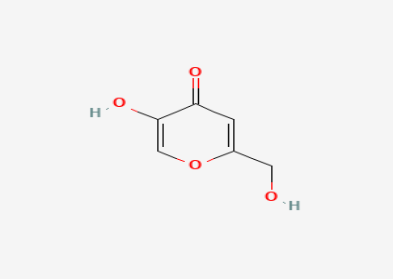
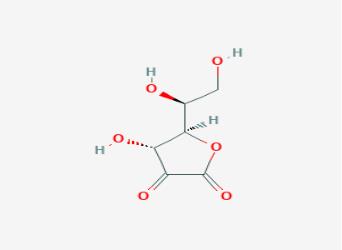
Kojic Acid + Vitamin C Chemical Structure
IUPAC (International Union of Pure and Applied Chemistry)/ Chemical name
Kojic Acid: 5-hydroxy-2-(hydroxymethyl)pyran-4-one
Vitamin C: (4R,5R)-5-[(1S)-1,2-dihydroxyethyl]-4-hydroxyoxolane-2,3-dione
Intake routine/cycle
Daily dose
Take Kojic Acid + Vitamin C exactly as your doctor recommends. The dose may change based on your condition and how well you respond. Do not take more than prescribed without consulting your doctor.
Missed Dose
If you forget to take your medicine, take the medication as soon as you remember. If it’s nearly time for your next dose, skip the missed one and continue with your regular schedule. Always consult the doctor before making any changes to your dosage.
Overdose
Do not use more Kojic Acid + Vitamin C cream than prescribed by your doctor. Overuse can cause severe skin irritation, redness, burning, or swelling. Stop using it and seek medical advice immediately if these reactions occur.
Kojic Acid + Vitamin C Summary
Kojic Acid 2% with Vitamin C 2.5% cream is used to lighten dark spots due to acne, sun exposure or aging, hyperpigmentation i.e. uneven skin tone. It helps improve overall skin appearance, making the skin look brighter and healthier.
It works by reducing the production of pigmentation hormone called melanin, which evens out skin tone and fades dark areas. Common side effects include mild redness, itching, or burning, while rare reactions may include severe irritation or allergic responses. Use the cream as directed and apply sunscreen during the day to protect your skin from sun damage.
FAQ’s
1. What are the benefits of Kozicare cream?
Benefits for BN cream include skin lightening, pigmentation reduction, scar fading, anti-ageing, even skin tone, sun damage repair, moisturizing.
2. What is the price of Kozicare cream?
Kozicare cream price at one of the online pharmacies like SayaCare is about 59 rupees, at SayaCare we provide test report with each medicine. Also, at SayaCare we provide you with up to 80% less cost than the market.
3. What are the side effects of Kozicare cream?
Kozicare cream is generally safe when used as directed, but some people may experience mild side effects such as redness, itching, burning sensation, dryness, or skin peeling. Rarely, it may cause an allergic reaction. If any severe reaction occurs, discontinue and consult a doctor.
Reference
- PubChem. Kojic acid [Internet]. pubchem.ncbi.nlm.nih.gov. Available from
- PubChem. Ascorbic acid [Internet]. pubchem.ncbi.nlm.nih.gov. 2024. Available from
- Zeelab Pharmacy – Online Generic Medicine Store [Internet]. Zeelabpharmacy.com. 2025 [cited 2025 Sep 19]. Available from
- ApolloPharmacy [Internet]. Apollopharmacy.in. 2019 [cited 2025 Sep 19]. Available from
Authors


Pranathi is a final year Pharm D student at Chalapathi Institute of Pharmaceutical Sciences. She loves learning and applying her knowledge in pharmacy and has a passion for writing, which allows her to express ideas clearly and creatively. She enjoys combining her technical skills with her love for writing and communication to make a meaningful impact. Currently she is working on a research paper about “Consanguineous marriages and its impact on children’s health” which will be published by the end of 2025.