Category- Allopathy
Medicine Highlights
| Uses | 1. To treat arrhythmias. 2. To treat tachycardias (fast irregular heartbeats) |
| Common Side Effects | 1. Cough 2. Dizziness, lightheadedness, or fainting 3. Fever (slight) 4. Numbness or tingling in the fingers or toes 5. Painful breathing 6. Sensitivity of the skin to sunlight 7. Trembling or shaking of the hands 8. Trouble with walking 9. Unusual and uncontrolled movements of the body 10. Weakness of the arms or legs 11. Constipation 12. Headache 13. Loss of appetite 14. Nausea 15. Vomiting |
| Additional Information | 1. Patients may need regular blood tests, ECGs, and checkups, which are essential because the drug can affect the thyroid, lungs, liver, and eyes. |
| Storage | 1. The medicine should be stored at room temperature. 2. Keep away from sunlight and moisture. 3. Keep away from the reach of children |
| How to Take This Medicine | Take this medicine orally with a sip of water |
Amiodarone Uses
Amiodarone 100 mg is an oral medicine belonging to the category of class 3 antiarrhythmic agents and is used to:
- Control arrhythmias
- To treat tachycardias (fast irregular heartbeats)
Amiodarone side effects
More Common
- Cough
- Dizziness, lightheadedness, or fainting
- Fever (slight)
- Numbness or tingling in the fingers or toes
- Painful breathing
- Sensitivity of the skin to sunlight
- Trembling or shaking of the hands
- Trouble with walking
- Unusual and uncontrolled movements of the body
- Weakness of the arms or legs
- Constipation
- Headache
- Loss of appetite
- Nausea
- Vomiting
Less Common
- Bloating or swelling of the face, arms, hands, lower legs, or feet
- Burning, crawling, itching, numbness, prickling, “pins and needles”, or tingling feelings
- Chills
- Cold sweats
- Confusion
- Dizziness, faintness, or lightheadedness when getting up from lying or sitting position
- Fast, irregular, pounding, or racing heartbeat or pulse
- General feeling of discomfort or illness
- Rapid weight gain
- Swelling around the eyes
- Tingling of the hands or feet
- Unusual tiredness or weakness
- Unusual weight gain or loss.
How Amiodarone works
Heart cells spread electrical signals through the heart, but irregular signals can cause abnormal rhythms, and amiodarone works as a “traffic controller” for your heart’s electricity. It slows down the signals that make the heartbeat too fast or irregular. By calming these electrical impulses, it helps the heart maintain a steady, safe rhythm and prevents dangerous racing or chaotic beats.
Safety Measures and Warning
Breastfeeding
Amiodarone is not recommended during breastfeeding because it passes into breast milk and may harm the infant. It can affect the baby’s thyroid and heart rhythm, so safer alternatives are preferred whenever possible.
Pregnancy
Amiodarone is generally avoided in pregnancy because it can harm the developing baby, affecting the thyroid and growth. It is only used if no safer alternatives are available, and the mother’s life is at serious risk and consult the doctor before using it.
Kidney and Liver Problems
Amiodarone can strain the liver and complicate kidney functions, so it’s usually avoided or used only with close medical supervision. Please consult a doctor before using it.
Heart Problems
Patients with lower heartbeats (bradycardia) and heart blocks (sinoatrial block or advanced atrioventricular block) should need to inform the doctor before taking amiodarone because it can worsen heart function.
Respiratory problems
Amiodarone is generally avoided in lung patients because it can cause or worsen pulmonary toxicity. Those with pre‑existing lung disease are at higher risk of breathing problems and require close monitoring.
Amiodarone Interaction with Food Product
Amiodarone is generally safe with food, and it is recommended to avoid alcohol and smoking with Amiodarone, as they can alter the drug’s effect and may cause severe drowsiness and sedation because of their direct action on the brain.
Amiodarone Interaction with Other Medicines
Avoid taking Amiodarone 100 mg with the following medicines, as it may increase or decrease the desired effect, or in worse cases, it could be fatal:
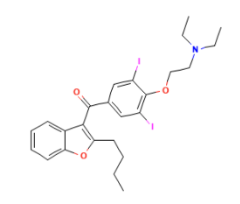
Amiodarone Chemical Structure
IUPAC (International Union of Pure and Applied Chemistry)/ Chemical name
(2-(2-butyl-1-benzofuran-3-yl)(4-{[2-(diethylamino)ethyl]oxy}-3,5-diiodophenyl)methanone
Intake routine/cycle
Daily dose
Take Amiodarone exactly as your doctor recommends. The dose may change based on your condition and how well you respond. Do not take more than prescribed without consulting your doctor.
Missed Dose
If you forget to take your medicine, take the medication as soon as you remember. If it’s nearly time for your next dose, skip the missed one and continue with your regular schedule. Always consult the doctor before making any changes to your dosage.
Overdose
It is not recommended to take more than 2 grams of amiodarone per day, as it may cause severe adverse effects like extreme drowsiness, confusion, low BP, unconsciousness, respiratory depression, and arrhythmia. Patients consuming alcohol or any antidepressant medications should not take amiodarone, as it causes severe overdose.
Storage
- Store the medicine at room temperature
- Keep away from sunlight and moisture
- Keep out of reach of children
Directions for use
- Take Amiodarone exactly as prescribed by your doctor, at the same time each day.
- Do not stop taking Amiodarone without your doctor’s approval, even if you feel better.
- If you forget to take Amiodarone, take it as soon as you remember. If it’s almost time for your next dose, skip the missed dose.
Amiodarone Summary
Amiodarone is a strong heart medicine used when the heartbeat becomes dangerously fast or irregular. It helps steady the rhythm, but because it can affect other organs like the thyroid, lungs, and liver, doctors keep a close watch with regular tests. Common side effects include feeling tired, nausea, or being more sensitive to sunlight, and it should never be mixed with grapefruit juice since that can make the drug stronger than intended. People with thyroid, lung, or liver problems; pregnant or breastfeeding women; and those with certain heart conditions need extra caution. Taking too much, usually 2 to 3 grams at once, can slow the heart dangerously, lower blood pressure, and damage organs, which is why overdoses require urgent hospital care.
FAQ’s
What are the uses of Amiodarone tablets?
Amiodarone tablets are mainly used to treat and prevent serious, life‑threatening irregular heart rhythms such as ventricular tachycardia and ventricular fibrillation, and sometimes off‑label for atrial fibrillation or flutter.
What is the maximum dose of Amiodarone?
The maximum recommended oral dose of amiodarone is usually up to 400 mg per day for maintenance. Higher doses, such as 800–1200 mg daily, may be used short‑term for loading, but only under strict medical supervision.
What are the side effects of Amiodarone tablets?
Amiodarone can cause everyday issues like nausea or tiredness, but more importantly it may harm the lungs, thyroid, liver, eyes, or heart, so close medical monitoring is essential.
Reference
- Mayo Clinic. Amiodarone (oral route) [Internet]. Rochester (MN): Mayo Foundation for Medical Education and Research; 2025 [cited 2025 Dec 6]. Available from.
- National Center for Biotechnology Information. Amiodarone [Internet]. Bethesda (MD): StatPearls Publishing; 2025 [cited 2025 Dec 6]. Available from.
- Drugs.com. Amiodarone: Uses, Dosage, Side Effects [Internet]. Drugs.com; 2025 [cited 2025 Dec 6]. Available from.
- National Center for Biotechnology Information. PubChem Compound Summary for CID 2160, Amiodarone [Internet]. Bethesda (MD): National Library of Medicine; 2025 [cited 2025 Dec 6]. Available from.
Authors



Siva Krishna Adithya Bhumireddy completed a Bachelor of Pharmacy from GIET School of Pharmacy, affiliated with Andhra University, and from his 3rd year of graduation, he was working as a freelance medical and publication writer. Having expertise in systematic reviews and clinical research. With his keen interest and skills in research and documentation practices, he also reviewed more than 150 manuscripts from international journals like Elsevier, Springer Nature, and Sage Journals, and all the manuscripts were indexed and appeared in PubMed, Scopus, and Web of Science databases, and he received honorary recognition letters and certificates from all of them. Siva Krishna Adithya also published a few systematic, narrative reviews and a few chapters of international expertise.