Category- Allopathy
Medicine Highlights
| Uses | 1. To treat mild-to-severe anxiety disorder 2. To treat preoperative anxiety 3. To treat alcohol withdrawal syndrome |
| Common Side Effects | 1. Skin rash or itching 2. Irregular menstrual periods 3. Blurred vision or changes in eyesight 4. Slurred speech 5. Muscle weakness or tremors 6. Mood changes such as depression or irritability 7. Difficulty urinating 8. Yellowing of the skin or eyes (possible liver effect) 9. Confusion or memory problems 10. Unusual tiredness or weakness |
| Additional Information | 1. Avoid driving or any hazardous activity after consuming chlordiazepoxide, as it can cause dizziness or drowsiness. 2. Its off-label indications include bipolar disorder and supporting other antipsychotic medicines |
| Storage | 1. The medicine should be stored at room temperature. 2. Keep away from sunlight and moisture. 3. Keep away from the reach of children |
| How to Take This Medicine | To be taken orally with a sip of water |
Chlordiazepoxide Uses
Chlordiazepoxide 10 mg is an oral medicine belonging to the category of benzodiazepines and is used for the following indications:
- Mild to severe anxiety
- Preoperative anxiety
- Alcohol withdrawal syndrome
Chlordiazepoxide side effects
More Common
- Skin rash or itching
- Irregular menstrual periods
- Blurred vision or changes in eyesight
- Slurred speech
- Muscle weakness or tremors
- Mood changes such as depression or irritability
- Difficulty urinating
- Yellowing of the skin or eyes (possible liver effect)
- Confusion or memory problems
- Unusual tiredness or weakness
Less Common
- Fainting
- Mood or mental changes
- Shakiness and unsteady walk
- Unsteadiness, trembling, or other problems with muscle control or coordination
How Chlordiazepoxide works
This medicine works by boosting gamma-aminobutyric acid (GABA), a calming chemical in the brain, to ease anxiety and alcohol withdrawal. Think of it as it turns down the volume of racing thoughts and tension, helping you feel more relaxed and in control.
Safety Measures and Warning
Pregnancy
The safety of chlordiazepoxide in pregnancy is not established. Inform your doctor if you are pregnant or planning to conceive. This may be used during pregnancy only if clearly needed, and its risks must be weighed carefully against potential benefits.
Kidney and Liver Problems
Chlordiazepoxide is not known to be safe for use in liver and kidney disease patients. Patients with kidney and liver problems need continuous monitoring if this medicine is used.
Past Mental Health Issues
Chlordiazepoxide directly acts on the brain and causes different side effects like sedation and drowsiness. Inform the doctor about your past mental health issues before using chlordiazepoxide.
Breastfeeding
Chlordiazepoxide is not recommended during breastfeeding because it passes into breast milk and can cause sedation or muscle weakness. If used, both mother and baby need close medical monitoring.
Heart Problems
Chlordiazepoxide should be used with caution in heart patients, as its effect can cause low blood pressure and influence blood vessel tone and, in rare cases, affect heart rhythm or blood pressure.
Chlordiazepoxide Interaction with Food Product
Avoid consuming alcohol and smoking simultaneously together, as it may affect the drug’s action and show an effect on the brain, leading to severe drowsiness, sedation, and coma in severe cases.
Chlordiazepoxide Interaction with Other Medicines
Avoid taking Chlordiazepoxide 10 mg with the following medicines, as it may increase or decrease the desired effect, or in worse cases, it could be fatal:
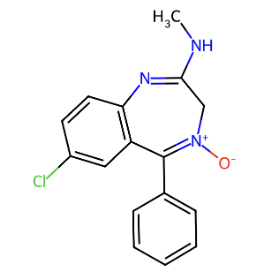
Chlordiazepoxide Chemical Structure
IUPAC (International Union of Pure and Applied Chemistry)/ Chemical name
(2Z)-7-chloro-N-methyl-5-phenyl-1,3-dihydro-2H-1,4-benzodiazepin-2-imine 4-oxide.
Intake routine/cycle
Daily dose
Take Chlordiazepoxide exactly as your doctor recommends. The dose may change based on your condition and how well you respond. Do not take more than prescribed without consulting your doctor.
Missed Dose
If you forget to take your medicine, take the medication as soon as you remember. If it’s nearly time for your next dose, skip the missed one and continue with your regular schedule. Always consult the doctor before making any changes to your dosage.
Overdose
It is not recommended to take more than 300 mg of Chlordiazepoxide per day, as it may cause severe overdosing effects like heart inflammation, extreme drowsiness, confusion, unconsciousness, sweating, double vision, low blood pressure, and slurred speech. Immediately seek medical attention and meet the doctor if necessary.
Storage
- Store the medicine at room temperature
- Keep away from sunlight and moisture
- Keep out of reach of children
Directions for use
- Take Chlordiazepoxide exactly as prescribed by your doctor, at the same time each day.
- Do not stop taking Chlordiazepoxide without your doctor’s approval, even if you feel better.
- If you forget to take Chlordiazepoxide, take it as soon as you remember. If it’s almost time for your next dose, skip the missed dose.
Chlordiazepoxide Summary
Chlordiazepoxide is a calming medicine from the benzodiazepine family, used to treat anxiety, alcohol withdrawal, and pre-surgery nervousness, and sometimes used off -label for agitation or irritable bowel syndrome. It works by boosting a natural brain chemical called GABA, which acts like a brake on stress signals, helping you feel more relaxed and less overwhelmed. Common side effects include drowsiness, dizziness, dry mouth, and confusion, and it can be risky if mixed with alcohol or grapefruit juice, which may intensify its effects or slow its breakdown. Because it can cause dependence, it’s usually used short-term and stopped gradually under medical supervision.
FAQ’s
Why is chlordiazepoxide considered the safest benzodiazepine?
Chlordiazepoxide is considered one of the safest benzodiazepines due to its long history of use, relatively mild withdrawal profile, and lower risk of severe sedation compared to shorter-acting agents. Its gradual onset and long half-life help reduce rebound anxiety and withdrawal symptoms.
What are the uses of chlordiazepoxide tablets?
Chlordiazepoxide tablets are used to treat anxiety, alcohol withdrawal symptoms, and preoperative nervousness. They help calm the brain by enhancing the effect of GABA, a natural calming chemical.
What are the side effects of chlordiazepoxide tablets?
Chlordiazepoxide tablets can cause drowsiness, dizziness, confusion, and dry mouth. Less common effects include blurred vision, mood changes, and muscle weakness.
What is the chlordiazepoxide drug class?
Chlordiazepoxide belongs to the benzodiazepine drug class, which is known for its calming, anti-anxiety, and muscle-relaxing effects.
Reference
- National Center for Biotechnology Information. Chlordiazepoxide [Internet]. Bethesda (MD): National Library of Medicine (US); 2021 [cited 2025 Nov 3]. Available from.
- Drugs.com. Chlordiazepoxide Monograph [Internet]. [cited 2025 Nov 3]. Available from.
- Mayo Clinic. Chlordiazepoxide hydrochloride (oral route) – Description and Brand Names [Internet]. [cited 2025 Nov 3]. Available from.
- Chem Spider. Chlordiazepoxide [Internet]. Royal Society of Chemistry; [cited 2025 Nov 3]. Available from.
Authors



Siva Krishna Adithya Bhumireddy completed a Bachelor of Pharmacy from GIET School of Pharmacy, affiliated with Andhra University, and from his 3rd year of graduation, he was working as a freelance medical and publication writer. Having expertise in systematic reviews and clinical research. With his keen interest and skills in research and documentation practices, he also reviewed more than 150 manuscripts from international journals like Elsevier, Springer Nature, and Sage Journals, and all the manuscripts were indexed and appeared in PubMed, Scopus, and Web of Science databases, and he received honorary recognition letters and certificates from all of them. Siva Krishna Adithya also published a few systematic, narrative reviews and a few chapters of international expertise.