Category- Allopathy
About Itraconazole 130 mg
Itraconazole 130 mg is an antifungal medication. It kills and stops the growth of fungi by destroying its cell membrane, that is by working on inhibiting the synthesis of ergosterol, which is a crucial compound in the fungal cell membrane, thereby treating your skin infection. Side effects of this medication usually include decreased urine output, dry mouth, fever, increased thirst, irregular heartbeat, loss of appetite, mood changes, and muscle pain or cramps. Alcohol, smoking and grapefruits should be avoided with itraconazole, taking more than 400 mg of itraconazole per day, as it may cause severe overdosing effects like extreme nausea and vomiting, abdominal pain.
Medicine Highlights
| Uses | 1. To treat fungal infection in the food pipe (esophageal candidiasis) 2. To treat lung infection caused by fungus (aspergillosis) 3. To treat serious body infections caused by fungus (blastomycosis and histoplasmosis) 4. To treat fungal infection of the fingernails 5. To treat fungal infection of the toenails |
| Common Side Effects | 1. Decreased urine output 2. Dry mouth 3. Fever 4. Increased thirst 5. Irregular heartbeat 6. Loss of appetite 7. Mood changes 8. Muscle pain or cramps 9. Nausea 10. Numbness or tingling in the hands, feet, or lips 11. Seizures 12. Trouble breathing 13. Unusual tiredness or weakness 14. Vomiting |
| Additional Information | Itraconazole can make you feel dizzy or sleepy. So, avoid driving as it can cause falls, accidents, or severe injuries |
| Storage | 1. The medicine should be stored at room temperature. 2. Keep away from sunlight and moisture. 3. Keep away from the reach of children |
| How to Take This Medicine | This medication should be taken orally |
Itraconazole 130 mg Uses
Itraconazole 130 mg is used to treat fungal infection such as:
- Lung infection caused by fungus (aspergillosis)
- Serious body infections caused by fungus (blastomycosis or histoplasmosis)
- Fungal infection in the food pipe (esophageal candidiasis)
- Fungal infection of the fingernails
- Fungal infection of the toenails
Itraconazole 130 mg side effects
More Common
- Decreased urine output
- Dry mouth
- Fever
- Increased thirst
- Irregular heartbeat
- Loss of appetite
- Mood changes
- Muscle pain or cramps
- Nausea
- Numbness or tingling in the hands, feet, or lips
- Seizures
- Trouble breathing
- Unusual tiredness or weakness
- Vomiting
Less Common
- Blurred vision
- Chest pain or tightness
- Chills
- Clay-colored stools
- Cloudy urine
- Cold sweats
- Confusion
- Cough
- Dark urine
- Decrease in urine-concentrating ability
- Diarrhea
- Dizziness
- Dizziness, faintness, or lightheadedness when getting up suddenly from a lying or sitting position
- Drowsiness
- Feeling unusually cold
- Headache
- Itching, skin rash
- Light-colored stools
- Mental changes
How Itraconazole 130 mg works
Itraconazole 130 mg works by blocking an enzyme that the fungus needs to make its cell membrane. The cell membrane is an important protective layer of the fungus. When this membrane is not formed properly, the fungus becomes damaged, cannot survive normally, and eventually dies. This helps treat the fungal infection.
Safety Measures and Warning
Allergy or Hypersensitivity
Tell your doctor if you had experienced an allergic reaction to itraconazole. If you had symptoms like rash, itching, swelling, or breathing trouble, this medicine should be avoided.
Pregnancy
Itraconazole should not be used during pregnancy unless clearly advised by a doctor, because it may harm the baby’s growth and development. It is usually used only when no safer option is available.
Kidney Disease
If you have a history of kidney problems, tell your doctor before taking itraconazole. This medicine may worsen kidney function in some people and may need careful monitoring.
Liver Disease
If you have liver disease or a history of liver problems, tell your doctor before taking this medicine. Itraconazole can affect the liver and may make liver problems worse.
Congestive Heart Failure
If you have heart failure or a history of heart failure, itraconazole should be used very carefully or avoided, especially for nail fungal infections, because it may worsen heart function.
Organ Transplant / Acid-Reducing Medicines
If you have had an organ transplant, tell your doctor before using itraconazole. Many transplant patients take medicines that reduce stomach acid, and this can make itraconazole absorb poorly, so the medicine may not work properly.
Itraconazole 130 mg Interaction with Food Product
Itraconazole 130 mg has an interaction with grapefruit Juice, so it is better to avoid it. Alcohol and smoking can simultaneously affect the drug’s action, so they may cause severe drowsiness and sedation.
Itraconazole 130 mg Interaction with Other Medicines
Avoid taking Itraconazole 130 mg with the following medicines, as it may increase or decrease the desired effect, or in worse cases, it could be fatal:
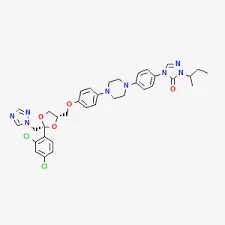
Itraconazole 130 mg Chemical Structure
IUPAC (International Union of Pure and Applied Chemistry)/ Chemical name
Itraconazole: (2R,4S)-rel-1-[2-(2,4-dichlorophenyl)-2-[(1H-1,2,4-triazol-1-yl)methyl]-1,3-dioxolan-4-yl]methoxy-4-[4-(4-[pentyloxy]phenyl)piperazin-1-yl]phenyl]butan-2-ol
Intake routine/cycle
Daily dose
Take Itraconazole 130 mg exactly as your doctor recommends. The dose may change based on your condition and how well you respond. Do not take more than prescribed without consulting your doctor.
Missed Dose
If you forget to take your medicine, take the medication as soon as you remember. If it’s nearly time for your next dose, skip the missed one and continue with your regular schedule. Always consult the doctor before making any changes to your dosage.
Overdose
Don’t take more than 400 mg of itraconazole per day, as it may cause severe overdosing effects like extreme nausea, vomiting, abdominal pain, headache, dizziness or lightheadedness, fatigue or weakness, and skin rash. Consult a doctor if you experience any of these symptoms.
Storage
- Store the medicine at room temperature.
- Keep away from sunlight and moisture.
- Keep out of reach of children.
Directions for use
- Take Itraconazole 130 mg exactly as prescribed by your doctor, at the same time each day.
- Do not stop taking Itraconazole 130 mg without your doctor’s approval, even if you feel better.
- If you forget to take Itraconazole 130 mg, take it as soon as you remember. If it’s almost time for your next dose, skip the missed dose.
FAQ’s
What are the uses of Itraconazole 130 mg?
Itraconazole 130 mg tablets are used to treat fungal infections in the body. They are commonly used for nail fungal infections (fungal infection of fingernails or toenails) and used for certain serious fungal infections in the lungs or other parts of the body, depending on the form prescribed by the doctor.
What are the side effects of Itraconazole 130 mg?
Itraconazole 130 mg side effects generally include decreased urine output, dry mouth, fever, increased thirst, irregular heartbeat, loss of appetite, mood changes, muscle pain or cramps, nausea, numbness or tingling in the hands, feet, or lips, seizures.
Can Itraconazole 130 mg be used during pregnancy?
Itraconazole 130 mg should generally be avoided during pregnancy unless the doctor feels it is absolutely necessary. It may harm the unborn baby, so it is usually used only when the benefit is greater than the risk, especially in serious infections.
Reference
- Itraconazole (oral route) [Internet]. Mayo Clinic. 2025 [cited 2025 Jul 14]. Available from
- Itraconazole Disease Interactions [Internet]. Drugs.com. 2025 [cited 2025 Jul 14]. Available from
- PubChem. Itraconazole [Internet]. Nih.gov. PubChem; 2025 [cited 2025 Jul 14]. Available from
- Kurn H, Wadhwa R. Itraconazole [Internet]. PubMed. Treasure Island (FL): StatPearls Publishing; 2021. Available from
Authors


Pranathi is a final year Pharm D student at Chalapathi Institute of Pharmaceutical Sciences. She loves learning and applying her knowledge in pharmacy and has a passion for writing, which allows her to express ideas clearly and creatively. She enjoys combining her technical skills with her love for writing and communication to make a meaningful impact. Currently she is working on a research paper about “Consanguineous marriages and its impact on children’s health” which will be published by the end of 2025.