Category- Allopathy
Medicine Highlights
| Uses | 1. To support pregnancy 2. To maintain timely menstrual cycle 3. To protect uterus in women above 45 years |
| Common Side Effects | 1. Chest pain 2. Chills 3. Cold or flu-like symptoms 4. Cough or hoarseness 5. Fever 6. Problems with urination 7. Breast pain or tenderness 8. Depression 9. Muscle or joint pain 10. White or brownish vaginal discharge |
| Additional Information | 1. Don’t take this medicine without a doctor’s recommendation. 2. Patients with ovarian cysts, vaginal bleeding, or hepatic impairment are not recommended to use progesterone. |
| Storage | 1. The medicine should be stored at room temperature. 2. Keep away from sunlight and moisture. 3. Keep away from the reach of children |
| How to Take This Medicine | Take this medicine orally with a sip of water. |
Progesterone Uses
Progesterone 200 mg is an oral medicine belonging to the category of progestins and is used for the following conditions:
- Supporting pregnancy
- Irregular Menstrual Cycle
- Protection of Uterus
Progesterone side effects
More Common
- Chest pain
- Chills
- Cold or flu-like symptoms
- Cough or hoarseness
- Fever
- Problems with urination
- Breast pain or tenderness
- Depression
- Muscle or joint pain
- White or brownish vaginal discharge
Less Common
- Clear or bloody discharge from the nipple
- Dimpling of the breast skin
- Inverted nipple
- Lump in the breast or under the arm
- Persistent crusting or scaling of the nipple
- Redness or swelling of the breast
- Sore on the skin of the breast that does not heal
How Progesterone works
Progesterone works like a natural “support hormone” for women’s bodies. After ovulation, it tells the womb to get ready for a baby by making the lining thicker and more stable. It also keeps the lining from growing too much when estrogen is used, so the uterus stays healthy and balanced.
Safety Measures and Warning
Pregnancy
Progesterone is the key pregnancy hormone that keeps the womb lining stable and ready for a baby. It prevents early contractions and supports the placenta, helping maintain a healthy pregnancy.
Breastfeeding
Progesterone is safe to use while breastfeeding because only tiny amounts pass into breast milk and do not affect the baby. Doctors often prefer progesterone-only options in breastfeeding patients over other alternatives since they do not affect milk supply.
Kidney and Liver Problems
Progesterone should be avoided in liver disease because it can worsen liver function. In kidney patients, it may be used cautiously, as fluid retention and blood pressure changes. It is recommended to consult a doctor before using it.
Heart Patients
Progesterone should be used carefully in heart patients because it can cause fluid retention and changes in blood pressure. Those with heart failure, a history of stroke, or clotting problems need close medical supervision before taking it.
Progesterone Interaction with Food Product
The use of drinks that contain alcohol raises your risk of low blood pressure from progesterone. If you drink alcohol, talk to your doctor. You may need to have your blood pressure monitored while you take this drug.
Progesterone Interaction with Other Medicines
Avoid taking Progesterone 200 mg with the following medicines, as it may increase or decrease the desired effect, or in worse cases, it could be fatal:
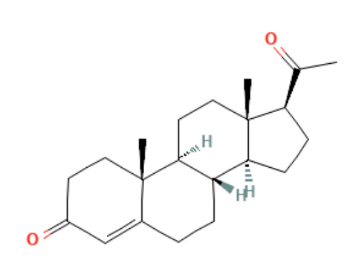
Progesterone Chemical Structure
IUPAC (International Union of Pure and Applied Chemistry)/ Chemical name
(8S,9S,10R,13S,14S,17S)-17-acetyl-10,13-dimethyl-2,6,7,8,9,11,12,14,15,16-decahydro-1H-cyclopenta[a]phenanthren-3-one
Intake routine/cycle
Daily dose
Take progesterone exactly as your doctor recommends. The dose may change based on your condition and how well you respond. Do not take more than prescribed without consulting your doctor.
Missed Dose
If you forget to take your medicine, take the medication as soon as you remember. If it’s nearly time for your next dose, skip the missed one and continue with your regular schedule. Always consult the doctor before making any changes to your dosage.
Overdose
It is not recommended to take more than 200 mg of progesterone per day, as it may cause severe overdosing effects like nausea, vomiting, abdominal pain, flushing, and vision changes (blurred vision, flashes, or spots). If you face any of the severe effects, please contact the doctor.
Storage
- Store the medicine at room temperature
- Keep away from sunlight and moisture
- Keep out of reach of children
Directions for use
- Take progesterone exactly as prescribed by your doctor, at the same time each day.
- Do not stop taking progesterone without your doctor’s approval, even if you feel better.
- If you forget to take progesterone, take it as soon as you remember. If it’s almost time for your next dose, skip the missed dose.
Progesterone Summary
Progesterone 200 mg tablets are hormone pills that help regulate periods, protect the uterus lining, and support pregnancy. They work by preparing the womb for a baby or keeping the lining from growing too much. Common side effects include breast soreness, bloating, sleepiness, dizziness, and mood changes. Grapefruit and alcohol can interfere with the medicine, so they should be avoided. Women with breast cancer, liver problems, unexplained bleeding, blood clots, or stroke should not take it unless a doctor approves. In short, it is a supportive hormone medicine that must be used under medical guidance, because taking more than 200 mg at once can cause serious side effects like extreme drowsiness, dizziness, or even complications requiring urgent medical care.
FAQ’s
What are the side effects of progesterone 200 mg?
Progesterone 200 mg can cause breast tenderness, bloating, dizziness, sleepiness, and mood changes. In some women it may also lead to headaches or mild digestive discomfort, which usually improves with time.
What are the uses of the progesterone 200 mg tablet?
Progesterone 200 mg tablets are mainly used to support pregnancy in women undergoing fertility treatments, to correct menstrual irregularities caused by low progesterone, and to protect the uterine lining when estrogen is given during menopause.
What is the mechanism of action of progesterone?
Progesterone works by binding to progesterone receptors in the uterus and other tissues, stabilizing the uterine lining, preparing it for implantation, and preventing overgrowth. It also relaxes uterine muscles, supports pregnancy, and balances estrogen’s effects.
What is the drug class of progesterone?
Progesterone belongs to the progestogen drug class, which includes both natural progesterone and synthetic compounds called progestins
Reference
- Mayo Clinic. Progesterone (oral route) – Side effects & dosage [Internet]. Rochester (MN): Mayo Foundation for Medical Education and Research; 2026 Jan 1 [cited 2026 Jan 12]. Available from.
- Drugs.com. Progesterone: uses, dosage & side effects [Internet]. Sanjai Sinha, MD, medical reviewer. Updated 2023 Aug 14 [cited 2026 Jan 12]. Available from.
- National Center for Biotechnology Information (NCBI). PubChem Compound Summary for CID 5994, Progesterone [Internet]. Bethesda (MD): National Library of Medicine; [updated 2025 Dec 21; cited 2026 Jan 12]. Available from.
- StatPearls Publishing. Progesterone [Internet]. Treasure Island (FL): StatPearls Publishing; [updated 2025 Jul 10; cited 2026 Jan 12]. Available from.
Authors



Siva Krishna Adithya Bhumireddy completed a Bachelor of Pharmacy from GIET School of Pharmacy, affiliated with Andhra University, and from his 3rd year of graduation, he was working as a freelance medical and publication writer. Having expertise in systematic reviews and clinical research. With his keen interest and skills in research and documentation practices, he also reviewed more than 150 manuscripts from international journals like Elsevier, Springer Nature, and Sage Journals, and all the manuscripts were indexed and appeared in PubMed, Scopus, and Web of Science databases, and he received honorary recognition letters and certificates from all of them. Siva Krishna Adithya also published a few systematic, narrative reviews and a few chapters of international expertise.