Category- Allopathy
Medicine Highlights
| Uses | 1. To improve the pumping strength of the heart pump after heart failure. 2. To treat arrhythmias (irregular heartbeats) |
| Common Side Effects | 1. Headache 2. Dizziness 3. Constipation 4. Skin rash 5. Decreased blood pressure 6. Nausea |
| Additional Information | 1. This medicine should only be consumed after doctors’ advice 2. Patients may need regular heart monitoring. 3. Consume once daily. Overuse may cause toxicity and can be fatal. |
| Storage | 1. The medicine should be stored at room temperature. 2. Keep away from sunlight and moisture. 3. Keep away from the reach of children |
| How to Take This Medicine | Take this medicine orally with a sip of water. |
Digoxin Uses
Digoxin 0.25 mg is an oral medicine belonging to the category of cardiotonic and is used for the following indications:
- Heart failure
- Arrhythmias
Digoxin side effects
More Common
- Dizziness
- Fainting
- Fast, pounding, or irregular heartbeat or pulse
- Slow heartbeat
Less Common
- Black, tarry stools
- Bleeding gums
- Blood in the urine or stools
- Bloody vomit
- Pinpoint red spots on the skin
- Rash with flat lesions or small raised lesions on the skin
- Severe stomach pain
- Unusual bleeding or bruising
How Digoxin works
Digoxin targets a tiny “pump” in heart cells called the sodium–potassium pump. Normally, this pump keeps sodium out and potassium in, maintaining balance inside the cell. When digoxin blocks this pump, sodium builds inside the cell. Because of this, another system (the sodium–calcium exchanger) slows down, and more calcium stays inside the heart cell. Calcium is the key signal that makes the heart muscle fibers contract. With extra calcium, each heartbeat becomes stronger and more forceful, helping the heart pump blood better.
Safety Measures and Warning
Pregnancy
Digoxin can treat fetal heartbeat problems in pregnancy and is safe when monitored. Always consult a doctor before use.
Breastfeeding
Digoxin passes into breast milk in very small amounts and is generally considered safe for breastfeeding mothers. It can help control the mother’s weak or irregular heartbeat without harming the baby. Always meet your doctor for proper guidance.
Kidney and Liver Problems
Digoxin is cleared mainly by the kidneys, so patients with kidney problems need lower doses and close monitoring. Liver problems usually have less effect, but severe disease can still alter digoxin levels. Always meet your doctor for safe dose adjustment and monitoring.
Heart Problems
Digoxin should be avoided in people with ventricular fibrillation or severe heart block. It can be dangerous in these cases. Always consult your doctor before using it.
Digoxin Interaction with Food Product
Digoxin absorption can be reduced by high-fiber foods and certain herbs like St John’s wort or licorice. Grapefruit juice and some antacids may also affect its levels. These interactions can make digoxin less effective or increase side effects. Always consult your doctor before mixing digoxin with specific foods or supplements.
Digoxin Interaction with Other Medicines
Avoid taking digoxin 0.25 mg with the following medicines, as it may increase or decrease the desired effect, or in worse cases, it could be fatal:
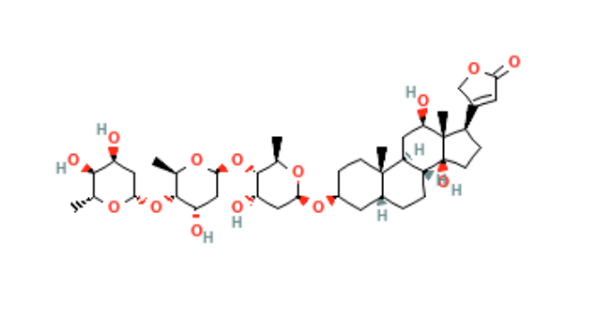
Digoxin Chemical Structure
IUPAC (International Union of Pure and Applied Chemistry)/ Chemical name
3β-[(O-2,6-dideoxy-β-D-ribo-hexopyranosyl-(1→4)-O-2,6-dideoxy-β-D-ribo-hexopyranosyl-(1→4)-2,6-dideoxy-β-D-ribo-hexopyranosyl)oxy]-12β,14-dihydroxy-5β-card-20(22)-enolide
Intake routine/cycle
Daily dose
Take digoxin exactly as your doctor recommends. The dose may change based on your condition and how well you respond. Do not take more than prescribed without consulting your doctor.
Missed Dose
If you forget to take your medicine, take the medication as soon as you remember. If it’s nearly time for your next dose, skip the missed one and continue with your regular schedule. Always consult the doctor before making any changes to your dosage.
Overdose
It is not recommended to take more than 2 mg of digoxin per day, as it may cause severe overdosing effects like extreme dehydration, drowsiness, confusion, unconsciousness, sweating, double vision, low blood pressure, and slurred speech. Immediately seek medical attention and meet the doctor if necessary.
Storage
- Store the medicine at room temperature
- Keep away from sunlight and moisture
- Keep out of reach of children
Directions for use
- Take digoxin exactly as prescribed by your doctor, at the same time each day.
- Do not stop taking digoxin without your doctor’s approval, even if you feel better.
- If you forget to take digoxin, take it as soon as you remember. If it’s almost time for your next dose, skip the missed dose.
Digoxin Summary
Digoxin is heart medicine belonging to the cardiac glycoside drug class. It is approved for heart failure and atrial fibrillation. It is sometimes used off-label for atrial flutter and other rhythm problems. Common side effects are nausea, dizziness, confusion, vision changes, and irregular heartbeat. It works by blocking the sodium-potassium pump, which increases calcium in heart cells, leading to stronger contractions in the heart pump. Digoxin interacts with high-fiber-containing meals, leading to reduced absorption of medicine, and with St. John’s Wort. People with ventricular fibrillation, severe kidney disease, or digoxin allergy should avoid it. Taking more than 2 mg of digoxin in adults can cause overdose effects like severe nausea, vomiting, vision disturbances, confusion, and dangerous heart rhythm changes, which may be life-threatening.
FAQ’s
What are the uses of digoxin tablets?
Digoxin tablets are used to treat heart failure and certain irregular heartbeats like atrial fibrillation. They help the heart pump blood more strongly and keep the rhythm steady.
What are the side effects of digoxin tablets?
Digoxin tablets can cause side effects like nausea, vomiting, dizziness, confusion, and vision changes. In higher doses, they may lead to dangerous irregular heartbeats, so always consult your doctor if you notice any unusual symptoms.
What is the drug class of digoxin?
Digoxin belongs to the cardiac glycoside drug class. These medicines strengthen heart contractions and help control irregular heart rhythms.
What is the importance of digoxin in heart disease?
Digoxin is important in heart diseases because it helps the heart pump blood more strongly and keeps irregular rhythms like atrial fibrillation under control. This improves symptoms such as shortness of breath and fatigue.
Reference
- National Center for Biotechnology Information. Digoxin. In: Stat Pearls [Internet]. Treasure Island (FL): Stat Pearls Publishing; 2025 Jan–. Available from.
- Mayo Clinic. Digoxin (oral route) [Internet]. Rochester (MN): Mayo Foundation for Medical Education and Research; 2025 Jan 1 [cited 2026 Jan 20]. Available from.
- National Center for Biotechnology Information. PubChem Compound Summary for CID 2724385, Digoxin [Internet]. Bethesda (MD): National Library of Medicine (US); [cited 2026 Jan 20]. Available from.
- Drugs.com. Digoxin [Internet]. Drugs.com; c2025 [cited 2026 Jan 20]. Available from.
Authors



Siva Krishna Adithya Bhumireddy completed a Bachelor of Pharmacy from GIET School of Pharmacy, affiliated with Andhra University, and from his 3rd year of graduation, he was working as a freelance medical and publication writer. Having expertise in systematic reviews and clinical research. With his keen interest and skills in research and documentation practices, he also reviewed more than 150 manuscripts from international journals like Elsevier, Springer Nature, and Sage Journals, and all the manuscripts were indexed and appeared in PubMed, Scopus, and Web of Science databases, and he received honorary recognition letters and certificates from all of them. Siva Krishna Adithya also published a few systematic, narrative reviews and a few chapters of international expertise.