Category- Allopathy
Medicine Highlights
| Uses | 1. To support gastric and duodenal ulcer healing 2. To treat stomach inflammation |
| Common Side Effects | 1. Diarrhea 2. Constipation 3. Nausea 4. Abdominal pain/discomfort 5. Headache 6. Dizziness 7. Skin rash 8. Fatigue |
| Additional Information | 1. Its off-label indications include migraines and severe pains 2. This medicine should be used with a prescription only. 3. Ophthalmic drops containing rebamipide are used to treat dry eyes |
| Storage | 1. The medicine should be stored at room temperature. 2. Keep away from sunlight and moisture. 3. Keep away from the reach of children |
| How to Take This Medicine | Take this medicine orally with a sip of water. |
Rebamipide Uses
Rebamipide 100 mg is an oral prescription medicine belonging to the category of dopamine antagonists or prokinetics and is used for the following indications:
- Gastric and duodenal ulcer healing
- Stomach inflammation
Rebamipide side effects
More Common
- Diarrhea
- Constipation
- Nausea
- Abdominal pain/discomfort
- Headache
- Dizziness
- Skin rash
- Fatigue
Less Common
- Allergic reactions (rash, itching, swelling of face/throat)
- Severe abdominal pain or persistent cramps
- Blood in stool (rare)
- Abnormal liver function tests
- Jaundice (rare)
- Severe hypersensitivity reactions affecting skin or mucous membranes
How Rebamipide works
Rebamipide works by increasing the production of natural mucus and forming a protective lining above the ulcer. It reduces inflammation and reduces harmful chemicals that damage the stomach. This strengthens the stomach’s defense against acid, helping ulcers and gastritis heal faster.
Safety Measures and Warning
Pregnancy
Rebamipide is not routinely recommended during pregnancy, as safety data in pregnant women is limited. It should only be used if a doctor believes the benefits outweigh the risks. Always consult your doctor before taking it to ensure the safest option for both mother and baby.
Breastfeeding
Rebamipide is not advised during breastfeeding due to limited safety data. Use only if a doctor recommends it. Always consult your doctor before using it to ensure the safest choice for both mother and baby.
Kidney and Liver Problems
Rebamipide should be used cautiously in kidney or liver problems, as impaired function affects drug processing. Doctors often advise avoiding it or using it under strict supervision with side effects and liver test monitoring.
Rebamipide Interaction with Food Product
Avoid consuming alcohol and smoking simultaneously, as it may affect the drug’s action and show an effect on the brain, leading to severe drowsiness, sedation, and coma in severe cases.
Rebamipide Interaction with Other Medicines
Avoid taking Rebamipide 100 mg with the following medicines, as it may increase or decrease the desired effect, or in worse cases, it could be fatal:
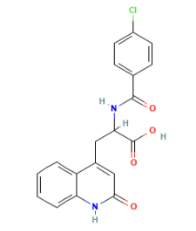
Rebamipide Chemical Structure
IUPAC (International Union of Pure and Applied Chemistry)/ Chemical name
2-[(4-chlorobenzoyl) amino]-3-(2-oxo-1H-quinolin-4-yl) propanoic acid
Intake routine/cycle
Daily dose
Take Rebamipide exactly as your doctor recommends. The dose may change based on your condition and how well you respond. Do not take more than prescribed without consulting your doctor.
Missed Dose
If you forget to take your medicine, take the medication as soon as you remember. If it’s nearly time for your next dose, skip the missed one and continue with your regular schedule. Always consult the doctor before making any changes to your dosage.
Overdose
It is not recommended to take more than 300 mg of Rebamipide per day, as it may cause severe overdosing effects like extreme drowsiness, heart problems, confusion, unconsciousness, sweating, double vision, low blood pressure, and slurred speech. Immediately seek medical attention and meet the doctor if necessary.
Storage
- Store the medicine at room temperature
- Keep away from sunlight and moisture
- Keep out of reach of children
Directions for use
- Take rebamipide exactly as prescribed by your doctor, at the same time each day.
- Do not stop taking rebamipide without your doctor’s approval, even if you feel better.
- If you forget to take rebamipide, take it as soon as you remember. If it’s almost time for your next dose, skip the missed dose.
Rebamipide Summary
Rebamipide is a gastroprotective medicine from the mucosal protective agent class, mainly used to treat gastritis, stomach ulcers, and sometimes eye conditions like dry eye. It works by increasing mucus production and reducing inflammation in the stomach lining, helping protect against acid damage. Common uses include relief from gastritis symptoms, ulcer healing, and prevention of gastric injury from painkillers. Common side effects are mild and include constipation, diarrhea, nausea, rash, and dizziness. It works by stimulating prostaglandin and mucus secretion, scavenging free radicals, and strengthening the stomach’s natural defense. Drug-food interactions are minimal, but alcohol and irritant foods may worsen stomach irritation and reduce its benefit. Taking more than 300 mg may cause severe gastrointestinal upset, dizziness, and liver strain, though exact toxic limits are not well established. People allergic to rebamipide, with severe liver disease, or who are pregnant or breastfeeding should avoid it, unless a doctor specifically recommends it.
FAQ’s
What are the uses of Rebamipide tablets?
Rebamipide tablets are used to treat nausea, vomiting, acid reflux, and delayed stomach emptying (gastroparesis). They help food move faster through the stomach and relieve discomfort from these conditions.
What are the side effects of Rebamipide tablets?
Rebamipide tablets can cause both common and serious side effects. Common ones include sleepiness, tiredness, dizziness, low mood, and restlessness. Serious risks include movement disorders like tardive dyskinesia (involuntary muscle movements), which may be irreversible if the drug is used for a long time
What is the drug class of rebamipide?
Rebamipide belongs to the phenothiazine class of dopamine antagonists, which are also known as prokinetics.
What is the highest dose of rebamipide?
The highest recommended dose of rebamipide is usually about 40–60 mg per day in adults, depending on the condition being treated. For short-term use in chemotherapy-induced nausea, higher doses may be given under strict medical supervision.
Reference
- Drugs.com. Rebamipide. International drug information. [Internet]. Drugs.com; [cited 2026 Jan 14]. Available from.
- Kinoshita Y, Ishimura N, Ishihara S. Advantages of mucosal protective agents for gastric mucosal injury: roles of rebamipide. World J Gastrointestinal Pharmocol Ther [Internet]. 2021 Nov 5 [cited 2026 Jan 12(6):66‑77. Available from.
- Practo. Rebamipide – Uses, Dosage, Side Effects, Price, Composition, Precautions. [Internet]. Practo Technologies Pvt Ltd; [cited 2026 Jan 14]. Available from.
- National Center for Biotechnology Information (NCBI). PubChem Compound Summary for CID 5042, Rebamipide. [Internet]. Bethesda (MD): National Library of Medicine; [cited 2026 Jan 14]. Available from.
Authors



Siva Krishna Adithya Bhumireddy completed a Bachelor of Pharmacy from GIET School of Pharmacy, affiliated with Andhra University, and from his 3rd year of graduation, he was working as a freelance medical and publication writer. Having expertise in systematic reviews and clinical research. With his keen interest and skills in research and documentation practices, he also reviewed more than 150 manuscripts from international journals like Elsevier, Springer Nature, and Sage Journals, and all the manuscripts were indexed and appeared in PubMed, Scopus, and Web of Science databases, and he received honorary recognition letters and certificates from all of them. Siva Krishna Adithya also published a few systematic, narrative reviews and a few chapters of international expertise.