Category- Allopathy
Medicine Highlights
| Uses | 1. To treat bacterial conjunctivitis with redness and discharge 2. To treat inflamed eye infections caused by susceptible bacteria 3. To treat post-operative eye inflammation where bacterial infection risk is present 4. To treat blepharitis (infected and inflamed eyelids) 5. To treat keratitis (superficial corneal infection with inflammation) |
| Common Side Effects | 1. Mild burning or stinging sensation in the eyes 2. Eye irritation or discomfort 3. Temporary blurred vision after application 4. Redness or itching of the eyes |
| Additional Information | This medicine should only be used under medical supervision. |
| Storage | 1- The medicine should be stored at room temperature 2- Keep away from sunlight and moisture 3- Keep away from the reach of children |
| How to Take This Medicine | These drops should be administered in the eyes |
BrandName Uses
BrandName is an eye medicine used to treat bacterial eye infections associated with inflammation. Chloramphenicol helps kill the bacteria, while dexamethasone reduces redness, swelling, pain, and irritation of the eye. It helps treat conditions such as:
- Bacterial conjunctivitis
- Inflamed eye infections
- Blepharitis (infection and inflammation of the eyelids)
- Keratitis (superficial corneal infection with inflammation)
- Post-operative eye inflammation where the risk of bacterial infection is present
Directions for use
- Take this medicine exactly as prescribed by your doctor, at the same time each day.
- Do not stop taking this medicine without your doctor’s approval, even if you feel better.
- If you forget to take this medicine, take it as soon as you remember. If it’s almost time for your next dose, skip the missed dose.
BrandName side effects
More Common
- Mild burning or stinging sensation in the eyes
- Eye irritation or discomfort
- Temporary blurred vision after application
- Redness or itching of the eyes
Less Common
- Increased intraocular pressure (with prolonged steroid use)
- Glaucoma on long-term use
- Cataract formation with extended use
- Delayed wound healing of the eye
- Secondary eye infections (bacterial, fungal, or viral)
- Allergic reactions such as swelling, severe redness, or rash around the eyes
How BrandName works
This combination works by addressing both the infection and inflammation in the eye. Chloramphenicol kills bacteria by inhibiting their protein synthesis, which stops bacterial growth and helps clear the infection. Dexamethasone, a corticosteroid, reduces inflammation by suppressing the immune response in the eye tissues, thereby relieving redness, swelling, pain, and irritation. Together, they effectively treat bacterial eye infections while improving comfort and promoting faster healing.
Safety Measures and Warning
Allergy/Hypersensitivity
Do not use this medicine if you are allergic to BrandName, as it may cause serious eye reactions such as redness, swelling, itching, rash, or severe irritation. Always inform your doctor if you have had any reaction to eye medicines or antibiotics before using this medicine.
Viral or Fungal Eye Infections
Avoid using this combination if your eye infection is caused by viruses or fungi, as it is meant only for bacterial infections and may worsen the condition. Inform your doctor about your previous infections
Glaucoma
People with glaucoma should avoid or use this medicine with caution, as the steroid component (dexamethasone) can increase intraocular pressure and worsen the disease. Communicate with your doctor about your past disease history.
Eye Injuries or Perforated Cornea
Do not use this medicine if you have eye injuries, ulcers, or a perforated cornea unless prescribed by a doctor, because steroids may delay healing and increase the risk of complications.
Children
Use in children only under medical supervision. Prolonged steroid use can affect eye development and may cause other complications.
Tuberculosis or Herpes Eye Infections
Avoid this medicine if you have eye infections caused by tuberculosis or herpes, as steroids may suppress immunity and worsen the infection.
BrandName Interaction with Food Product
BrandName eye drops have no significant interactions with food, so they can be used regardless of meals. However, it is important to avoid alcohol while using this medicine, as alcohol may increase side effects and put additional stress on the body. Always follow your doctor’s instructions and use the drops only as prescribed.
BrandName Interaction with Other Medicines
Avoid taking BrandName with the following medicines, as it may increase or decrease the desired effect, or in worse cases, it could be fatal:
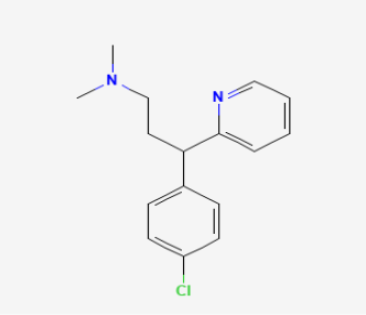
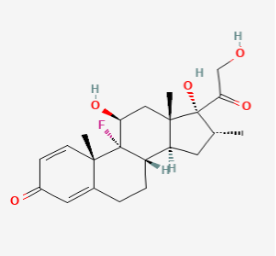
BrandName Chemical Structure
IUPAC (International Union of Pure and Applied Chemistry)/ Chemical name
Chlorpheniramine: 3-(4-chlorophenyl)-N, N-dimethyl-3-pyridin-2-ylpropan-1-amine
Dexamethasone: 9-fluoro-11,17-dihydroxy-17-(2-hydroxyacetyl)-10,13,16-trimethyl-6,7,8,11,12,14,15,16-octahydrocyclopenta[a]phenanthren-3-one
Intake routine/cycle
Daily dose
Take BrandName exactly as your doctor recommends. The dose may change based on your condition and how well you respond. Do not take more than prescribed without consulting your doctor.
Missed Dose
If you forget to take your medicine, take the medication as soon as you remember. If it’s nearly time for your next dose, skip the missed one and continue with your regular schedule. Always consult the doctor before making any changes to your dosage.
Overdose
It is not recommended to take BrandName more than the prescribed dose. Overdose may cause tremors, chest pain, fast or irregular heartbeat, nervousness, dizziness, headache, muscle cramps, or high blood pressure. In case of any of these symptoms, seek immediate medical help.
Storage
- Store the medicine at room temperature
- Keep away from sunlight and moisture
- Keep out of reach of children
BrandName Summary
BrandName eye drops are used to treat bacterial eye infections with inflammation. Chloramphenicol works by killing bacteria, while dexamethasone, a corticosteroid, reduces redness, swelling, pain, and irritation. This combination helps relieve symptoms such as eye redness, discharge, itching, and discomfort, promoting faster healing. It should be used only under medical supervision, as improper or prolonged use may lead to serious complications like increased eye pressure, delayed healing, glaucoma, or secondary infections.
These drops should not be used by people who are allergic to BrandName, those with viral or fungal eye infections, glaucoma or increased eye pressure, eye injuries, ulcers, or perforated cornea, children without medical guidance, tuberculosis or herpes eye infections, contact lens users, and pregnant and breastfeeding women should only take this medicine if your doctor prescribes, as it may harm the baby. Drops can be used with or without food, but alcohol should be avoided during treatment.
FAQ’s
What are the uses of chloramphenicol?
Chloramphenicol is an antibiotic that treats infections caused by bacteria, like ear infections, eye infections, or skin infections. It helps stop the bacteria from growing and spreading, so your infection gets better.
How does chloramphenicol work?
It stops bacteria from making proteins, which they need to grow and multiply. Without these proteins, the bacteria cannot survive or spread, so the infection gets better.
What are the side effects of chloramphenicol
You may notice burning, stinging, redness, or itching where the drops are applied. Mild swelling or a feeling of fullness in the ear can also occur. These usually go away on their own.
What class of medicine does chloramphenicol belong to?
Chloramphenicol is an antibiotic.
What are the common side effects of Dexamethasone?
Some people may feel burning, stinging, or irritation in the eye (with drops). With tablets, it may cause stomach upset, headache, trouble sleeping, or mood changes.
How does Dexamethasone work in the body?
Dexamethasone is a strong steroid medicine. It works by reducing swelling, redness, and irritation. It does this by blocking certain natural chemicals in the body that cause inflammation and allergic reactions.
Reference
- Oong GC, Tadi P. Chloramphenicol [Internet]. PubMed. Treasure Island (FL): StatPearls Publishing; 2023. Available from
- Chloramphenicol Dosage Guide + Max Dose, Adjustments [Internet]. Drugs.com. Available from
- PubChem. Chloramphenicol [Internet]. Nih.gov. PubChem; 2019. Available from
- PubChem. Dexamethasone [Internet]. pubchem.ncbi.nlm.nih.gov. Available from
- DrugBank. Dexamethasone [Internet]. go.drugbank.com. 2005. Available from
- Truemeds [Internet]. Truemeds.in. 2019 [cited 2026 Jan 3]. Available from
- Hoffman SL, Punjabi NH, Kumala S, Moechtar MA, Pulungsih SP, Rivai AR, et al. Reduction of Mortality in Chloramphenicol-Treated Severe Typhoid Fever by High-Dose Dexamethasone. New England Journal of Medicine. 1984 Jan 12;310(2):82–8.
Authors


Pranathi is a final year Pharm D student at Chalapathi Institute of Pharmaceutical Sciences. She loves learning and applying her knowledge in pharmacy and has a passion for writing, which allows her to express ideas clearly and creatively. She enjoys combining her technical skills with her love for writing and communication to make a meaningful impact. Currently she is working on a research paper about “Consanguineous marriages and its impact on children’s health” which will be published by the end of 2025.