Category- Allopathy
Medicine Highlights
| Uses | 1. To control high blood pressure |
| Common Side Effects | 1. Dizziness 2. Headache 3. Fatigue 4. Drowsiness 5. Dry‑mouth 6. Nausea 7. Insomnia 8. Rash 9. Weakness 10. Bradycardia |
| Additional Information | 1. Patients are recommended to limit salt intake, as it can be contraindicated and reduce drug action. |
| Storage | 1. The medicine should be stored at room temperature. 2. Keep away from sunlight and moisture. 3. Keep away from the reach of children |
| How to Take This Medicine | Take this medicine orally with a sip of water |
Moxonidine Uses
Moxonidine 0.2 mg is an oral medicine belonging to the category of diuretics and is used for the management of high blood pressure.
Moxonidine side effects
More Common
- Urination
- Dizziness
- Headache
- Fatigue
- Nausea
- Constipation
- Hypokalemia
- Photosensitivity
- Gout
- Hyperglycemia
Less Common
- Anxiety
- Depression
- Palpitations
- Edema
- Constipation
- Diarrhea
- Back‑pain
- Joint‑pain
- Rash
- Pruritus
How Moxonidine works
Moxonidine quiets the brain’s signals that keep blood vessels tight. This lets vessels relax, easing the heart’s workload and lowering blood pressure. Think of it like turning down the volume on the body’s internal “stress wiring,” so the system runs more smoothly with fewer side effects than older medicines.
Safety Measures and Warning
Breastfeeding
Moxonidine is not usually recommended during breastfeeding because there is no reliable information on whether it passes into breast milk or how it might affect a nursing infant.
Pregnancy
The safety of moxonidine in pregnancy is not established, and it can cause jaundice, low platelet counts, and diarrhea in patients. Inform your doctor if you are pregnant or planning to conceive.
Kidney and Liver Problems
Moxonidine builds up in kidney diseases and can cause strong drops in blood pressure, while liver problems may also slow its clearance leading to toxicity, so doctors give smaller doses and monitor closely.
Moxonidine Interaction with Food Product
Moxonidine is generally safe with food, and it is recommended to avoid alcohol and smoking with Moxonidine, as they can alter the drug’s effect and may cause severe drowsiness and sedation because of their direct action on the brain.
Moxonidine Interaction with Other Medicines
Avoid taking Moxonidine 0.2 mg with the following medicines, as it may increase or decrease the desired effect, or in worse cases, it could be fatal:
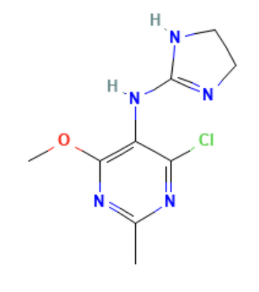
Moxonidine Chemical Structure
IUPAC (International Union of Pure and Applied Chemistry)/ Chemical name
4‑Chloro‑N‑(4,5‑dihydro‑1H‑imidazol‑2‑yl)‑6‑methoxy‑2‑methylpyrimidin‑5‑amine
Intake routine/cycle
Daily dose
Take Moxonidine exactly as your doctor recommends. The dose may change based on your condition and how well you respond. Do not take more than prescribed without consulting your doctor.
Missed Dose
If you forget to take your medicine, take the medication as soon as you remember. If it’s nearly time for your next dose, skip the missed one and continue with your regular schedule. Always consult the doctor before making any changes to your dosage.
Overdose
It is not recommended to take more than 4 mg of Moxonidine per day, as it may cause severe overdosing effects like extreme drowsiness, confusion, unconsciousness, sweating, double vision, low blood pressure, and slurred speech. Immediately seek medical attention and meet the doctor if necessary.
Storage
- Store the medicine at room temperature
- Keep away from sunlight and moisture
- Keep out of reach of children
Directions for use
- Take Moxonidine exactly as prescribed by your doctor, at the same time each day.
- Do not stop taking Moxonidine without your doctor’s approval, even if you feel better.
- If you forget to take Moxonidine, take it as soon as you remember. If it’s almost time for your next dose, skip the missed dose.
Moxonidine Summary
Moxonidine is an imidazoline receptor agonist used mainly for high blood pressure and sometimes off label for resistant hypertension or metabolic syndrome, it lowers pressure by stimulating imidazoline‑1 receptors in the brainstem, which quiet sympathetic nerve signals that normally tighten blood vessels and raise blood pressure, allowing vessels to relax and easing the heart’s workload. common side effects are dizziness, dry mouth, fatigue, headache and low blood pressure, food has little effect, but alcohol worsens drowsiness, and NSAIDs may blunt its action. Vulnerable groups include elderly patients, those with severe heart failure, kidney or liver disease, and pregnant or breastfeeding women. Overdoses usually above 4 mg, can cause severe low blood pressure, slow heart rate, drowsiness, and coma, needing urgent medical care.
FAQ’s
What are the uses of Moxonidine tablets?
Moxonidine tablets are used to treat mild to moderate high blood pressure when other medicines are not suitable. They may also be used off labels for resistant hypertension or metabolic syndrome, helping relax blood vessels and ease the heart’s workload.
What are the side effects of moxonidine tablets?
Moxonidine tablets can cause common side effects such as dizziness, headache, fatigue, drowsiness, dry mouth, nausea, insomnia, rash, weakness, and slow heart rate. Less common effects include anxiety, depression, palpitations, swelling, constipation, diarrhea, back pain, joint pain, and itching.
What is the drug class of moxonidine?
Moxonidine belongs to the drug class of centrally acting antihypertensives, specifically an imidazoline receptor agonist with some activity at α‑2 adrenergic receptors.
What is Moxonidine’s highest dose?
The highest recommended dose of moxonidine is 0.6 mg per day, usually taken as 0.2–0.4 mg twice daily.
Reference
- van Zwieten PA, Birkenhäger WH. Moxonidine: clinical pharmacology and therapeutic potential in the treatment of hypertension. J Hypertens Suppl. 1999 Sep;17(3):S29‑35. PMID: 10489097.Available from.
- Practo. Moxonidine – Uses, Dosage, Side Effects, Price, Composition. Practo Medicine Info. Updated 14 Jul 2022. Available from.
- National Center for Biotechnology Information. PubChem Compound Summary for CID 4810, Moxonidine. PubChem. Bethesda (MD): National Library of Medicine; [updated 2025 Dec 22; cited 2025 Dec 22]. Available from.
- Patient.info. Moxonidine for high blood pressure (Physiotens) – Medicine Information. Patient Platform Limited; [updated 2023 Oct 10; cited 2025 Dec 22]. Available from.
Authors



Siva Krishna Adithya Bhumireddy completed a Bachelor of Pharmacy from GIET School of Pharmacy, affiliated with Andhra University, and from his 3rd year of graduation, he was working as a freelance medical and publication writer. Having expertise in systematic reviews and clinical research. With his keen interest and skills in research and documentation practices, he also reviewed more than 150 manuscripts from international journals like Elsevier, Springer Nature, and Sage Journals, and all the manuscripts were indexed and appeared in PubMed, Scopus, and Web of Science databases, and he received honorary recognition letters and certificates from all of them. Siva Krishna Adithya also published a few systematic, narrative reviews and a few chapters of international expertise.