Category- Allopathy
Medicine Highlights
| Uses | 1. To treat plaque psoriasis (severe plaque-type psoriasis, pustular psoriasis generalized, pustular psoriasis localized) |
| Common Side Effects | 1. Back pain 2. Bad, unusual, or unpleasant (after) taste 3. Bone or joint pain 4. Change in taste 5. Continuing ringing or buzzing or other unexplained noise in the ears 6. Difficulty with moving or walking 7. Excessive muscle tone 8. Feeling of warmth 9. Headache (severe and continuing) 10. Hearing loss 11. Increased sensitivity to pain 12. Increased sensitivity to touch 13. Muscle stiffness, tension, or tightness 14. Nausea (severe and continuing) 15. Redness of the face, neck, arms, and occasionally, upper chest 16. Redness of the skin 17. Sleeplessness 18. Thinning of the skin with easy bruising 19. Tingling in the hands and feet 20. Tongue irritation 21. Trouble sleeping 22. Vomiting (severe and continuing) 23. Chapped, red, or swollen lips 24. Difficulty in wearing contact lenses 25. Dry or runny nose 26. Dryness of the eyes 27. Increased ability to sunburn 28. Increased amount of ear wax (unusual) 29. Irritation in the mouth or swollen gums 30. Itchy skin 31. Loss of hair (usually reversible) 32. Scaling and peeling of the eyelids, fingertips, palms, and soles of feet 33. Sticky skin 34. Unusual thirst |
| Additional Information | 1. This medicine should only be used with a prescription. 2. Off label uses may include tough skin problems where the skin grows too thick, scaly, or bumpy, like certain rare conditions (ichthyosis, Darier’s disease, lichen planus, pityriasis rubra pilaris), or even to help prevent some types of skin cancers. |
| Storage | 1. The medicine should be stored at room temperature. 2. Keep away from sunlight and moisture. 3. Keep away from the reach of children |
| How to Take This Medicine | Take this medicine orally with a sip of water |
Acitretin Uses
Acitretin 25 mg is an oral medicine belonging to the category of retinoids and is used to treat psoriasis
Acitretin side effects
More Common
- Back pain
- Bad, unusual, or unpleasant (after) taste
- Bone or joint pain
- Change in taste
- Continuing ringing or buzzing or other unexplained noise in the ears
- Difficulty with moving or walking
- Excessive muscle tone
- Feeling of warmth
- Headache (severe and continuing)
- Hearing loss
- Increased sensitivity to pain
- Increased sensitivity to touch
- Muscle stiffness, tension, or tightness
- Nausea (severe and continuing)
- Redness of the face, neck, arms, and occasionally, upper chest
- Redness of the skin
- Sleeplessness
- Thinning of the skin with easy bruising
- Tingling in the hands and feet
- Tongue irritation
- Trouble sleeping
- Vomiting (severe and continuing)
- Chapped, red, or swollen lips
- Difficulty in wearing contact lenses
- Dry or runny nose
- Dryness of the eyes
- Increased ability to sunburn
- Increased amount of ear wax (unusual)
- Irritation in the mouth or swollen gums
- Itchy skin
- Loss of hair (usually reversible)
- Scaling and peeling of the eyelids, fingertips, palms, and soles of feet
- Sticky skin
- Unusual thirst
Less Common
- Back pain
- Belching
- Burning, itching, pain in the hairy areas, pus at the root of the hair
- Decreased appetite
- Heartburn
- Indigestion
- Muscle aches
- Stomach discomfort, upset, or pain
- Upper abdominal or stomach pain
- Vomiting
- Changes in behavior
- Discouragement
- Feeling sad or empty
- Irritability
- Lack of appetite
- Loss of interest or pleasure
- Thoughts of killing oneself
- Tiredness
- Trouble concentrating
- Trouble sleeping
How Acitretin works
Acitretin works by binding to specific receptors in the skin called retinoic acid receptors (RARs and RXRs), which control how skin cells grow and shed. This slows down the rapid turnover of cells seen in psoriasis and other scaly skin conditions. By normalizing cell growth, it reduces thick plaques and scaling, helping the skin look and function more normally.
Safety Measures and Warning
Pregnancy
Pregnant women are not recommended to take acitretin, as there are no human studies supporting its safety during pregnancy. In case of an emergency, consult a doctor before using it.
Breastfeeding
Acitretin passes into breast milk. Tell your healthcare provider if you are breastfeeding or plan to breastfeed. Your healthcare provider will advise you if you should stop breastfeeding or stop acitretin.
Liver and Kidney Problems
Patients suffering from kidney and liver problems are more prone to kidney and liver damage, as the medicine is converted into a less toxic form in the liver and excreted through the kidney. They may cause interactions and cause severe toxicity, so consult a doctor before using them
Acitretin Interaction with Food Product
Acitretin is generally safe with food, and it is recommended to avoid alcohol and smoking with acitretin, as they can alter the drug’s effect and may cause severe drowsiness and sedation because of their direct action on the brain.
Acitretin Interaction with Other Medicines
Avoid taking Acitretin 25 mg with the following medicines, as it may increase or decrease the desired effect, or in worse cases, it could be fatal:
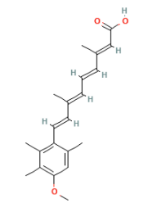
Acitretin Chemical Structure
IUPAC (International Union of Pure and Applied Chemistry)/ Chemical name
(2E, 4E, 6E, 8E)-9-(4-methoxy-2,3,6-trimethylphenyl)-3,7-dimethylnona-2,4,6,8-tetraenoic acid.
Intake routine/cycle
Daily dose
Take Acitretin exactly as your doctor recommends. The dose may change based on your condition and how well you respond. Do not take more than prescribed without consulting your doctor.
Missed Dose
If you forget to take your medicine, take the medication as soon as you remember. If it’s nearly time for your next dose, skip the missed one and continue with your regular schedule. Always consult the doctor before making any changes to your dosage.
Overdose
It is not recommended to take more than 90 mg of acitretin per day, as it may cause severe adverse effects like extreme drowsiness, confusion, low blood pressure, unconsciousness, high fever, and bone pains. Patients consuming alcohol or any antidepressant medications should not take acitretin, as it causes severe overdose leading to potential adverse effects.
Storage
- Store the medicine at room temperature
- Keep away from sunlight and moisture
- Keep out of reach of children
Directions for use
- Take Acitretin exactly as prescribed by your doctor, at the same time each day.
- Do not stop taking Acitretin without your doctor’s approval, even if you feel better.
- If you forget to take Acitretin, take it as soon as you remember. If it’s almost time for your next dose, skip the missed dose.
Acitretin Summary
Acitretin is an oral medicine from the retinoid (vitamin A–derived) drug class, FDA‑approved mainly for severe psoriasis, but doctors also use it off‑label for rare thick or scaly skin conditions like ichthyosis, Darier’s disease, lichen planus, pityriasis rubra pilaris, and sometimes to help prevent certain skin cancers; it works by slowing down the rapid growth of skin cells, though common side effects include dry skin, chapped lips, hair thinning, joint pain, and sensitivity to sunlight. Alcohol can worsen its effects or cause harmful by‑products, and vulnerable groups such as pregnant women, children, and people with liver or kidney disease must avoid it because of serious risks; overdose, usually above the prescribed daily 25–50 mg range, for example taking multiple capsules at once can lead to severe headache, nausea, liver damage, bone pain, and dangerous vitamin A-like toxicity.
FAQ’s
What are the uses of Acitretin tablets?
Acitretin tablets are prescribed mainly for severe psoriasis, helping reduce thick, scaly patches by slowing abnormal skin cell growth. Doctors may also use them off‑label for rare skin disorders like ichthyosis, Darier’s disease, lichen planus, and pityriasis rubra pilaris when other treatments don’t work.
What are the side effects of Acitretin tablets?
Acitretin tablets commonly cause dry skin, chapped lips, hair thinning, joint pain, and sensitivity to sunlight. More serious side effects include liver problems, high cholesterol, mood changes, and severe birth defects if taken during pregnancy.
What is the mechanism of action of the acitretin tablet?
Acitretin tablets work by binding to retinoic acid receptors (RARs and RXRs) in the skin, which regulate how skin cells grow and shed. This slows down the rapid turnover of cells seen in psoriasis and related disorders, helping reduce thick, scaly patches.
Reference
- Mayo Clinic. Acitretin (oral route): Description and proper use. [Internet]. Mayo Foundation for Medical Education and Research; 2025 [cited 2025 Dec 5]. Available from.
- Drugs.com. Acitretin: Uses, Dosage, Side Effects. [Internet]. Drugs.com; 2025 [cited 2025 Dec 5]. Available from.
- National Center for Biotechnology Information. Acitretin. In: StatPearls [Internet]. Treasure Island (FL): StatPearls Publishing; 2025 [cited 2025 Dec 5]. Available from.
- National Center for Biotechnology Information. PubChem Compound Summary for Acitretin. [Internet]. Bethesda (MD): National Library of Medicine; 2025 [cited 2025 Dec 5].Available from.
Authors



Siva Krishna Adithya Bhumireddy completed a Bachelor of Pharmacy from GIET School of Pharmacy, affiliated with Andhra University, and from his 3rd year of graduation, he was working as a freelance medical and publication writer. Having expertise in systematic reviews and clinical research. With his keen interest and skills in research and documentation practices, he also reviewed more than 150 manuscripts from international journals like Elsevier, Springer Nature, and Sage Journals, and all the manuscripts were indexed and appeared in PubMed, Scopus, and Web of Science databases, and he received honorary recognition letters and certificates from all of them. Siva Krishna Adithya also published a few systematic, narrative reviews and a few chapters of international expertise.