Category- Allopathy
Medicine Highlights
| Uses | 1. To treat chest pain post heart attack 2. To reduce the chances of heart failure |
| Common Side Effects | 1. Headache 2. Dizziness 3. Numbness, tingling, or burning in your arms, feet, or face 4. Low blood pressure 5. Flushing |
| Additional Information | 1. Always keep the medicine away from heat and keep in its container only |
| Storage | 1. The medicine should be stored at room temperature. 2. Keep away from sunlight and moisture. 3. Keep away from the reach of children |
| How to Take This Medicine | To be taken orally with a sip of water |
Nitroglycerin Uses
Nitroglycerin 2.6 mg (cr) is an oral medicine belonging to the category of anti anginal drugs and is used for the following indications:
- To treat chest pain post heart attack
- To reduce the chances of heart failure.
Nitroglycerin side effects
More Common
- Headache
- Dizziness
- Numbness, tingling, or burning in your arms, feet, or face
- Low blood pressure
- Flushing
Less Common
- Severe or throbbing headaches that do not become less severe with continued use of nitroglycerin;
- Pounding heartbeats or fluttering in your chest;
- Slow heart rate;
- Feeling like you might pass out; or
- New or worsening chest pain.
How Nitroglycerin works
Nitroglycerin works by quickly entering the bloodstream when taken, and it turns into a substance called nitric oxide, which tells the muscles in blood vessel walls to relax. This relaxation makes the vessels wider, allowing blood to flow more easily, reducing the strain on the heart, improving oxygen supply, and easing chest pain.
Safety Measures and Warning
Pregnancy
Nitroglycerin’s safety in pregnancy isn’t well studied, so if you’re pregnant or planning to be, tell your doctor.
Breastfeeding
Nitroglycerin passes into breast milk. Tell your healthcare provider if you are breastfeeding or plan to breastfeed. Your healthcare provider will advise you if you should stop breastfeeding or stop Nitroglycerin.
Kidney and Liver Problems
Patients suffering from kidney and liver problems are more prone to kidney and liver damage, as the drug is made into a less toxic form in the liver and kidney, so consult a doctor before using it.
Nitroglycerin Interaction with Food Product
Alcohol and smoking can simultaneously affect the drug’s action and show an effect on blood glucose levels by affecting the liver and pancreas. It can sometimes increase blood sugar levels and sometimes decrease blood sugar levels.
Nitroglycerin Interaction with Other Medicines
Avoid taking nitroglycerin 2.6 mg (Cr) with the following medicines, as it may increase or decrease the desired effect, or in worse cases, it could be fatal:
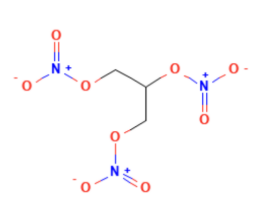
Nitroglycerin Chemical Structure
IUPAC (International Union of Pure and Applied Chemistry)/ Chemical name
propane-1,2,3-triyl trinitrate
Intake routine/cycle
Daily dose
Take nitroglycerin exactly as your doctor recommends. The dose may change based on your condition and how well you respond. Do not take more than prescribed without consulting your doctor.
Missed Dose
If you forget to take your medicine, take the medication as soon as you remember. If it’s nearly time for your next dose, skip the missed one and continue with your regular schedule. Always consult the doctor before making any changes to your dosage.
Overdose
It is not recommended to take more than 25 mg of nitroglycerin per day, as it may cause severe overdosing effects like extreme drowsiness, confusion, low blood pressure, unconsciousness, palpitations, bluish lips and loss of coordination. If you face any of the severe effects, see the doctor.
Storage
- Store the medicine at room temperature
- Keep away from sunlight and moisture
- Keep out of reach of children
Directions for use
- Take Nitroglycerin exactly as prescribed by your doctor, at the same time each day.
- Do not stop taking Nitroglycerin without your doctor’s approval, even if you feel better.
- If you forget to take Nitroglycerin, take it as soon as you remember. If it’s almost time for your next dose, skip the missed dose.
Nitroglycerin Summary
Nitroglycerin is a medicine used to treat chest pain, heart failure, and high blood pressure by helping blood vessels relax and widen, which makes it easier for the heart to pump blood and get enough oxygen. It works by turning into a substance in the body that opens the blood vessels and lowers the pressure on the heart. Common side effects include headaches, feeling dizzy, flushed skin, and low blood pressure, especially when starting medicine. People with certain heart problems, very low blood pressure, recent head injuries, or those taking medicines for sexual health like sildenafil should avoid it, because it can cause a dangerous drop in blood pressure. Drinking alcohol while using it can make dizziness worse, and although most foods are safe, it’s best to avoid grapefruit juice unless your doctor says it’s okay.
FAQ’s
What are the indications for nitroglycerin?
Nitroglycerin is a medicine used to treat chest pain, heart failure, and high blood pressure by helping blood vessels relax and widen, which makes it easier for the heart to pump blood and get enough oxygen.
What is the mechanism of action of nitroglycerin?
Nitroglycerin starts working as a helper that calms down tight blood vessels. Imagine your heart is trying to push blood through narrow pipes, and it’s struggling; this causes chest pain. When you place a nitroglycerin tablet under your tongue, it melts and quickly sends a message through your blood. That message tells the blood vessels to relax and open, like turning tight pipes into wider ones. As the blood flows more easily, your heart gets the oxygen it needs, and the pain fades away.
What is the drug class of nitroglycerin?
Nitroglycerin is an anti-anginal medicine used to treat chest pain due to heart attacks, heart failure, and angina.
What are the brand names of nitroglycerin in India?
Nitroglycerin has different brand names that are endorsed by marketing companies, but the salt name remains the same. Many of the brands fail to pass the CDSCO standard quality test, and it’s the time when SayaCare steps in, and we provide the medicine with a quality test report.
Reference
- National Center for Biotechnology Information. PubChem Compound Summary for CID 4510, Nitroglycerin. Bethesda (MD): National Library of Medicine. [cited 2025 Jul 23]. Available from.
- Drugs.com. Nitroglycerin oral/sublingual. [Internet]. [cited 2025 Jul 23]. Available from.
- Mayo Clinic. Nitroglycerin (oral route, sublingual route) [Internet]. [cited 2025 Jul 23]. Available from.
- National Center for Biotechnology Information. Nitroglycerin [Internet]. Bethesda (MD): National Library of Medicine (US); [cited 2025 Jul 23]. Available from.
- WebMD. Nitroglycerin Sublingual: Uses, Side Effects, Interactions [Internet]. [cited 2025 Jul 23]. Available from.
Authors



Siva Krishna Adithya Bhumireddy completed a Bachelor of Pharmacy from GIET School of Pharmacy, affiliated with Andhra University, and from his 3rd year of graduation, he was working as a freelance medical and publication writer. Having expertise in systematic reviews and clinical research. With his keen interest and skills in research and documentation practices, he also reviewed more than 150 manuscripts from international journals like Elsevier, Springer Nature, and Sage Journals, and all the manuscripts were indexed and appeared in PubMed, Scopus, and Web of Science databases, and he received honorary recognition letters and certificates from all of them. Siva Krishna Adithya also published a few systematic, narrative reviews and a few chapters of international expertise.