Category- Allopathy
About Nepafenac 0.1% w/v
Nepafenac 0.1% eye drops is a non-steroidal anti-inflammatory drug (NSAID) used mainly after cataract surgery. Once inside the eye, it changes into its active form (amfenac) and blocks prostaglandins, the chemicals responsible for pain, redness, and swelling. By doing this, it helps relieve pain, control inflammation, and prevent complications like swelling in the back of the eye (macular edema), especially in diabetic patients. It is generally prescribed to reduce discomfort, redness, and irritation after eye surgery and to support faster healing.
Most people tolerate it well, though mild burning, stinging, blurred vision, or eye redness may occur, while rare cases may involve delayed healing, severe allergy, or corneal problems. It should be avoided by people allergic to NSAIDs like aspirin or ibuprofen, those with asthma triggered by painkillers, or those with active eye infections or slow healing problems and used with caution in pregnancy or breastfeeding only if advised by a doctor.
Medicine Highlights
| Uses | 1. To treat pain and swelling in the eyes after cataract surgery 2. To treat eye irritation, redness, and discomfort after eye surgery 3. To treat temporary eye inflammation |
| Common Side Effects | 1. Mild burning or stinging in the eye after putting drops 2. Blurred vision for a short time 3. Feeling like something is in the eye 4. Eye redness, watering, or itching |
| Additional Information | 1. Remove contact lenses before using the drops and wait at least 15 minutes before reinserting them. 2. Avoid driving or operating machinery immediately if your vision is blurred after applying the drops. |
| Storage | 1- The medicine should be stored at room temperature 2- Keep away from sunlight and moisture 3- Keep away from the reach of children |
| How to Take This Medicine | This medicine is meant to be used in the eyes only |
Nepafenac 0.1% w/v Uses
Nepafenac 0.1% eye drops is a non-steroidal anti-inflammatory medicine (NSAID). It is useful for the following indications:
- Pain and swelling in Eye post cataract surgery
- Eye inflammation
Directions for use
- Take this medicine exactly as prescribed by your doctor, at the same time each day.
- Do not stop taking this medicine without your doctor’s approval, even if you feel better.
- If you forget to take this medicine, take it as soon as you remember. If it’s almost time for your next dose, skip the missed dose.
Nepafenac 0.1% w/v side effects
More Common
- Mild burning or stinging in the eye after putting drops
- Blurred vision for a short time
- Feeling like something is in the eye
- Eye redness, watering, or itching
Less Common
- Eye pain that doesn’t go away
- Swelling around the eye or eyelids
- Sensitivity to light
- Headache
- Watery nose or sneezing
How Nepafenac 0.1% w/v works
Nepafenac 0.1% w/v works by reducing pain and swelling in the eye after surgery. Once you use the drops, Nepafenac changes into its active form called Amfenac inside the eye. Amfenac blocks certain natural chemicals called prostaglandins, which cause redness, pain, and swelling. This helps your eye heal faster and prevents swelling after surgery.
Safety Measures and Warning
Allergy Warning
If you ever had an allergy to Nepafenac or similar pain-relief medicines (like aspirin, ibuprofen, or other NSAIDs), you should not use it because it may cause serious allergic reactions.
Asthma
Some people with asthma may get breathing problems or asthma attacks after using Nepafenac or similar medicines. If you have asthma, tell your doctor before using this medicine, and stop using it if you notice any trouble breathing
Slow Wound healing
Nepafenac may slow down the natural healing of the eye, so it should be used only if your doctor recommends it.
Pregnant or breastfeeding women
It should be avoided unless the doctor clearly says it is safe, as the medicine may affect the fetus growth.
Nepafenac 0.1% w/v Interaction with Food Product
Avoid taking caffeinated food, alcohol and smoking simultaneously as they can cause an increase or decrease in drug action; also, they may cause severe drowsiness and sedation as they act on the brain directly.
Nepafenac 0.1% w/v Interaction with Other Medicines
Avoid taking Nepafenac 0.1% w/v with the following medicines, as it may increase or decrease the desired effect, or in worse cases, it could be fatal:
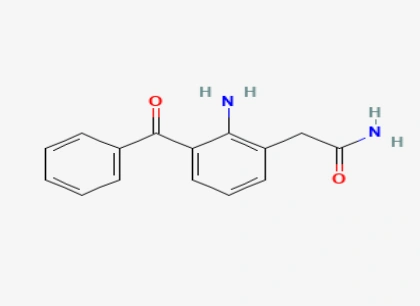
Nepafenac 0.1% w/v Chemical Structure
IUPAC (International Union of Pure and Applied Chemistry) / Chemical name
2-(2-amino-3-benzoylphenyl) acetamide
Intake routine/cycle
Daily dose
Take Nepafenac 0.1% w/v exactly as your doctor recommends. The dose may change based on your condition and how well you respond. Do not take more than prescribed without consulting your doctor.
Missed Dose
If you forget to take your medicine, take the medication as soon as you remember. If it’s nearly time for your next dose, skip the missed one and continue with your regular schedule. Always consult the doctor before making any changes to your dosage.
Overdose
Do not use more than prescribed dose of Nepafenac 0.1% w/v. Using too many drops can increase the risk of eye irritation, stinging, redness, or blurred vision. If you experience severe reactions such as swelling around the eyes, eye pain, vision changes, or difficulty breathing, stop using the drops immediately and seek medical attention.
Storage
- Store the medicine at room temperature
- Keep away from sunlight and moisture
- Keep out of reach of children
FAQ’s
What are the uses of Nepafenac 0.1% w/v eye drops?
Nepafenac 0.1% w/v eye drops are mainly prescribed to reduce pain, redness, and swelling in the eye after cataract surgery or other eye operations. Doctors use nepafenac because it is a nonsteroidal anti-inflammatory drug (NSAID) that helps the eye heal more comfortably and reduces the risk of complications after surgery. Sometimes, doctors may use it for other types of eye inflammation, but its primary use is for post-surgical care.
What are the common side effects of Nepafenac 0.1% w/v eye drops?
Common side effects include a feeling like something is in the eye, mild eye pain, sticky or dry feeling in the eyes, blurred vision, decreased vision, and mild eye redness
How does Nepafenac 0.1% w/v work in the eye?
Nepafenac 0.1% w/v changes into its active form (called amfenac) inside the eye. This active form blocks certain natural chemicals called prostaglandins that cause pain, redness, and swelling.
What class of drug is nepafenac?
Nepafenac belongs to the class of medicines called non-steroidal anti-inflammatory drugs (NSAIDs).
Reference
- PubChem. Nepafenac [Internet]. Nih.gov. PubChem; 2025 [cited 2025 Sep 3]. Available from
- Nepafenac [Internet]. go.drugbank.com. Available from
- Nepafenac (ophthalmic route) [Internet]. Mayo Clinic. 2025. Available from
- Nepafenac Ophthalmic: Usage, Side Effects, Warnings [Internet]. Drugs.com. Available from
Authors


Pranathi is a final year Pharm D student at Chalapathi Institute of Pharmaceutical Sciences. She loves learning and applying her knowledge in pharmacy and has a passion for writing, which allows her to express ideas clearly and creatively. She enjoys combining her technical skills with her love for writing and communication to make a meaningful impact. Currently she is working on a research paper about “Consanguineous marriages and its impact on children’s health” which will be published by the end of 2025.