Category- Allopathy
Medicine Highlights
| Uses | 1. To treat moderate to severe symptoms of Alzheimer’s dementia. |
| Common Side Effects | 1. Dizziness 2. Headache 3. Confusion 4. Constipation. |
| Additional Information | 1. Avoid driving or any hazardous activity after consuming memantine, as it can cause dizziness or drowsiness. 2. Its off-label indications include migraines and severe pains This medicine should be used with a prescription only. |
| Storage | 1. The medicine should be stored at room temperature. 2. Keep away from sunlight and moisture. 3. Keep away from the reach of children |
| How to Take This Medicine | To be taken orally with a sip of water |
Memantine Uses
Memantine 10 mg is an oral medicine belonging to the category of N-methyl-D-aspartate (NMDA) receptor antagonists and is used for the management of moderate to severe symptoms of Alzheimer’s dementia.
Memantine side effects
More Common
- Dizziness
- Headache
- Confusion
- Constipation.
Less Common
- Bloating or swelling of the face, arms, hands, lower legs, or feet
- Blurred vision
- Dizziness
- Headache
- Nervousness
- Pounding in the ears
- Rapid weight gain
- Slow or fast heartbeat
- Tingling of the hands or feet
- Unusual weight gain or loss
How Memantine works
Memantine protects brain cells by blocking excess glutamate, a chemical that overstimulates and harms neurons in Alzheimer’s disease. It attaches to N-methyl-D-aspartate (NMDA) receptors, like gates that control signal flow, and keeps them from staying open too long. This helps reduce brain noise while preserving normal learning and memory.
Safety Measures and Warning
Pregnancy
The safety of memantine in pregnancy is not established. Inform your doctor if you are pregnant or planning to conceive
Kidney and Liver Problems
Memantine is known to be safe for use in liver and kidney disease patients.
Past Mental Health Issues
Memantine directly acts on the brain and causes different side effects like sedation, drowsiness, and suicidal thoughts. Inform the doctor about your past mental health issues before using memantine.
Breastfeeding
Memantine is not usually recommended during breastfeeding because there is no reliable information on whether it passes into breast milk or how it might affect a nursing infant.
Heart Problems
Memantine is generally safe for heart patients, but rare cases of bradycardia (slow heart rate) have been reported, so cardiac monitoring is advised in vulnerable individuals.
Memantine Interaction with Food Product
Avoid consuming alcohol and smoking simultaneously together, as it may affect the drug’s action and show an effect on the brain, leading to severe drowsiness, sedation, and coma in severe cases.
Memantine Interaction with Other Medicines
Avoid taking Memantine 10 mg with the following medicines, as it may increase or decrease the desired effect, or in worse cases, it could be fatal:
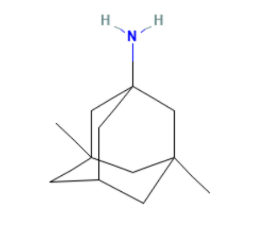
Memantine Chemical Structure
IUPAC (International Union of Pure and Applied Chemistry)/ Chemical name
1-amino-3,5-dimethyladamantane.
Intake routine/cycle
Daily dose
Take Memantine exactly as your doctor recommends. The dose may change based on your condition and how well you respond. Do not take more than prescribed without consulting your doctor.
Missed Dose
If you forget to take your medicine, take the medication as soon as you remember. If it’s nearly time for your next dose, skip the missed one and continue with your regular schedule. Always consult the doctor before making any changes to your dosage.
Overdose
It is not recommended to take more than 28 mg of Memantine per day, as it may cause severe overdosing effects like extreme drowsiness, confusion, unconsciousness, sweating, double vision, low blood pressure, and slurred speech. Immediately seek medical attention and meet the doctor if necessary.
Storage
- Store the medicine at room temperature
- Keep away from sunlight and moisture
- Keep out of reach of children
Directions for use
- Take memantine exactly as prescribed by your doctor, at the same time each day.
- Do not stop taking memantine without your doctor’s approval, even if you feel better.
- If you forget to take memantine, take it as soon as you remember. If it’s almost time for your next dose, skip the missed dose.
Memantine Summary
Memantine is used to ease symptoms of moderate to severe Alzheimer’s disease. It belongs to a class called N-methyl-D-aspartate (NMDA) receptor antagonists, which helps calm overactive brain signals. Think of it as a traffic controller that prevents glutamate, a brain chemical, from causing signal overload. It’s also used off-label for Parkinson’s dementia and obsessive-compulsive disorder (OCD). Common side effects include dizziness, headache, and confusion. It doesn’t interact with food but combining it with other brain-affecting drugs should be done carefully under medical guidance.
FAQ’s
What is memantine?
Memantine is a prescription medicine used to treat moderate to severe Alzheimer’s disease by helping regulate brain signals involved in memory and learning.
What are the side effects of Memantine tablets?
Memantine tablets commonly cause drowsiness, weight gain, dry mouth, stomach upset, and nausea; rarely, long‑term use may lead to movement disorders (extrapyramidal symptoms).
What are the uses of memantine tablets?
Memantine is primarily used to treat moderate to severe Alzheimer’s disease and is sometimes prescribed off-label for other brain-related conditions like Parkinson’s dementia, OCD, and schizophrenia.
What is Memantine highest dose?
The maximum recommended dose of memantine is 28 mg per day, typically divided into two or three doses. This applies to adults being treated for balance disorders or peripheral circulatory issues.
Reference
- National Center for Biotechnology Information. PubChem Compound Summary for CID 4054, Memantine. [Internet]. Bethesda (MD): National Library of Medicine (US); [cited 2025 Oct 24]. Available from.
- National Center for Biotechnology Information. Memantine. In: LiverTox: Clinical and Research Information on Drug-Induced Liver Injury [Internet]. Bethesda (MD): National Institute of Diabetes and Digestive and Kidney Diseases; 2012 [updated 2017 Sep 21; cited 2025 Oct 24]. Available from.
- Mayo Clinic Staff. Memantine (Oral Route) Description and Brand Names. [Internet]. Rochester (MN): Mayo Foundation for Medical Education and Research; [cited 2025 Oct 24]. Available from.
- Drugs.com. Memantine: Uses, Dosage, Side Effects. [Internet]. [cited 2025 Oct 24]. Available from.
Authors



Siva Krishna Adithya Bhumireddy completed a Bachelor of Pharmacy from GIET School of Pharmacy, affiliated with Andhra University, and from his 3rd year of graduation, he was working as a freelance medical and publication writer. Having expertise in systematic reviews and clinical research. With his keen interest and skills in research and documentation practices, he also reviewed more than 150 manuscripts from international journals like Elsevier, Springer Nature, and Sage Journals, and all the manuscripts were indexed and appeared in PubMed, Scopus, and Web of Science databases, and he received honorary recognition letters and certificates from all of them. Siva Krishna Adithya also published a few systematic, narrative reviews and a few chapters of international expertise.