Category- Allopathy
Medicine Highlights
| Uses | 1. To treat deep vein blood clots 2. To treat lung-related blood clots 3. To dissolve blood clots during surgeries 4. To reduce the risk of blood clots and prevent strokes related to clots. 5. To prevent blood clots related to irregular heartbeat. |
| Common Side Effects | 1. Back pain 2. Bleeding gums 3. Bloody stools 4. Bowel or bladder dysfunction 5. Burning, crawling, itching, numbness, prickling, “pins and needles”, or tingling feelings 6. Coughing up blood 7. Difficulty with breathing or swallowing 8. Dizziness 9. Headache 10. Increased menstrual flow or vaginal bleeding 11. Leg weakness 12. Nosebleeds 13. Numbness 14. Paralysis 15. Prolonged bleeding from cuts 16. Red or black, tarry stools 17. Red or dark brown urine 18. Vomiting of blood or material that looks like coffee grounds |
| Additional Information | 1. Its off-label indications include heparin-related low platelet count and supporting stents. 2. Use this medication only after consulting a doctor with prescription only |
| Storage | 1. The medicine should be stored at room temperature. 2. Keep away from sunlight and moisture. 3. Keep away from the reach of children |
| How to Take This Medicine | Swallow this medicine with water. |
Rivaroxaban Uses
Rivaroxaban 20 mg is an oral medicine belonging to the category of oral anticoagulants and is used for the following indications:
- Deep vein blood clots
- Lung-related blood clots
- Blood clots during surgeries
- Risk of blood clots
- Strokes related to blood clots
- Arrhythmia-related blood clots.
Rivaroxaban side effects
More Common
- Back pain
- Bleeding gums
- Bloody stools
- Bowel or bladder dysfunction
- Burning, crawling, itching, numbness, prickling, “pins and needles”, or tingling feelings
- Coughing up blood
- Difficulty with breathing or swallowing
- Dizziness
- Headache
- Increased menstrual flow or vaginal bleeding
- Leg weakness
- Nosebleeds
- Numbness
- Paralysis
- Prolonged bleeding from cuts
- Red or black, tarry stools
- Red or dark brown urine
- Vomiting of blood or material that looks like coffee grounds
Less Common
- Fainting
- Pain in the arms or legs
- Wound secretion
How Rivaroxaban works
Rivaroxaban helps prevent harmful blood clots by blocking a key clotting protein called Factor Xa, which slows down the body’s ability to form clots. Resulting in decreasing the density of the clot and lowering the chances of clot formation by thinning the blood, it lowers the risk of stroke, chest pain, or breathing trouble caused by these clots.
Safety Measures and Warning
Pregnancy
Rivaroxaban is not safe to consume during pregnancy due to increased bleeding risk and hasn’t been well studied in pregnant women. Doctors often recommend switching to a safer option.
Breastfeeding
Rivaroxaban isn’t usually advised while breastfeeding due to unknown effects on the baby. Always talk to your doctor before using it.
Kidney and Liver Problems
Rivaroxaban isn’t safe in serious kidney or liver disease, as it can build up and raise bleeding risk. Doctors may choose a safer option if you inform them in advance.
Rivaroxaban Interaction with Food Product
Avoid consuming alcohol and smoking simultaneously, as it may affect the drug’s action and show effects like falling blood pressure, leading to severe drowsiness, sedation, and coma in severe cases.
Rivaroxaban Interaction with Other Medicines
Avoid taking Rivaroxaban 20 mg with the following medicines, as it may increase or decrease the desired effect, or in worse cases, it could be fatal:
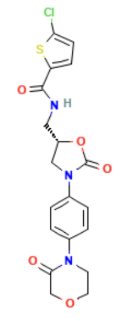
Rivaroxaban Chemical Structure
IUPAC (International Union of Pure and Applied Chemistry)/ Chemical name
5-chloro-N-({(5S)-2-oxo-3-[4-(3-oxomorpholin-4-yl)phenyl]-1,3-oxazolidin-5-yl}methyl)thiophene-2-carboxamide
Intake routine/cycle
Daily dose
Take Rivaroxaban exactly as your doctor recommends. The dose may change based on your condition and how well you respond. Do not take more than prescribed without consulting your doctor.
Missed Dose
If you forget to take your medicine, take the medication as soon as you remember. If it’s nearly time for your next dose, skip the missed one and continue with your regular schedule. Always consult the doctor before making any changes to your dosage.
Overdose
It is not recommended to take more than 30 mg of Rivaroxaban per day, as it may cause severe overdosing effects like extreme drowsiness, confusion, unconsciousness, sweating, double vision, low blood pressure, and slurred speech. Immediately seek medical attention and meet the doctor if you experience overdose symptoms.
Storage
- Store the medicine at room temperature
- Keep away from sunlight and moisture
- Keep out of reach of children.
Directions for use
- Take rivaroxaban exactly as prescribed by your doctor, at the same time each day.
- Do not stop taking rivaroxaban without your doctor’s approval, even if you feel better.
- If you forget to take the rivaroxaban, take it as soon as you remember. If it’s almost time for your next dose, skip the missed dose.
Rivaroxaban Summary
Rivaroxaban is a blood thinner that helps prevent and treat harmful clots in the legs, lungs, heart, and post-surgery in the hip or knee area. It works by blocking a key clotting protein called Factor Xa, slowing down the body’s ability to form clots. Off -label uses include conditions like clots in the brain or liver or in cancer patients. Common side effects include bleeding and easy bruising. You should take it exactly as prescribed, as some doses work better with food, and avoid alcohol or painkillers like ibuprofen, which can increase bleeding risk. Store it at room temperature, away from heat and moisture.
FAQ’s
What are the uses of Rivaroxaban tablets?
Rivaroxaban tablets are used to prevent and treat harmful blood clots in conditions like deep vein thrombosis, pulmonary embolism, and atrial fibrillation. They also help reduce stroke risk and protect blood flow after certain heart procedures.
What are the side effects of Rivaroxaban tablets?
Common side effects of rivaroxaban include bleeding, easy bruising, and dizziness. Serious risks may include internal bleeding, allergic reactions, and spinal blood clots in certain procedures.
What is the drug class of Rivaroxaban tablets?
Rivaroxaban belongs to the drug class of oral anticoagulants and used for various types of blood clots.
What is the highest dose of Rivaroxaban tablets?
The highest dose of rivaroxaban is 20 mg once daily, typically used for stroke prevention in atrial fibrillation or treatment of deep vein thrombosis. In some cases, 10 mg twice daily is used short-term during initial clot treatment.
Reference
- National Center for Biotechnology Information. PubChem Compound Summary for CID 987703, Rivaroxaban. Available from.
- Mayo Clinic. Rivaroxaban (Oral Route) – Description. Available from.
- Drugs.com. Rivaroxaban Monograph. Available from.
- Kubitza D, Becka M, Zuehlsdorf M, Mueck W. Rivaroxaban. In: StatPearls [Internet]. Treasure Island (FL): StatPearls Publishing; 2023 Jan–. Available from.
Authors



Siva Krishna Adithya Bhumireddy completed a Bachelor of Pharmacy from GIET School of Pharmacy, affiliated with Andhra University, and from his 3rd year of graduation, he was working as a freelance medical and publication writer. Having expertise in systematic reviews and clinical research. With his keen interest and skills in research and documentation practices, he also reviewed more than 150 manuscripts from international journals like Elsevier, Springer Nature, and Sage Journals, and all the manuscripts were indexed and appeared in PubMed, Scopus, and Web of Science databases, and he received honorary recognition letters and certificates from all of them. Siva Krishna Adithya also published a few systematic, narrative reviews and a few chapters of international expertise.