Category- Allopathy
Medicine Highlights
| Uses | 1. To treat severe pains after surgery all over the body. |
| Common Side Effects | 1. Nausea 2. Constipation 3. Dry mouth 4. Drowsiness 5. Dizziness 6. Vomiting. |
| Additional Information | 1. Avoid driving or any hazardous activity after consuming tramadol, as it can cause dizziness or drowsiness. 2. This medicine belongs to the class of narcotic substances, and it should not be prescribed for minor pains 3. It should not be prescribed to children under 12 years, and you need to check for risk factors like breathing issues. |
| Storage | 1. The medicine should be stored at room temperature. 2. Keep away from sunlight and moisture. 3. Keep away from the reach of children |
| How to Take This Medicine | 1. To be swallowed with a sip of water |
Tramadol Uses
Tramadol 100 mg (PR) is an oral medicine belonging to the category of opioid analgesics and is used for the following indications:
- Pain after surgical procedures
- Moderate to severe pains
Tramadol side effects
More Common
- Nausea
- Constipation
- Dry mouth
- Drowsiness
- Dizziness
- Vomiting.
Less Common
- Suicidal thoughts
- Hallucinations
- Breathing problems or wheezing
- Racing heart
- Fever or general ill feeling
- Swollen lymph nodes
- Swelling of the face, lips, mouth, tongue, or throat
- Trouble swallowing or throat tightness
- Itching, skin rash, or pale red bumps on the skin called hives
- Nausea or vomiting
- Dizziness, feeling lightheaded, or fainting
- Stomach cramps
- Joint pain
How Tramadol works
Tramadol works by calming the body’s pain signals like a smart mechanic fixing a noisy engine. Imagine your nerves as electric wires sending pain messages to the brain, like a loud alarm during joint pain or injury. Tramadol steps in with two tools: one quiets the alarm by attaching to special pain-blocking switches (opioid receptors), and the other boosts natural calming chemicals like serotonin and norepinephrine. Once inside, it’s converted into a stronger form that fine-tunes this effect.
Safety Measures and Warning
Pregnancy
Tramadol can show effects on pregnant or breastfeeding women and show their effect on the child, so it is said to take the medication only after the doctor’s recommendation.
Breastfeeding
Tramadol passes into breast milk. Tell your healthcare provider if you are breastfeeding or plan to breastfeed. Your healthcare provider will advise you if you should stop breastfeeding or stop tramadol.
Past Mental Health Issues
Patients having past psychiatric problems can experience potential psychiatric symptoms, so inform your doctor before using.
Heart Problems
Tramadol can affect the functioning of the heart. Consult the doctor before using it.
Tramadol Interaction with Food Product
Grape juice may alter the metabolism of tramadol, leading to an increase in the time of elimination from the body, causing toxicity to internal organs. Alcohol should be avoided before and after taking the medicine, as it can increase side effects and cause more potential adverse reactions like severe drowsiness. loss of control over the body.
Tramadol Interaction with Other Medicines
Avoid taking Tramadol 100 mg (PR) with the following medicines, as it may increase or decrease the desired effect, or in worse cases, it could be fatal:
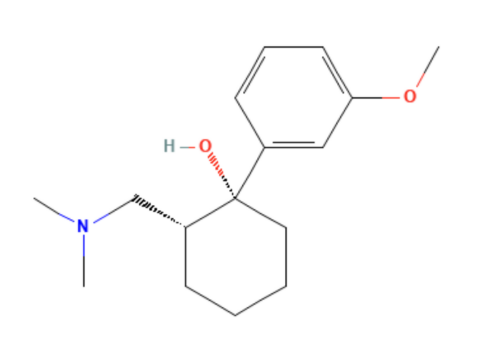
Tramadol Chemical Structure
IUPAC (International Union of Pure and Applied Chemistry)/ Chemical name
1-[2-(2,4-dimethylphenylsulfanyl) phenyl] piperazine
Intake routine/cycle
Daily dose
Take Tramadol exactly as your doctor recommends. The dose may change based on your condition and how well you respond. Do not take more than prescribed without consulting your doctor.
Missed Dose
If you forget to take your medicine, take the medication as soon as you remember. If it’s nearly time for your next dose, skip the missed one and continue with your regular schedule. Always consult the doctor before making any changes to your dosage.
Overdose
It is not recommended to take more than 500 mg of tramadol per day, as it may cause severe addiction and psychological effects. Patients consuming alcohol or any antidepressant medications should not take Tramadol as it causes severe overdose leading to potential adverse effects.
Storage
- Store the medicine at room temperature
- Keep away from sunlight and moisture
- Keep out of reach of children.
Directions for use
- Take Tramadol exactly as prescribed by your doctor, at the same time each day.
- Do not stop taking Tramadol without your doctor’s approval, even if you feel better.
- If you forget to take the Tramadol, take it as soon as you remember. If it’s almost time for your next dose, skip the missed dose.
Tramadol Summary
Tramadol is a centrally acting synthetic opioid analgesic used to treat moderate to moderately severe pain. It works by binding to μ-opioid receptors and inhibiting the reuptake of serotonin and norepinephrine, altering pain perception. Common side effects include nausea, dizziness, constipation, drowsiness, and dry mouth. It should be avoided by individuals with severe respiratory issues, recent monoamine oxidase inhibitor (MAOI) use, or a history of seizures. Alcohol and central nervous system depressants increase sedation and breathing risks. Food may delay absorption but doesn’t affect efficacy. Tramadol is contraindicated in children under 12 and should be used cautiously in pregnancy, breastfeeding, and hepatic or renal impairment.
FAQ’s
Which class of drugs does tramadol belong to?
Tramadol belongs to a class of opioid analgesics that are only used in severe pain conditions.
Complications of taking extended-release tramadol?
Extended-release tramadol can lead to addiction, serotonin syndrome, seizures, and respiratory depression, especially at high doses or with other medications. Long-term use may also cause cognitive decline, fatigue, and gastrointestinal issues.
What are tramadol injection side effects?
Tramadol injection may cause nausea, dizziness, sleepiness, dry mouth, constipation, and vomiting. Serious side effects include respiratory depression, seizures, and serotonin syndrome in rare cases.
What are the uses of tramadol hydrochloride and acetaminophen or paracetamol tablets?
Tramadol hydrochloride and acetaminophen (Ultracet) tablets are used for short-term relief of moderate to severe acute pain. They combine opioid and non-opioid mechanisms to enhance pain control while minimizing individual drug doses.
Reference
- Drugs.com [Internet]. Tramadol: Uses, Side Effects, Dosage, Warnings; c1996–2025 [updated 2025 Jan 6; cited 2025 Jun 27]. Available from.
- WebMD [Internet]. Tramadol oral: Uses, Side Effects, Interactions, Pictures, Warnings & Dosing; c2005–2025 [cited 2025 Jun 27]. Available from.
- National Library of Medicine (US). PubChem Compound Summary for CID 33741, Tramadol [Internet]. Bethesda (MD): National Center for Biotechnology Information; [cited 2025 Jun 27]. Available from.
- Gudla SS, Bhumireddy SKA, Vadaga AK. Tramadol and mental health: A systematic review of case reports describing psychological side-effects. Int J Psychiatry Med. 2025 Feb 18:912174251322356. doi: 10.1177/00912174251322356. Epub ahead of print. PMID: 39965561.Available from.
Authors



Siva Krishna Adithya Bhumireddy completed a Bachelor of Pharmacy from GIET School of Pharmacy, affiliated with Andhra University, and from his 3rd year of graduation, he was working as a freelance medical and publication writer. Having expertise in systematic reviews and clinical research. With his keen interest and skills in research and documentation practices, he also reviewed more than 150 manuscripts from international journals like Elsevier, Springer Nature, and Sage Journals, and all the manuscripts were indexed and appeared in PubMed, Scopus, and Web of Science databases, and he received honorary recognition letters and certificates from all of them. Siva Krishna Adithya also published a few systematic, narrative reviews and a few chapters of international expertise.