Category- Allopathy
Medicine Highlights
| Uses | 1. To treat sleep problem (insomnia) |
| Common Side Effects | 1. Headache 2. Drowsiness 3. Dizziness 4. Diarrhea |
| Additional Information | 1. Do not take this medicine for more than a week continuously, as it may cause addiction or habit forming. The doctor always prescribes it for 2 to 5 days only. |
| Storage | 1. The medicine should be stored at room temperature. 2. Keep away from sunlight and moisture. 3. Keep away from the reach of children |
| How to Take This Medicine | Swallow this medicine with water. |
Zolpidem Uses
Zolpidem 10 mg is an oral medicine belonging to the category of central nervous system depressants and is used to treat an individual with sleeping difficulty (insomnia).
Zolpidem side effects
More Common
- Headache
- Drowsiness
- Dizziness
- Diarrhea
Less Common
- Allergies
- Breathing problems or wheezing
- Racing heart
- Fever or general ill feeling
- Swollen lymph nodes
- Swelling of the face, lips, mouth, tongue, or throat
- Trouble swallowing or throat tightness
- Itching, skin rash, or pale red bumps on the skin called hives
- Nausea or vomiting
- Dizziness, feeling lightheaded, or fainting
- Stomach cramps
- Joint pain
- Abnormal thoughts
How Zolpidem works
Zolpidem is a fast-acting sleep medicine used to treat insomnia, especially when someone has trouble falling asleep. It works by targeting specific receptors in the brain called GABA-A receptors, which help calm brain activity. Zolpidem attaches mainly to a part of these receptors known as the BZ1 site, enhancing the effect of releasing a natural calming chemical called GABA. This action slows down the brain’s activity, making it easier for the person to relax and fall asleep. Zolpidem helps regulate these signals, allowing them to pass in a calmer, more controlled manner.
Safety Measures and Warning
Pregnancy and Breastfeeding
zolpidem prescribed to pregnant or breastfeeding women shows its effect on the child, so it is said to take the medication only after the doctor’s recommendation and there are few studies showing that zolpidem can cause mental health issues in children.
Breathing Problems
Patients with breathing problems taking this medication experience worsening of breathing problems.
Liver Problems
Zolpidem may show toxicity in the liver. If you have any liver problems, inform your doctor beforehand.
Past Mental Health Issues
Patients with mental health issues may face higher risks when using this drug, such as depression, suicidal thoughts, or addiction.
Zolpidem Interaction with Food Product
Taking foods that contain caffeine can oppose the action of zolpidem and reduce its effect. High-fat meals can lower their absorption, leading to reduced effectiveness. Alcohol and smoking can either increase or decrease the action of the drug.
Zolpidem Interaction with Other Medicines
Avoid taking Zolpidem 10 mg with the following medicines, as it may increase or decrease the desired effect, or in worse cases, it could be fatal:
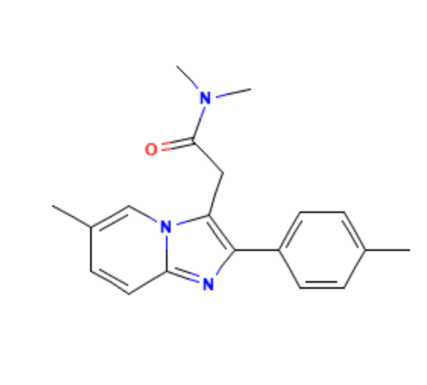
Zolpidem Chemical Structure
IUPAC (International Union of Pure and Applied Chemistry)/ Chemical name
N, N-Dimethyl-2-[6-methyl-2-(4-methylphenyl)imidazo[1,2-a] pyridin-3-yl] acetamide
Intake routine/cycle
Daily dose
Take Zolpidem exactly as your doctor recommends. The dose may change based on your condition and how well you respond. Do not take more than prescribed without consulting your doctor.
Missed Dose
If you forget to take your medicine, take the medication as soon as you remember. If it’s nearly time for your next dose, skip the missed one and continue with your regular schedule. Always consult the doctor before making any changes to your dosage.
Overdose
It is not recommended to take more than 70 mg of Zolpidem per day, as it may cause severe overdosing effects like extreme drowsiness, confusion, unconsciousness, sweating, double vision, low blood pressure, and slurred speech. Immediately seek medical attention and meet the doctor if necessary
Storage
- Store the medicine at room temperature
- Keep away from sunlight and moisture
- Keep out of reach of children
Directions for use
- Take Zolpidem exactly as prescribed by your doctor, at the same time each day.
- Do not stop taking Zolpidem without your doctor’s approval, even if you feel better.
- If you forget to take Zolpidem, take it as soon as you remember. If it’s almost time for your next dose, skip the missed dose.
Zolpidem Summary
Zolpidem is used to treat insomnia (trouble sleeping). It belongs to the group of medicines called central nervous system (CNS) depressants, which slow down the nervous system. Zolpidem will help you get to sleep faster and sleep throughout the night. Take this medicine only when you are prepared to get a long sleep of nearly 7 to 8 hours, or else it may cause severe drowsiness and make your body feel numb and nonresponsive. Sometimes it may cause accidents also.
FAQ’s
What is the duration of action of zolpidem?
The duration of zolpidem action ranges from 7 to 10 hours based on an individual’s metabolism rate.
What is the zolpidem dosage for sleep?
Commonly 5 to 10 mg is enough for producing sleep. The dosage is decided by the doctor based on different factors of an individual and you should not take the medicine without any prescription.
Which category does Zolpidem belong to?
Zolpidem belongs to the category of central nervous system depressants, or non-benzodiazepines. Used to treat insomnia or trouble sleeping.
What are the adverse effects of zolpidem?
The adverse effects include extreme drowsiness, breathing issues, loss of coordination, etc.
Reference
- PubChem. Zolpidem. National Center for Biotechnology Information; 2025. Available from.
- Mayo Clinic. Zolpidem (oral route). Mayo Foundation for Medical Education and Research; 2025 [cited 2025 Jun 28]. Available from.
- WebMD. Zolpidem (Ambien) oral: Uses, side effects, and more. WebMD; 2024 [cited 2025 Jun 28]. Available from.
- Drugs.com. Zolpidem: Uses, dosage & side effects. Drugs.com; 2023 [cited 2025 Jun 28]. Available from.
Authors



Siva Krishna Adithya Bhumireddy completed a Bachelor of Pharmacy from GIET School of Pharmacy, affiliated with Andhra University, and from his 3rd year of graduation, he was working as a freelance medical and publication writer. Having expertise in systematic reviews and clinical research. With his keen interest and skills in research and documentation practices, he also reviewed more than 150 manuscripts from international journals like Elsevier, Springer Nature, and Sage Journals, and all the manuscripts were indexed and appeared in PubMed, Scopus, and Web of Science databases, and he received honorary recognition letters and certificates from all of them. Siva Krishna Adithya also published a few systematic, narrative reviews and a few chapters of international expertise.