Category- Allopathy
Medicine Highlights
| Uses | 1. To treat asthma 2. To treat chronic bronchitis 3. To treat COPD (Chronic Obstructive Pulmonary Disease) 4. To treat emphysema (A condition that damages lung tissues) |
| Common Side Effects | 1.Tremors or shaking 2. Nervousness or restlessness 3. Headache 4. Palpitations 5. Muscle cramps 6. Throat irritation or mild cough |
| Additional Information | 1. Take it exactly as prescribed by your doctor. Avoid smoking, as it can reduce the medicine’s effect. 2. Inform your doctor if you have heart, liver, or kidney problems. 3. Salbutamol increases blood sugar level, so monitor your blood sugar levels regularly. |
| Storage | 1.The medicine should be stored at room temperature 2. Keep away from sunlight and moisture 3. Keep away from the reach of children |
| How to Take This Medicine | This medicine is meant to be taken orally |
Salbutamol Uses
Salbutamol is a bronchodilator used to relieve breathing difficulty caused by airway narrowing in the following conditions:
- Asthma
- Chronic bronchitis
- COPD (Chronic Obstructive Pulmonary Disease)
- Emphysema (A condition that damages lung tissues)
Directions for use
- If you forget to take this medicine, take it as soon as you remember. If it’s almost time for your next dose, skip the missed dose.
- Take this medicine exactly as prescribed by your doctor, at the same time each day.
- Do not stop taking this medicine without your doctor’s approval, even if you feel better.
Salbutamol side effects
More Common
- Tremors or shaking
- Nervousness or restlessness
- Headache
- Palpitations
- Muscle cramps
- Throat irritation or mild cough
Less Common
- Severe allergic reaction (rash, itching, swelling, trouble breathing)
- Chest pain or severe palpitations
- Severe dizziness or fainting
- Seizures
- Low potassium levels
How Salbutamol works
Salbutamol is a bronchodilator that relaxes the muscles around the airways in your lungs. By doing this, it opens the air passages, making it easier to breathe. This helps reduce wheezing, coughing, chest tightness, and shortness of breath, especially in conditions like asthma, chronic bronchitis, emphysema, and Chronic obstructive pulmonary disease (COPD).
Safety Measures and Warning
Allergic Individuals
If you are allergic to salbutamol or similar medicines, it can cause serious allergic reactions like rash, swelling, or trouble breathing. Always check with your doctor first.
Heart Problems
If you have heart disease, very fast or irregular heartbeat, this medicine can make it worse. Talk to your doctor before taking it.
High Blood Pressure
If you have very high blood pressure, salbutamol may raise it further. Consult your doctor first.
Seizures
If you have a history of seizures, it can trigger fits. Always inform your doctor.
Overactive Thyroid (Hyperthyroidism)
It can further increase your heartbeat and make you feel more anxious or restless because it stimulates the heart and nervous system, which are already overactive in this condition. Check with your doctor before use.
Diabetes
It can raise your blood sugar levels because it makes the liver release more sugar into the blood and reduces how well insulin works. This can make your sugar harder to control, so ask your doctor before using it.
Pregnancy and breastfeeding
This medicine should be used only after doctor’s advice to ensure safety for mother and baby.
Salbutamol Interaction with Other Medicines
Avoid taking Salbutamol with the following medicines, as it may increase or decrease the desired effect, or in worse cases and it could be fatal:
Salbutamol Interaction with Food Product
Salbutamol may increase side effects if taken with caffeine (coffee, tea, chocolate) or high-sugar foods, especially in people with diabetes. Avoid alcohol and smoking while taking this medicine and always check with your doctor.
Storage
- Store the medicine at room temperature
- Keep away from sunlight and moisture
- Keep out of reach of children
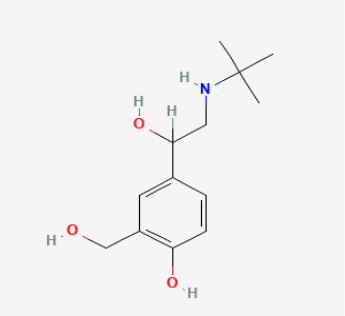
Salbutamol Chemical Structure
IUPAC (International Union of Pure and Applied Chemistry)/ Chemical name
Salbutamol: (RS)-4-[2-(tert-butylamino)-1-hydroxyethyl]-2-(hydroxymethyl)phenol
Intake routine/cycle
Daily dose
Take Salbutamol exactly as your doctor recommends. The dose may change based on your condition and how well you respond. Do not take more than prescribed without consulting your doctor.
Missed Dose
If you forget to take your medicine, take the medication as soon as you remember. If it’s nearly time for your next dose, skip the missed one and continue with your regular schedule. Always consult the doctor before making any changes to your dosage.
Overdose
Salbutamol syrup should not exceed more than 20 ml. Symptoms for overdosing include dizziness or lightheadedness when getting up suddenly from a lying or sitting position. Immediate medical support is needed in case of any emergency.
Salbutamol Summary
Salbutamol is a bronchodilator used to relieve breathing problems caused by conditions such as asthma, chronic bronchitis, emphysema and Chronic obstructive pulmonary disease (COPD). It works by relaxing the muscles around the airways, opening them up and making breathing easier. It helps reduce wheezing, coughing, chest tightness, and shortness of breath.
Common side effects may include tremors, nervousness, headache, fast heartbeat, or muscle cramps, while rare but serious effects can include allergic reactions, chest pain, seizures, or low potassium levels. It should be used exactly as prescribed, and patients should inform their doctor about heart problems, high blood pressure, seizures, thyroid issues, or diabetes before use. Avoid excess caffeine, alcohol, and smoking while taking Salbutamol.
FAQ’s
What are the uses of Salbutamol?
It is used to treat breathing problems like asthma, chronic bronchitis, emphysema, and Chronic obstructive pulmonary disease (COPD) by opening the airways.
What are the side effects of Salbutamol?
Salbutamol can cause some common side effects like tremors or shaking, nervousness, headache, fast heartbeat, muscle cramps, or mild throat irritation.
How does Salbutamol work?
Salbutamol is a bronchodilator that relaxes the muscles around the airways in the lungs. This opens the air passages, making breathing easier and reducing wheezing, coughing, chest tightness, and shortness of breath, especially in conditions like asthma, chronic bronchitis, emphysema, and Chronic obstructive pulmonary disease (COPD).
Who should not take Salbutamol?
Salbutamol should not be taken by people who are allergic to it, as it can cause serious reactions like rash, swelling, or trouble breathing. It should be used with caution in people with heart problems, high blood pressure, seizures, overactive thyroid, and diabetes, always under a doctor’s guidance. Pregnant or breastfeeding women should take it only if recommended by a doctor.
What class of drug is Salbutamol?
Salbutamol belongs to the bronchodilator class of drugs. More specifically, it is a short-acting β2-adrenergic agonist (SABA), which works by relaxing the muscles around the airways to make breathing easier.
Reference
- PubChem. Salbutamol [Internet]. pubchem.ncbi.nlm.nih.gov. Available from
- France N. Salbutamol: Uses, Dosage, Side Effects, Warnings [Internet]. Drugs.com. 2023. Available from
- DrugBank. Salbutamol [Internet]. DrugBank. 2025. Available from
- Johnson DB, Bounds CG. Albuterol [Internet]. National Library of Medicine. StatPearls Publishing; 2024. Available from
Authors


Pranathi is a final year Pharm D student at Chalapathi Institute of Pharmaceutical Sciences. She loves learning and applying her knowledge in pharmacy and has a passion for writing, which allows her to express ideas clearly and creatively. She enjoys combining her technical skills with her love for writing and communication to make a meaningful impact. Currently she is working on a research paper about “Consanguineous marriages and its impact on children’s health” which will be published by the end of 2025.