Category- Allopathy
Medicine Highlights
| Uses | 1. To improve memory and brain functioning after a stroke 2. To improve age-related memory decline and cognitive performance 3. To enhance memory and cognition function in patients with schizophrenia, Alzheimer’s, bipolar disorder, and depression. |
| Common Side Effects | 1. Nausea 2. Headache 3. Trouble sleeping |
| Additional Information | 1. It is recommended to avoid self-administration and to take it only when prescribed by the doctor. 2. Patients with low blood pressure are recommended to take it after consultation with the doctor. |
| Storage | 1. The medicine should be stored at room temperature. 2. Keep away from sunlight and moisture. 3. Keep away from the reach of children. |
| How to Take This Medicine | Swallow this medicine with water. |
Citicoline + Piracetam Uses
Citicoline and piracetam (500/800) mg) are oral combination medicines belonging to the category of nootropics and is used for the following indications:
- Improve memory and cognition in patients with stroke, schizophrenia, bipolar disorder, Alzheimer’s, and Parkinsonism.
- Age-related memory loss and thinking
Citicoline + Piracetam side effects
More Common
- Nausea
- Headache
- Trouble sleeping
Less Common
- Tremors
- Mood changes
- Confusion
- Increased urination
- Blood pressure changes
How Citicoline + Piracetam works
This medication is a combination of citicoline and piracetam that work individually, as citicoline helps rebuild damaged brain cells by boosting the production of important building blocks like phosphatidylcholine and choline, which strengthens tissues and improves communication between brain cells. Piracetam, on the other hand, improves blood flow and oxygen delivery to the brain, making it easier for brain cells to function and recover. It also helps the brain use energy more efficiently and supports learning and memory by enhancing signals between nerve cells. Together these medicines act like a repair team: citicoline fixes the structure, while piracetam boosts the power supply and communication.
Safety Measures and Warning
Pregnancy
Citicoline and piracetam are not well studied during pregnancy, so doctors usually avoid recommending them unless absolutely necessary. While it’s generally considered safe for most adults, there’s not enough research to confirm it’s safe for the fetus. If you’re pregnant or planning to be, it’s best to talk with your doctor before using citicoline.
Breastfeeding
It is not known if citicoline and piracetam passes into breast milk. Tell your health care provider if you are breastfeeding or plan to breastfeed. Your health care provider will let you know if you should stop breastfeeding or stop using citicoline.
Citicoline + Piracetam Interaction with Food Product
Alcohol and smoking may disrupt citicoline’s effects, potentially causing headaches, confusion, or hallucinations. Avoid these substances and consult a doctor if serious symptoms appear.
Citicoline + Piracetam Interaction with Other Medicines
Avoid taking citicoline and piracetam (500/800) mg with the following medicines, as it may increase or decrease the desired effect, or in worse cases, it could be fatal:
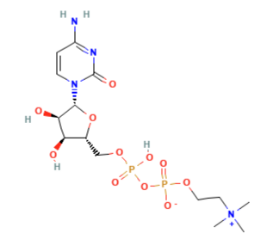
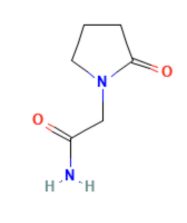
Citicoline + Piracetam Chemical Structure
IUPAC (International Union of Pure and Applied Chemistry)/Chemical name
Citicoline- 5′-O-[hydroxy(4-methylpentanoyl) phosphoryl] cytidine
Piracetam- 2-oxo-1-pyrrolidineacetamide
Intake routine/cycle
Daily dose
Take citicoline and piracetam exactly as your doctor recommends. The dose may change based on your condition and how well you respond. Do not take more than prescribed without consulting your doctor.
Missed Dose
If you forget to take your medicine, take the medication as soon as you remember. If it’s nearly time for your next dose, skip the missed one and continue with your regular schedule. Always consult the doctor before making any changes to your dosage
Overdose
It is not recommended to take more than 4000 mg of citicoline and piracetam per day, as it may cause severe overdosing effects like insomnia, headaches, agitation, and muscle problems. If you face any of the severe effects, see the doctor.
Storage
- Store the medicine at room temperature.
- Keep away from sunlight and moisture.
- Keep out of reach of children.
Directions for use
- If you forget to take citicoline and piracetam, take it as soon as you remember. If it’s almost time for your next dose, skip the missed dose.
- Take citicoline and piracetam exactly as prescribed by your doctor, at the same time each day.
- Do not stop taking citicoline and piracetam without your doctor’s approval, even if you feel better.
Citicoline + Piracetam Summary
Citicoline and piracetam are brain-supporting medicines known as nootropics, often used together to help improve memory, focus, and recovery after stroke or brain injury. Citicoline helps repair and protect nerve cells by boosting important brain chemicals, while piracetam improves blood and oxygen flow to the brain, making it more alert and better at learning. This combination is commonly used for stroke rehabilitation, age-related memory decline, and certain neurological conditions. People may experience side effects like headaches, nervousness, trouble sleeping, stomach discomfort, or weight gain. It should be avoided by those with severe kidney problems, a history of brain bleeding, or certain movement disorders like Huntington’s disease. It may interact with blood thinners (like warfarin), thyroid medications, and sedatives, so always check with a doctor before combining it with other treatments.
FAQ’s
Which category does citicoline belong to?
Citicoline belongs to the category of nootropics, or cognition enhancers, used to improve memory and brain functioning after stroke and other mental health issues.
What are citicoline medicine uses?
Citicoline is a brain-friendly supplement often used to boost memory, focus, and recovery after a stroke or injury, belonging to the category of nootropics, or cognition enhancers. People use it for forgetfulness, age-related memory decline, or attention problems like attention deficit hyperactivity disorder (ADHD).
What is Citicoline MOA (Mechanism of Action)?
Citicoline helps your brain heal and work better, especially after a stroke or memory problem. Think of it as providing support to brain cells with extra building blocks and energy so they can talk to each other again. It brings a special ingredient called choline that helps your brain send messages clearly and fix damaged areas.
What is piracetam’s MOA (mechanism of action)?
Piracetam acts by improving blood flow and oxygen delivery to the brain, making it easier for brain cells to function and recover. It also helps the brain use energy more efficiently and supports learning and memory by enhancing signals between nerve cells.
Reference
- Drug Bank. Rucaparib [Internet]. Ottawa (ON): Canadian Institutes of Health Research; 2005 [cited 2025 Jul 16]. Available from.
- Kaye AD, Baluch A. Pain management in the elderly population: a review. Ochsner J [Internet]. 2007 Spring [cited 2025 Jul 16]; 7(1):91–7. Available from.
- National Center for Biotechnology Information. PubChem Compound Summary for CID 441, Citicoline [Internet]. Bethesda (MD): National Library of Medicine (US); [cited 2025 Jul 16]. Available from.
- Drugs.com [Internet]. Citicoline: Uses, side effects, interactions. c1996–2025 [updated 2024 Dec 12; cited 2025 Jul 16]. Available from.
- WebMD [Internet]. Citicoline: Uses, side effects, interactions. c1996–2025 [updated 2024 Dec 12; cited 2025 Jul 16]. Available from.
- National Center for Biotechnology Information. PubChem Compound Summary for CID 4418, Piracetam. [Internet]. Bethesda (MD): National Library of Medicine (US); [cited 2025 Jul 16]. Available from.
- Drugs.com. What is piracetam? [Internet]. [updated 2024 Jul 1; cited 2025 Jul 16]. Available from.
- Malykh AG, Sadaie MR. Piracetam and piracetam-like drugs: From basic science to clinical applications to CNS disorders. CNS Drugs [Internet]. 2010 Sep;24(8):729–58. Available from.
Authors



Siva Krishna Adithya Bhumireddy completed a Bachelor of Pharmacy from GIET School of Pharmacy, affiliated with Andhra University, and from his 3rd year of graduation, he was working as a freelance medical and publication writer. Having expertise in systematic reviews and clinical research. With his keen interest and skills in research and documentation practices, he also reviewed more than 150 manuscripts from international journals like Elsevier, Springer Nature, and Sage Journals, and all the manuscripts were indexed and appeared in PubMed, Scopus, and Web of Science databases, and he received honorary recognition letters and certificates from all of them. Siva Krishna Adithya also published a few systematic, narrative reviews and a few chapters of international expertise.