Category- Allopathy
About Acebrophylline (sr) 200 mg
Acebrophylline (sr) 200 mg is a bronchodilator and mucolytic agent. Acebrophylline (sr) 200 mg is used to treat respiratory conditions like asthma, chronic bronchitis, and COPD. It works by relaxing the airway muscles and thinning mucus, making breathing easier. The usual adult dose is 200 mg twice a day (maximum 400 mg/day). Common side effects of Acebrophylline (sr) 200 mg include nausea, headache, and heartburn, while overdose i.e 400 mg /day may cause tremors, restlessness, or rapid heartbeat. If you have any allergy to this medicine, or if you have serious liver or kidney problems, you should avoid taking this medicine. It may not be safe for you.
Medicine Highlights
| Uses | 1. To treat chronic obstructive pulmonary disease (COPD) 2. To treat bronchial asthma 3. To treat chronic bronchitis (long-lasting wet cough) 4. To treat damaged lung air sacs(emphysema) 5. Breathing difficulties due to allergic or inflammatory conditions |
| Common Side Effects | 1. Nausea 2. Vomiting 3. Diarrhea 4. Constipation 5. Heartburn 6. Loss of appetite 7. Rash, Itching 8. Drowsiness 9. Red spots or bumps 10. Breathing problems 11. Increased white blood cell count 12. Abdominal discomfort 13. Abdominal distension 14. Esophageal bleeding 15. Nasal inflammation 16. Dizziness |
| Additional Information | To be taken only when prescribed by the doctor. Don’t use it without a doctor’s recommendation. |
| Storage | 1- The medicine should be stored at room temperature 2- Keep away from sunlight and moisture 3- Keep away from the reach of children |
| How to Take This Medicine | To be taken orally |
Acebrophylline (sr) 200 mg Uses
Acebrophylline (sr) 200 mg is an oral medicine belonging to the category of bronchodilator. Acebrophylline (sr) 200 mg is used to prevent and treat conditions like:
- Chronic Obstructive Pulmonary Disease (COPD) (long-term breathing problem)
- Bronchial Asthma (swollen narrow airways)
- Chronic Bronchitis (wet cough)
- Emphysema (damaged lung air sacs)
- Breathing difficulties due to allergic or inflammatory conditions
Directions for use
- If you forget to take Acebrophylline (sr) 200 mg, take it as soon as you remember. If it’s almost time for your next dose, skip the missed dose.
- Take Acebrophylline (sr) 200 mg exactly as prescribed by your doctor, at the same time each day.
- Do not stop taking Acebrophylline (sr) 200 mg without your doctor’s approval, even if you feel better.
Acebrophylline (sr) 200 mg side effects
More Common
- Nausea,
- Vomiting,
- Diarrhea,
- Constipation,
- Heartburn,
- Loss of appetite,
- Rash, Itching,
- Drowsiness,
- Red spots or bumps,
- Breathing problems,
- Increased white blood cell count,
- Abdominal discomfort,
- Abdominal distension,
- Esophageal bleeding,
- Nasal inflammation,
- Dizziness
Less Common
- Heartburn or acid reflux
- Headache
- Tremors
- Increased heart rate (palpitations)
- Insomnia (difficulty sleeping)
- Skin rash or itching
- Restlessness or irritability
- Muscle cramps or weakness infection
- Yellowing of the skin or eyes (jaundice)
How Acebrophylline (sr) 200 mg works
Acebrophylline (sr) 200 mg, which works by relaxing the airway muscles and widening the bronchial passages in the lungs. It also reduces the thickness of mucus, making it easier to expel through coughing. This helps improve airflow and makes breathing more comfortable.
Safety Measures and Warning
Pregnancy
Avoid Acebrophylline (sr) 200 mg if you’re pregnant because it can be harmful to the fetus.
Breastfeeding
Acebrophylline (sr) 200 mg passes into breast milk. Tell your healthcare provider if you are breastfeeding or plan to breastfeed. Your healthcare provider will advise you if you should stop breastfeeding or stop acebrophylline.
Kidney and Liver Problems
If you’re suffering from kidney and liver problems consult a doctor before using them as this medication can cause kidney and liver damage.
Allergic Reactions or Hypersensitivity
Avoid taking this medication if you have a known allergy to Acebrophylline (sr) 200 mg. If you experience symptoms like rash, swelling, or difficulty breathing, seek immediate medical attention.
Acebrophylline (sr) 200 mg Interaction with Food Product
Avoid caffeinated food and avoiding taking alcohol and smoking can simultaneously cause an increase or decrease in drug action; also, they may cause severe drowsiness and sedation as they act on the brain directly.
Acebrophylline (sr) 200 mg Interaction with Other Medicines
Avoid taking Acebrophylline (sr) 200 mg with the following medicines, as it may increase or decrease the desired effect, or in worse cases, it could be fatal:
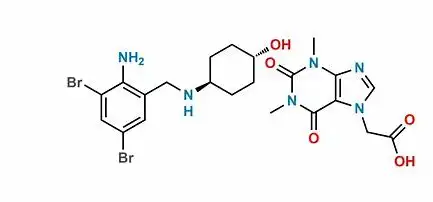
Acebrophylline (sr) 200 mg Chemical Structure
IUPAC (International Union of Pure and Applied Chemistry)/ Chemical name
4-[(2-amino-3,5-dibromobenzyl)amino]cyclohexan-1-ol 2-(1,3-dimethyl-2,6-dioxopurin-7-yl)acetate
Intake routine/cycle
Daily dose
Take Acebrophylline (sr) 200 mg exactly as your doctor recommends. The dose may change based on your condition and how well you respond. Do not take more than prescribed without consulting your doctor.
Missed Dose
If you forget to take your medicine, take the medication as soon as you remember. If it’s nearly time for your next dose, skip the missed one and continue with your regular schedule. Always consult the doctor before making any changes to your dosage.
Overdose
Don’t take more than 400 mg of acebrophylline per day, as it may cause severe overdose symptoms like nausea, vomiting, headache, tremors, restlessness, and rapid heartbeat.
Storage
- Store the medicine at room temperature
- Keep away from sunlight and moisture
- Keep out of reach of children
FAQ’s
What are the side effects of Acebrophylline (sr) 200 mg?
Acebrophylline (sr) 200 mg side effects include nausea, vomiting, diarrhea, constipation, heartburn, loss of appetite, rash, itching, drowsiness, red spots or bumps, breathing problems, increased white blood cell count, abdominal discomfort, abdominal distension, esophageal bleeding, nasal inflammation, dizziness
What is the uses of Acebrophylline (sr) 200 mg?
Acebrophylline (sr) 200 mg is an oral bronchodilator used to treat COPD (long-term breathing problem), bronchial asthma (swollen narrow airways), chronic bronchitis (long-lasting wet cough), emphysema (damaged lung air sacs), and breathing issues due to allergies or inflammation.
What is the mechanism of action of Acebrophylline (sr) 200 mg?
Acebrophylline (sr) 200 mg, which works by relaxing the airway muscles and widening the bronchial passages in the lungs. It also reduces the thickness of mucus, making it easier to expel through coughing. This helps improve airflow and makes breathing more comfortable.
Reference
- Vijayaganesh Kasinathan. Acebrophylline – Indications, Dosage, Side Effects and Precautions [Internet]. Medindia. Medindia.net; 2024 [cited 2025 Jul 16]. Available from
- Truemeds [Internet]. Truemeds.in. 2019 [cited 2025 Jul 16]. Available from
- PubChem. Ambroxol acefyllinate [Internet]. Nih.gov. PubChem; 2025 [cited 2025 Jul 16]. Available from
- Medical Dialogues. Acebrophylline [Internet]. Medicaldialogues.in. Medical Dialogues; 2023 [cited 2025 Jul 16]. Available from
Authors


Pranathi is a final year Pharm D student at Chalapathi Institute of Pharmaceutical Sciences. She loves learning and applying her knowledge in pharmacy and has a passion for writing, which allows her to express ideas clearly and creatively. She enjoys combining her technical skills with her love for writing and communication to make a meaningful impact. Currently she is working on a research paper about “Consanguineous marriages and its impact on children’s health” which will be published by the end of 2025.