Category- Allopathy
Medicine Highlights
| Uses | 1- To treat fungal infection infecting organs |
| Common Side Effects | 1- Nausea 2- Vomiting 3- Constipation 4- Abdominal pain 5- Dry mouth 6- Flatulence 7- Tongue discoloration |
| Additional Information | Avoid taking alcohol or tobacco with this medicine. |
| Storage | 1- The medicine should be stored at room temperature 2- Keep away from sunlight and moisture 3- Keep away from the reach of children |
| How to Take This Medicine | The medicine should be taken orally |
Ketoconazole Summary
Ketoconazole is an antifungal medicine that works by weakening the fungus’s cell membrane, helping your body fight off the infection. It’s important to take it exactly as prescribed and let your doctor know if you have liver issues, heart problems, or trouble absorbing medications. Watch out for serious side effects like trouble breathing, vision changes, or yellowing of the skin. Avoid alcohol while taking it, and keep it stored in a cool, dry place away from kids.
To help the medicine work better and prevent future infections, eat a healthy, low-sugar diet rich in Vitamin C and protein, and steer clear of dairy and starchy foods. Good hygiene, staying hydrated, regular sleep, and avoiding alcohol and smoking can also make a big difference in your recovery.
Ketoconazole Uses
Ketoconazole 200 mg is an oral medicine belonging to the class of imidazole antifungal medicines. It is used to treat fungal infection in various organs.
Ketoconazole side effects
More Common
- Nausea
- Vomiting
- Constipation
- Abdominal pain
- Dry mouth
- Flatulence
- Tongue discoloration
Less Common
- Back, leg, or stomach pains
- Black, tarry stools
- Bleeding gums
- Blood in the urine or stools
- Blurred vision
- Burning, crawling, itching, numbness, prickling, “pins and needles”, or tingling feelings
- Change in color vision
- Change in the ability to see colors, especially blue or yellow
- Chest pain
- Chills
- Confusion
- Cough
- Dark urine
- Difficulty seeing at night
- Difficulty swallowing
- Dizziness
- Fast heartbeat
- Fever
- General body swelling
- Headache
- Hoarseness
- Increased sensitivity of the eyes to sunlight
- Irritation
- Joint pain, stiffness, or swelling
- Light-colored stools
- Loss of appetite
- Mood or mental changes
- Nausea or vomiting, severe
- Nosebleeds
- Painful or difficult urination
- Pale skin
- Pinpoint red spots on the skin
- Puffiness or swelling of the eyelids or around the eyes, face, lips, or tongue
- Redness of the skin
- Skin rash, hives, itching
- Sore throat
- Sores, ulcers, or white spots on the lips or in the mouth
- Swelling of the eyelids, face, lips, hands, or feet
- Swollen glands
- Tightness in the chest
- Trouble sleeping
- Troubled breathing or swallowing
- Unusual bleeding or bruising
- Unusual tiredness or weakness
- Vision changes
- Yellow eyes or skin
How Ketoconazole works
Ketoconazole works by inhibiting the production of lanosterol, a chemical in fungi that serves as a precursor to ergosterol biosynthesis. Ergosterol is an essential chemical for strengthening the fungal cell membrane. By blocking ergosterol production, the fungal cells become fragile and are easily destroyed.
Safety Measures and Warning
1- Allergy/Hypersensitivity
If you have trouble breathing, body swelling, or a drop in blood pressure after taking this medication, you may be allergic to it. If you have a known allergy to this medicine, inform your doctor.
2- Liver Dysfunction
If you have existing liver dysfunction, inform your doctor, as this medicine can further damage your liver.
3- Absence of stomach acidic fluid (Achlorhydria)
If you have achlorhydria then inform your doctor about it as this condition delays the absorption of ketoconazole.
4- Heart Disease
If you have heart rhythm problem then this medicine can worsen your condition therefore it is best to inform your doctor about your condition.
Ketoconazole Interaction with Other Medicines
Avoid taking ketoconazole 200 mg with the following medicines, as it may increase or decrease the desired effect, or in worse cases, it could be fatal:
Ketoconazole Interaction with Food Product
Ketoconazole does not interact with any food products, but alcohol should be avoided before and after taking the medicine, as it can increase or decrease the effect of ketoconazole.
Storage
- The medicine should be stored at room temperature
- Keep away from sunlight and moisture
- Keep away from the reach of children
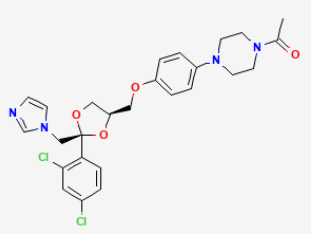
Ketoconazole Chemical Structure
IUPAC (International Union of Pure and Applied Chemistry)/ Chemical name-
1-[4-[4-[[2-(2,4-dichlorophenyl)-2-(imidazol-1-ylmethyl)-1,3-dioxolan-4-yl]methoxy]phenyl]piperazin-1-yl]ethanone
Intake routine/cycle
Daily Dose
Take ketoconazole exactly as your doctor recommends. The dose may change based on your condition and how well you respond. Do not take more than prescribed without consulting your doctor.
Missed Dose
If you forget to take your medicine, take the medication soon as you remember. If it’s nearly time for your next dose, skip the missed one and continue with your regular schedule. Always consult the doctor before making any changes to your dosage.
Overdose
A dose of more than 800 mg of ketoconazole can cause toxicity. Overdosing symptoms of ketoconazole include nausea, vomiting, diarrhea, constipation, abdominal pain, weight fluctuations, and fatigue. If you know someone who takes ketoconazole and has these symptoms rush them to hospital immediately.
Dietary and Lifestyle Management
Medicine will help you combat systemic fungal infections, but to prevent future fungal infections, you need to make dietary and lifestyle changes. Below are some dietary recommendations and lifestyle management tips to help prevent fungal infections.
Dietary Changes
1- Vitamin C-rich Diet
Include fruits and vegetables rich in ascorbic acid, as they act as antioxidants, boost immunity, and help fight fungal infections.
2- Non-Starchy Foods
Consume foods low in starch, such as cabbage, sprouts, broccoli, cucumber, eggplant, onion, and tomatoes.
3- Gluten-Free Food Products
Opt for millet, bajra, and corn flour. Avoid consuming dairy products during an infection.
4- High-Protein Foods
Include protein-rich vegetables and fruits such as chickpeas, peas, paneer, sprouts, dal, and pumpkin seeds.
5- Avoid Sugary Foods
Sugar fuels infection growth and can worsen your condition, so it is best to avoid sweet foods.
Lifestyle Management
1- Hygiene
Maintain proper hygiene and stay hydrated by drinking plenty of water, as it helps cleanse your system.
2- Strengthen Your Immune System
You can boost your immunity by getting 7-9 hours of quality sleep, exercising regularly, and avoiding alcohol and smoking.
FAQ’s
1- Which ketoconazole tablet 200 mg is effective?
Only a tested ketoconazole 200 mg tablet will be effective. Currently, SayaCare is the only provider that ensures this. We test all medicines before selling them, and you will receive a test report with every order delivered to your doorstep.
2- Ketoconazole टैबलेट के उपयोग?
Ketoconazole 200 mg एक मौखिक दवा है, जो इमिडाज़ोल एंटिफंगल दवाओं की श्रेणी में आती है। इसका उपयोग विभिन्न अंगों में फंगल संक्रमण के इलाज के लिए किया जाता है।
Reference
- Medical News Today. Candida diet: What to eat and what to avoid [Internet]. Brighton: Medical News Today; 2019 [cited 2024 Apr 2]. Available from.
- Dalyan Cilo B. Species Distribution and Antifungal Susceptibilities of Candida Species Isolated From Blood Culture. Cureus. 2023 Apr 27;15(4):e38183. doi: 10.7759/cureus.38183. PMID: 37252597; PMCID: PMC10224711. Available from.
- Healthline. Candida diet: What foods to eat and what to avoid [Internet]. 2023 [cited 2024 Apr 2]. Available from.
- Sugar AM, Alsip SG, Galgiani JN, Graybill JR, Dismukes WE, Cloud GA, Craven PC, Stevens DA. Pharmacology and toxicity of high-dose ketoconazole. Antimicrob Agents Chemother. 1987 Dec;31(12):1874-8. doi: 10.1128/AAC.31.12.1874. PMID: 3326525; PMCID: PMC175818.Available from.
- Sinawe H, Casadesus D. Ketoconazole. [Updated 2023 Jun 26]. In: StatPearls [Internet]. Treasure Island (FL): StatPearls Publishing; 2025 Jan-. Available from.
- Mayo Clinic. Ketoconazole (oral route) – Description and brand names [Internet]. 2023 [cited 2024 Apr 2]. Available from.
Authors


Mahak Phartyal completed her bachelor’s in pharmacy from Veer Madho Singh Bhandari Uttarakhand Technical University. She previously worked as a Medical Writer at Meril Life Sciences, where she wrote numerous scientific abstracts for conferences such as India Live 2024 and the European Society of Cardiology (ESC). During her college years, she developed a keen research interest and published an article titled “Preliminary Phytochemical Screening, Physicochemical and Fluorescence Analysis of Nyctanthes arbor-tristis and Syzygium cumini Leaves.