Category- Allopathy
About Chlorhexidine Antiseptic Soap
Chlorhexidine Gluconate 0.5% with Cetrimide 1% is an antiseptic soap used to prevent and treat minor cuts, scrapes, burns, pimples, and skin infections. It works by killing bacteria on the skin and helping keep the affected area clean, while Cetrimide also helps remove dirt and debris. Common side effects may include mild burning, redness, itching, or dryness, while rare reactions can include severe irritation, swelling, or allergic reactions.
The soap should be used as directed, avoiding contact with eyes or large open wounds, and a doctor should be consulted if severe reactions occur. It has no food interactions and helps maintain skin hygiene effectively.
Medicine Highlights
| Uses | 1. To treat minor cuts and wounds 2. To treat scrapes and abrasions 3. To treat burns 4. To treat skin infections 5. To treat pimples or acne 6. To treat surgical or post-procedure skin areas |
| Common Side Effects | 1. Mild burning or stinging 2. Redness 3. Itching 4. Dryness |
| Additional Information | Apply a thin layer on the affected area 1–2 times a day or as directed by a doctor. |
| Storage | 1. The medicine should be stored at room temperature. 2. Keep away from sunlight and moisture. 3. Keep away from the reach of children |
| How to Take This Medicine | This soap is for topical use only |
Chlorhexidine Antiseptic Soap Uses
Chlorhexidine Gluconate 0.5% with Cetrimide 1% antiseptic soap primarily used to prevent and treat skin infections. It is also useful to treat following conditions:
- Minor cuts and wounds
- Scrapes and abrasions (shallow scratches or grazes on the skin)
- Burns
- Skin infections
- Pimples or acne
- Surgical or post-procedure skin areas
Chlorhexidine Antiseptic Soap side effects
More Common
- Mild burning or stinging
- Redness
- Itching
- Dryness
Less Common
- Severe irritation or swelling
- Allergic reaction (rash, hives, difficulty breathing)
How Chlorhexidine Antiseptic Soap work
Chlorhexidine Gluconate + Cetrimide Antiseptic Soap works by killing or stopping the growth of bacteria on the skin. Chlorhexidine disrupts the cell walls of germs, while Cetrimide helps remove dirt and debris, making it easier to clean wounds and prevent infections.
Safety Measures and Warning
Allergy/Hypersentivity
Using it can cause rashes, swelling, or severe allergic reactions, so always consult your doctor before use.
Deep or Large Open Wounds
The medicine is meant for minor cuts and burns; applying it on large or deep wounds can irritate the skin, so doctor’s advice is necessary.
Eye or Mouth Contact
It can cause severe irritation if it gets into eyes or mouth, so use only under doctor’s guidance.
Children or people with very sensitive skin
Sensitive skin can react strongly, so a doctor should advise before using it.
Chlorhexidine Antiseptic Soap Interaction with Food Product
Chlorhexidine Gluconate + Cetrimide soap has no food interactions. You can continue your normal diet while using it.
Chlorhexidine Antiseptic Soap Interaction with Other Medicines
Avoid taking Chlorhexidine Antiseptic Soap with the following medicines, as it may increase or decrease the desired effect, or in worse cases, it could be fatal:
Chlorhexidine Antiseptic Soap Chemical Structure
IUPAC (International Union of Pure and Applied Chemistry)/ Chemical name
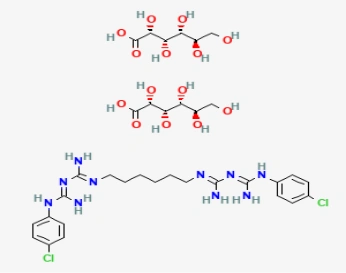
Chlorhexidine Gluconate: (1E)-2-[6-[[amino-[(E)-[amino-(4-chloroanilino) methylidene] amino] methylidene] amino] hexyl]-1-[amino-(4-chloroanilino) methylidene] guanidine;(2R,3S,4R,5R)-2,3,4,5,6-pentahydroxyhexanoic acid
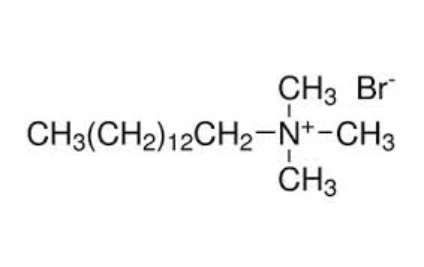
Cetrimide: hexadecyl(trimethyl)azanium bromide
Intake routine/cycle
Daily dose
Take Chlorhexidine Gluconate + Cetrimide exactly as your doctor recommends. The dose may change based on your condition and how well you respond. Do not take more than prescribed without consulting your doctor.
Missed Dose
If you forget to take your medicine, take the medication as soon as you remember. If it’s nearly time for your next dose, skip the missed one and continue with your regular schedule. Always consult the doctor before making any changes to your dosage.
Overdose
Do not use more Chlorhexidine Gluconate + Cetrimide soap than recommended by your doctor. Using it more frequently can cause severe skin irritation, redness, burning, or itching. Stop using it and seek medical advice immediately if these reactions occur.
Storage
- Store the medicine at room temperature.
- Keep away from sunlight and moisture.
- Keep out of reach of children
Directions for use
- Wet the affected area with water.
- Apply the soap and gently lather on the skin.
- Leave for 1–2 minutes before rinsing thoroughly.
- Use once or twice daily
- Avoid contact with eyes and mucous membranes.
FAQ’s
What is are the uses of Chlorhexidine Gluconate + Cetrimide soap?
It is used to clean the skin, prevent and treat minor cuts, scrapes, burns, pimples, and skin infections by killing bacteria and keeping the area germ-free.
What is are the uses of Cetrimide?
Cetrimide is used to clean and disinfect minor cuts, wounds, scrapes, burns, and skin infections by killing bacteria and preventing infection.
Can I use Cetrimide solution on my hair or scalp?
Yes, it can be used to clean the scalp, reduce germs, and help treat minor scalp infections or dandruff, but follow your doctor’s or pharmacist’s instructions.
What is are the uses of Chlorhexidine Gluconate?
It is used to clean and disinfect the skin, prevent and treat minor cuts, scrapes, burns, pimples, and skin infections by killing bacteria and keeping the area germ-free.
Reference
- PubChem. Chlorhexidine Gluconate [Internet]. pubchem.ncbi.nlm.nih.gov. Available from
- DRUGBANK. Chlorhexidine [Internet]. go.drugbank.com. Available from
- PubChem. Cetrimide [Internet]. pubchem.ncbi.nlm.nih.gov. Available from
Authors


Pranathi is a final year Pharm D student at Chalapathi Institute of Pharmaceutical Sciences. She loves learning and applying her knowledge in pharmacy and has a passion for writing, which allows her to express ideas clearly and creatively. She enjoys combining her technical skills with her love for writing and communication to make a meaningful impact. Currently she is working on a research paper about “Consanguineous marriages and its impact on children’s health” which will be published by the end of 2025.